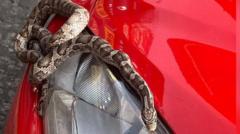
Imagine firing up your Ford Fiesta for a quick drive to the coast, completely unaware that a living, breathing reptile is wrapped around your front suspension. It sounds like a horror movie setup. For one driver in Yorkshire, it became reality when a snake takes surprise trip to seaside in car engine, proving that reality is often stranger than fiction.
The shock came right after parking. A two-foot corn snake suddenly emerged from the headlight housing, slithering across the bonnet in broad daylight. This wasn't a wild animal native to the British coast. It was a misplaced pet that had survived a twenty-mile journey from Bridlington to Scarborough, trapped next to hot, moving machinery.
Most people assume a snake inside a vehicle is an urban legend or something confined to tropical jungles. It happens way more often than you think. Understanding why these creatures seek out vehicles can save you a lot of panic, and it might just save the animal's life too.
The Scarborough Stowaway That Survived a Twenty Mile Cruise
When the driver pulled up at the Scarborough seafront, they expected a relaxing day out. Instead, they got a face-to-face encounter with a red rat snake. The police were called immediately. They quickly realized this wasn't a standard police matter and reached out to the experts.
Dave Bigsby, a local reptile rescue specialist who runs a dedicated rescue organization, arrived to handle the situation. The extraction wasn't easy. It took nearly two hours of meticulous, careful work to free the snake.
The young corn snake had managed to wedge itself tight. It was coiled firmly around the strut spring inside the engine bay. These springs are part of the car's suspension system, meaning the snake was constantly moving and shaking during the twenty-mile trek.
Bigsby had to navigate the hot, tight spaces of the engine compartment without injuring the animal or getting bitten. Corn snakes aren't venomous, but a terrified animal will still strike out. He managed to extract the creature safely without causing any harm to the car or the reptile.
The story has a happy ending. Bigsby used social media to track down the rightful owner by posting pictures and verifying the unique skin markings of the snake. The pet had escaped from its home in Bridlington, climbed into the parked car, and is now scheduled to be reunited with its owner next week.
Why a Snake Takes Surprise Trip to Seaside in Car Engine
Vehicles are basically giant, metal heated blankets for cold-blooded reptiles. Snakes don't generate their own body heat. They rely entirely on their environment to regulate their temperature.
When the outdoor temperature drops or when a snake feels vulnerable, it looks for dark, enclosed, and warm spaces. A car engine that was driven a few hours ago is the ultimate luxury resort for a roaming snake.
The gap between the road and the bottom of your engine bay is completely open in most cars. A snake can easily climb up a tire, slide across the axle, and find its way into the engine compartment. Once inside, the complex maze of hoses, wires, and structural brackets offers an incredible sense of security. They feel safe when they are squeezed tightly into tight gaps.
The problem starts when the ignition turns on. The sudden roar of the engine, the spinning belts, and the rapidly rising temperatures transform that safe haven into a death trap. It is a miracle that the Scarborough corn snake survived without being crushed by the suspension or burned by the exhaust manifold.
Understanding the Corn Snake Instincts
To understand how this happens, you have to understand the specific animal involved in this seaside journey. The corn snake, often called the red rat snake, is native to North America. They are incredibly popular pets in the UK because of their docile nature and beautiful, bright patterns.
They are also absolute escape artists.
Ask any reptile keeper. They will tell you that if there is a millimeter gap in a vivarium lid, a corn snake will find it. They have strong, muscular bodies designed for squeezing into rodent burrows. This natural drive means they constantly explore boundaries and push against glass, sliding doors, or vents.
Once a pet corn snake gets out of its enclosure inside a house, its first instinct is to find a dark hiding spot. If the house door is open, or if they manage to slip into a garage, a parked car becomes the next logical destination. They can survive for weeks without food, meaning they might hide inside a vehicle chassis long before the driver ever turns the key.
What to Do If You Spot a Reptile in Your Vehicle
Finding a snake on your bonnet is terrifying if you don't like reptiles. Panic is your worst enemy here. If you find yourself in this situation, you need to follow a very specific protocol to ensure everyone stays safe.
First, turn off the engine immediately. Do not try to drive to a garage or an animal shelter. The heat will kill the snake, or the moving parts will mangle it. Park the car in a safe spot, pull the handbrake, and step away from the vehicle.
Second, do not try to pull the snake out by its tail. This is a massive mistake. Snakes have delicate spines. If you pull on a snake that is wrapped around a suspension spring or an engine component, you can easily break its back or cause fatal internal injuries. They will also bite out of fear.
Third, call for professional help. In the UK, you can contact the RSPCA or look for local specialist groups like the one run by Dave Bigsby. Local police can sometimes assist with contacting wildlife officers, just like they did in the Scarborough incident.
Keep an eye on the vehicle from a distance. Snakes can move remarkably fast when they want to. If you lose sight of where it went inside the engine bay, the rescue specialist will have a much harder time finding it, which prolongs the process significantly.
Securing Your Pet Enclosures to Prevent Highway Hitchhikers
If you own a snake, this incident should serve as a major warning. An escaped snake doesn't just hide under the sofa. It can end up twenty miles away in another town.
Check your vivarium security today. Standard plastic wedges or sliding glass locks are essential. Never assume your snake is too big or too lazy to squeeze through a gap. Cable ports for heating elements and thermostats are common escape routes. Fill any excess space around these wires with aquarium-grade silicone.
Inspect the top mesh of wooden vivariums regularly. Heavy snakes can push against the mesh over time, weakening the staples or screws holding it in place. If you use a plastic tub setup, ensure the lid clicks shut firmly on all sides.
If your pet does escape, don't just search the room. Check the garage, check the underside of your furniture, and yes, check your car engine bay before you drive off. A quick glance under the bonnet takes thirty seconds and can prevent a major emergency on the motorway.
The Reality of Wildlife in Modern Machinery
Cars are encroaching on natural habitats every single day. While this specific case involved an escaped exotic pet, wild snakes, rodents, and birds climb into car engines constantly.
Rats and mice love chewing on modern car wiring because many manufacturers now use soy-based wire insulation. This attracts predators like snakes directly into the mechanism. It is a mini ecosystem right under your hood.
Staying vigilant is the only real solution. If you hear strange noises, notice unusual warning lights on your dashboard, or spot weird tracks on your car's exterior, pop the bonnet and take a look. You might just catch a surprising passenger before they take an unexpected trip to the coast.