The Roman Catholic Church just hit its biggest breaking point in nearly forty years. If you think this is just a minor spat over Latin prayers and old robes, you are missing the entire story. On July 2, 2026, the Vatican dropped a theological hammer that effectively cuts off hundreds of priests and thousands of lay Catholics around the world.
The Dicastery for the Doctrine of the Faith declared that the Society of Saint Pius X, a traditionalist group based in Switzerland, is now in formal schism. Everyone formally adhering to it stands excommunicated. If you liked this article, you might want to check out: this related article.
This came right after the rebel group directly defied Pope Leo XIV. They went ahead and consecrated four new bishops at their seminary in Écône without papal permission. The Vatican did not just punish the men on stage. They went after the whole movement.
This is not a routine administrative update. It is a historic crisis for a global church trying to hold its edges together. Understanding why this happened requires looking past the surface politics of the Vatican. For another perspective on this development, check out the latest coverage from USA.gov.
The Day the Breaking Point Arrived
The atmosphere in Écône on July 1, 2026, felt more like a festival than a mutiny. Over sixteen thousand traditionalist Catholics packed the mountain valley. Church bells rang out. People wore custom baseball caps reading "Econe2026" and bought souvenir bottles of wine to mark what they called a historic victory.
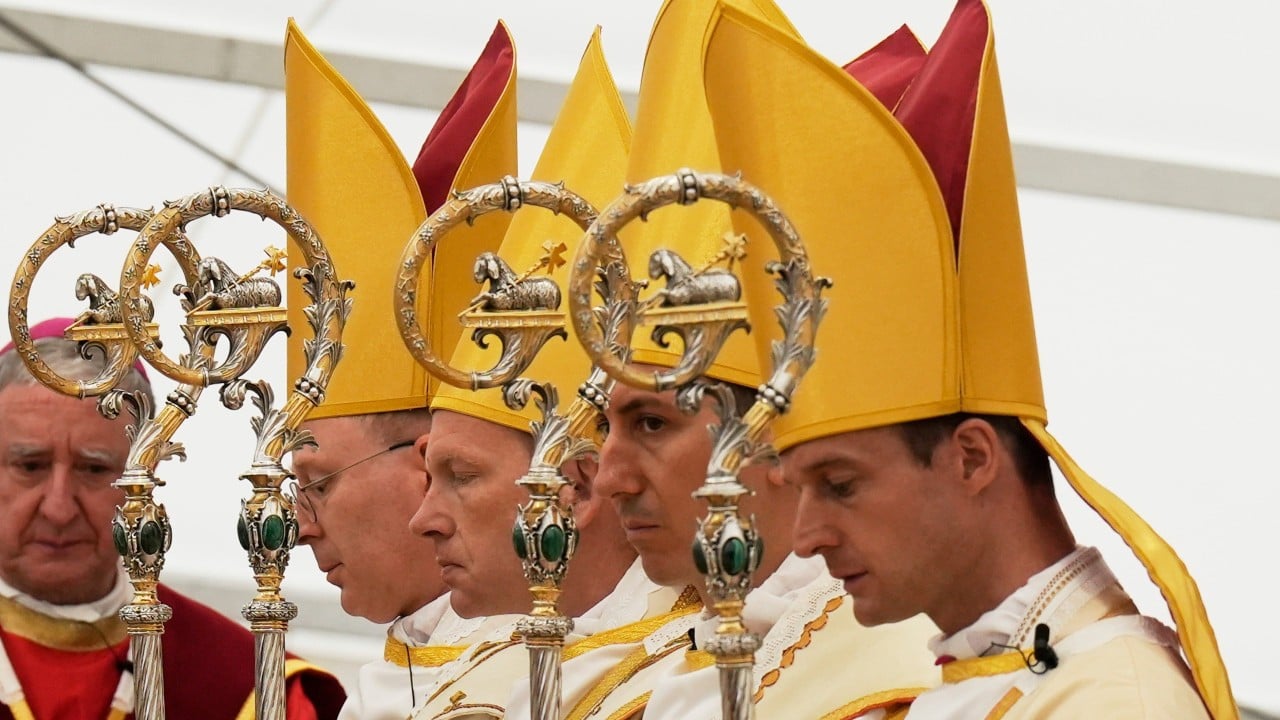
On stage, Bishop Alfonso de Galarreta laid his hands on the heads of four priests, elevating them to bishops. By doing so, he triggered an automatic penalty built right into Catholic canon law.
The four new bishops are Pascal Schreiber of Switzerland, Michael Goldade of the United States, and Michel Poinsinet de Sivry and Marc Hanappier of France. They knew exactly what they were doing.
Pope Leo XIV, the first North American pope, had begged them to stop. He sent letters warning that an unauthorized consecration is a sin of extreme gravity. The group ignored him. They claimed they had a sacred duty to protect the true faith from modern errors.
For decades, the SSPX argued they were operating under a state of necessity. They believe the modern Vatican has abandoned true Catholicism. With only two of their older bishops still active, they felt they had to ordain new ones to keep their sacraments alive. The Vatican saw it differently. To Rome, this was a blatant grab for independent power.
Why This Excommunication Goes Way Deeper Than 1988
To understand why this is sending shockwaves through the pews, you have to look back thirty-eight years. In 1988, the founder of the SSPX, French Archbishop Marcel Lefebvre, did the exact same thing. He consecrated four bishops without permission from Pope John Paul II.
Back then, the Vatican automatically excommunicated the bishops involved. Years later, Pope Benedict XVI lifted those specific excommunications in an attempt to heal the wound. It did not fix the underlying theological rot.
This new decree from Cardinal Víctor Manuel Fernández goes much further than the 1988 ruling. The Vatican did not just excommunicate the six bishops directly involved in the ceremony. The new ruling explicitly states that any priest belonging to the SSPX and any lay Catholic who formally adheres to the group is now in schism.
That means if you are a Catholic who regularly attends their chapels, financial supports them, and rejects the Pope's authority in favor of their leadership, the Vatican considers you cut off from the sacraments.
This hits a massive global footprint. The SSPX claims to have over seven hundred priests, hundreds of seminarians, and more than eight hundred places of worship spread across seventy-seven countries. They have a massive, well-funded base of operations in Kansas in the United States, alongside major strongholds in France and Argentina. Overnight, a parallel church went from being irregular to being formally labeled a breakaway sect.
The Ancient Mass and the Modern Rifts
People who do not follow church politics often assume this fight is just about Latin. It is true that the SSPX rejects the modern Mass introduced in the 1960s after the Second Vatican Council. They stick exclusively to the ancient Latin rite, which they feel preserves a sense of mystery and reverence that modern liturgies lost.
The actual battle is about authority, not language. The Second Vatican Council changed how the Catholic Church interacts with the world. It opened up dialogue with other Christian denominations, changed relationships with non-Christian religions, and embraced concepts of religious liberty.
The SSPX views these changes as heresies. They argue that the Church cannot alter its core stances to please modern society.
This create a major headache for Pope Leo XIV. Since taking office in May 2025, Leo tried to emphasize church unity. He inherited a deeply polarized church from his predecessor, Pope Francis, who had cracked down heavily on the traditional Latin Mass worldwide. Leo tried a gentler approach, hoping to bring traditionalists back into the fold without further fighting.
This open defiance from the SSPX completely shattered those efforts. By ordaining their own bishops, the group showed they do not recognize the Pope's right to govern the global church. In Catholicism, the pope's authorization of bishops is what connects the current church back to the original twelve apostles. Breaking that chain means breaking from the Church itself.
What This Means for Everyday Traditionalists
The Vatican's new decree leaves thousands of ordinary Catholics in a terrible position. Many people who attend SSPX chapels do not care about the underlying theological warfare between bishops. They just want a quiet, reverent Mass where their families can pray in Latin and find a traditional community.
Now, the Vatican says the group's sacraments are illicit. Specifically, the decree points out that SSPX priests cannot validly hear confessions or officiate marriages.
Under Catholic theology, an illicit Mass is still real, but it is celebrated in direct disobedience to the Church. Marriages and confessions, however, require specific legal faculties from the local diocese to even be valid. Without those faculties, the Vatican considers those marriages and confessions completely null and void in the eyes of God.
This creates an immediate pastoral nightmare. Couples married in these chapels face questions about their status. Penitents confessing their sins are told their absolutions did not count.
It also complicates the broader traditionalist movement. Plenty of Catholics love the Latin Mass but remain entirely loyal to Rome, attending authorized options like the Priestly Fraternity of Saint Peter. These mainstream traditionalists often find themselves lumped together with the rebel group by outside observers, even though they fiercely oppose the SSPX's disobedience.
Political undercurrents make the situation even messier. The ceremony in Écône attracted various far-right and neofascist political figures, including members of Italy's Forza Nuova and Futuro Nazionale. When a religious movement becomes tied to fringe political factions, it makes finding a peaceful, theological resolution almost impossible.
What to Do If You Are Caught in the Middle
If you are a practicing Catholic who values traditional liturgy, navigating this new reality requires quick, decisive choices. You can no longer pretend the divide does not exist.
First, check the status of your local chapel. If it is run by the SSPX, recognize that the Vatican now considers formal attendance and financial support an act of schism. You are risking your own standing in the Church by staying there.
Second, look for approved alternatives. Rites celebrated by diocesan priests or communities like the FSSP remain fully valid, lawful, and in communion with Pope Leo XIV. You can preserve your love for tradition without breaking your bond with Rome.
The Vatican has drawn a clear line in the sand. Disobedience cannot be justified by an appeal to tradition. True unity requires recognizing the authority of the living Church, even when you disagree with its direction. Turn away from breakaway movements and find refuge in communities that remain anchored to the chair of Peter.