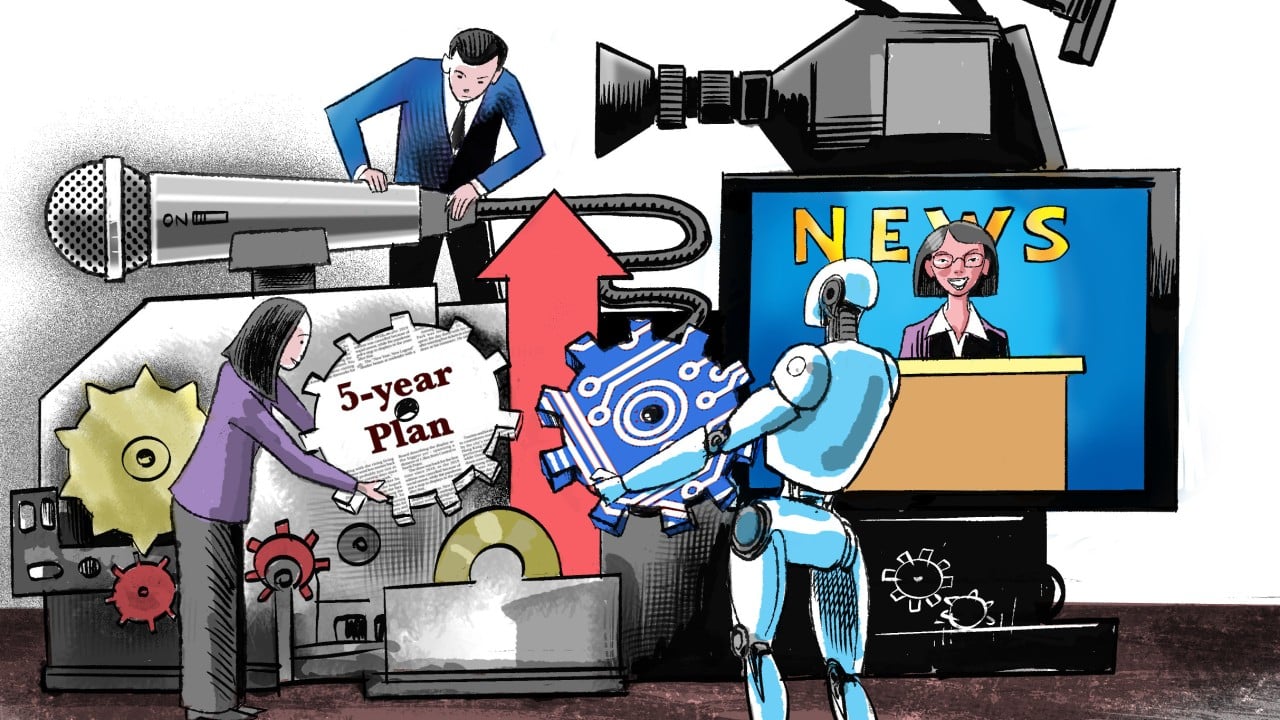
Hong Kong is doing something it has never done before. For the first time in its modern economic history, the city is ditching pure laissez-faire spontaneity for structured, long-term state planning. The government recently rolled out a two-month public consultation for its historic blueprint, officially named the First Five-Year Plan for Economic and Social Development (2026–2030).
Most discussions around this blueprint focus entirely on logistics, real estate, and the Northern Metropolis. People look at the tech hubs and the finance pipelines and assume that is the whole story. They completely overlook the media industry in Hong Kong's first 5-year plan.
That is a massive mistake.
Traditional newsrooms, digital content networks, and creative firms are not just casual observers in this structural shift. They are central to it. If you think this policy roadmap is only about factories, microchips, and banking regulations, you are missing the bigger picture. The city is rewriting its economic playbook, and media companies that fail to find their place in this new framework will quickly find themselves left behind.
The Reality of Hong Kong's First 5-Year Plan
For generations, this city operated under a reactive governance model. The government stepped in only when it had to, adjusting annual budgets on the fly and letting the free market dictate the rest. That approach created short-term wealth but left gaping holes in long-term strategy. We saw no unified industrial policy, a constant scramble for tech-friendly real estate, and very little institutional support for turning research into actual commercial businesses.
This new five-year plan changes the entire premise of how Hong Kong works. It explicitly syncs the city's economic engines with China's 15th Five-Year Plan. This is a move toward proactive steering. The government is setting clear, time-bound goals for everything from green transformation to spatial planning.
But do not confuse this with a rigid, mainland-style command economy. Top officials have repeatedly stressed that the city will keep its free-market foundations. Instead of using hard administrative decrees to force companies into compliance, the government is using market-driven tools. Think targeted tax incentives, strategic land allocation, and public-private capital deployments.
The goal is to turn the city into a global value-adder. That means connecting international capital and global standards directly with the massive manufacturing and commercial depth of the mainland. For local and international media companies operating out of the city, this means the rules of survival have changed. You can no longer just sit back and react to market forces. You have to align your operational targets with the city’s broader policy direction.
Why the Media Industry Needs a Blueprint Now
The local media sector has been drifting for years. Between shrinking ad revenues, fragmented audiences, and the global dominance of massive tech platforms, traditional media firms have struggled to maintain profit margins. Many companies have spent the last decade playing defense, cutting staff, shrinking coverage, and hoping that digital subscriptions would magically save the day.
It did not work.
Hong Kong's creative sectors need structural support, and this policy shift provides exactly that. The consultation document explicitly mentions upgrading traditional creative sectors by utilizing new technologies. The government wants to move local brands up the value chain, and you cannot do that without a sophisticated media ecosystem to tell those stories.
Think about the sheer volume of economic activity this blueprint intends to generate. The expansion of the Greater Bay Area, the development of the San Tin Technopole, and the rollout of advanced financial Connect programs all require clear, authoritative communication. International investors do not just deploy billions of dollars based on government press releases. They rely on deep analysis, financial journalism, and media platforms that can translate regional developments for a global audience.
If the local media industry does not integrate into this broader policy framework, it risks losing its economic relevance. Media companies cannot survive as isolated entities in an economy that is becoming highly integrated and structured. By aligning with the five-year roadmap, media owners can position themselves as critical infrastructure for the city's new economy, unlocking access to state-backed tech funds, talent schemes, and cross-border commercial partnerships.
Where Media and National Strategy Intersect
The blueprint lays out several pillars where the creative and media sectors have a distinct advantage. The most obvious one is the Culture plus Tourism and Event plus Tourism frameworks. The city wants to solidify its identity as an East-meets-West hub for international cultural exchange.
This is not just about organizing food festivals or building more museums. It is about content production, intellectual property distribution, and international broadcasting. Hong Kong still possesses a unique legal and cultural environment. Its common law system is intact, its bilingualism is an everyday reality, and its copyright protections are among the strongest in the region. Media firms need to treat these institutional features as raw materials for global content creation.
Consider the cross-border opportunities. The blueprint aims to enhance the Mainland and Hong Kong Closer Economic Partnership Arrangement, known as CEPA. The government wants to further liberalize trade in services and make it easier for brands to scale across the border. Media agencies and production houses can act as the primary bridge here. Mainland consumer brands trying to go global need sophisticated international marketing, localized video production, and global public relations strategies. Hong Kong media firms understand both the mainland consumer market and Western cultural nuances better than almost anyone else.
There is also the intellectual property angle. The plan calls for building a more advanced IP ecosystem that covers everything from valuation and financing to licensing and transactions. Media companies sit on massive troves of proprietary content, archives, and creative formats. Under a more sophisticated local IP framework, these assets can be monetized more effectively, turned into collateral for financing, or licensed out across the Greater Bay Area.
The AI Strategy and Modern Media Execution
You cannot talk about economic planning in 2026 without talking about artificial intelligence. Financial Secretary Paul Chan recently emphasized that the city is pushing hard on an AI plus strategy. The government has already built out the baseline infrastructure and research support. Now, the focus is on scaling up real-world applications and making sure these technologies create actual, high-quality jobs.
For the media industry, this is where the rubber meets the road. Media executives often view AI as a threat to headcount or a tool for cheap content generation. That is a narrow way to look at it. The five-year plan's focus on AI applications gives media firms a perfect reason to overhaul their operations using public resources and tech hub infrastructure.
We are talking about automated translation tools that allow local newsrooms to publish simultaneously in multiple languages, expanding their reach across Southeast Asia instantly. We are talking about advanced data analytics that help media planners understand cross-border consumer trends in real-time. The government wants to build out clear frameworks for data governance, which will make it safer for media companies to train proprietary models on their historical archives without violating privacy laws.
Instead of resisting these changes, local media organizations should be actively participating in the ongoing public consultation to demand specific tech grants for creative automation. The funding is there. The political will is there. The only question is whether media companies will step up and claim their share of the resources.
Actionable Steps for Media Leaders and Content Creators
Stop waiting for the government to hand you a custom-made solution. If you run a media business, a production house, or a digital content network in this city, you need to adapt to this new policy reality immediately.
First, look closely at the Northern Metropolis and the Hetao innovation hub. These are not just spaces for biotech firms and software engineers. They are massive economic zones that will require localized corporate communication, b2b media coverage, and specialized industry publications. Establish a physical or operational presence in these areas early. Position your media brand as the definitive voice of the city's new industrial zones.
Second, leverage the city's talent recruitment schemes. The five-year plan explicitly outlines strategies to dynamically adjust immigration and residency policies to bring in elite researchers and global talent. Media companies desperately need data scientists, AI engineers, and multimedia designers. Use these government-backed pathways to inject fresh, technical talent into your creative teams.
Third, rebuild your monetization models around intellectual property licensing rather than pure advertising. The government is actively building an IP valuation and transaction framework. Protect your content fiercely. Clean up your digital archives, secure your historical copyrights, and look for ways to license your media assets into the wider Chinese market under the updated CEPA rules.
Finally, participate in the public consultation before it closes on August 14. Submit formal proposals detailing exactly what kinds of technological subsidies, cross-border data arrangements, and creative tax credits the media sector needs to remain competitive. The government is actively looking for operable suggestions from different sectors to build out the final official document by the third quarter of this year. If your voice is missing from the final text, you have no one to blame but yourself.