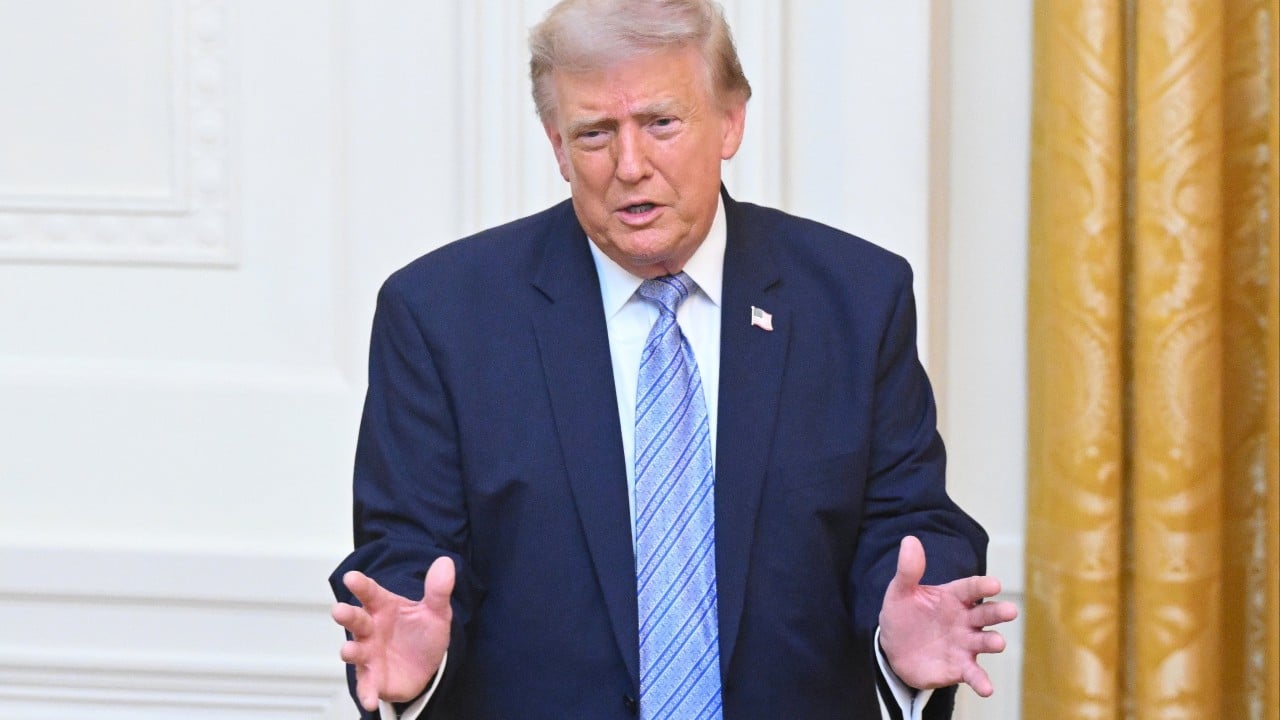
Donald Trump just took to prime-time television to throw another massive political bomb. In a nationally televised address, he claimed that the Chinese government pulled off the biggest election data heist in human history, stealing 220 million American voter records to rig the 2020 election for Joe Biden. To back it up, the White House dropped a freshly declassified batch of intelligence files.
If you just watch the headlines, you'll think our democratic systems were completely breached by foreign hackers. But if you actually sit down and read the declassified pages, a totally different story emerges.
The political rhetoric does not match the intelligence data.
We're looking at a classic case of threat inflation. Yes, Beijing is actively scraping American data. Yes, Chinese state actors are obsessed with tracking US political trends. But did they break into voting machines and manipulate ballots? The declassified files show zero evidence of that. Let's break down what's really happening inside these files and look at the massive gap between political grandstanding and operational reality.
Public data scraping is not an election hack
When people hear that a foreign adversary has over 200 million voter records, they picture dark-web hackers breaching encrypted government servers. That is not what happened here.
The vast majority of the records mentioned in the intelligence files are commercial. They are public. In the United States, voter registration data isn't a top-secret government asset. Most states legally sell their voter files to political campaigns, research institutions, and commercial data brokers. Anyone with a corporate checkbook can buy lists containing names, phone numbers, home addresses, and party affiliations.
The files reveal that an unidentified Chinese entity got its hands on a massive data set from 2016 containing roughly 204.8 million voter records. Sounds terrifying. But the intelligence report itself notes that this data set likely contains massive amounts of duplicate info, historical records, and aggregated entries. It doesn't mean 204 million unique voters were compromised. More importantly, the files openly admit they don't know who originally grabbed the data or how it was acquired.
Think about that for a second. The core evidence for a sweeping election hack is a stale, duplicate-ridden commercial database that might have been bought legally or pulled from an old, unrelated corporate leak. That isn't an act of cyber warfare. It's basic data collection.
The automated downloads of 2022
Let's look at another specific incident highlighted in the documents. In January 2022, a Chinese cyber actor flagged as a "computer network exploitation" threat downloaded voter registration files from public commercial sites.
The download covered six specific states.
- Colorado
- Connecticut
- Florida
- Michigan
- Oklahoma
- Rhode Island
The actor pulled history dating from 2013 to 2021. They also tried to download a voter registration application from an Ohio government website, but that attempt failed completely.
Notice the phrasing used by the analysts. They used the word downloaded, not hacked. The Chinese actor went to public-facing websites and saved files that anyone with an internet connection could access. If a foreign agent downloads a public PDF from a state government site, you can't call that a systemic breach of the electoral infrastructure. It's lazy intelligence work to conflate the two.
What China actually does with your data
Why does Beijing even want this stuff if it's mostly public? They aren't trying to change the ones and zeros in a voting machine. They are building influence profiles.
When you combine voter registration histories with leaked corporate data sets, you get a powerful targeting tool. Intelligence agencies use these massive data pools to map out American society. They can isolate government employees, identify military personnel, and pinpoint politically active citizens who might be vulnerable to targeted spear-phishing campaigns.
The documents outline that China has developed capabilities to shape public opinion by using overt and covert influencers. They use media contributors to push specific narratives about American domestic chaos. Two of the declassified intelligence summaries show that Chinese actors intentionally highlighted American soft spots. They pushed content focused on immigration friction, gun violence, racial tensions, and Washington's handling of the economy.
They want to make Americans lose faith in their own system. Every time a politician screams that the system is entirely rigged based on thin data, Beijing wins without firing a single shot.
Inside the intelligence community disagreement
One of the most fascinating parts of this declassified dump isn't the data on China. It's the chaos inside our own intelligence agencies. The documents expose an intense internal fight over how to label these Chinese activities.
The FBI actually recalled an internal report on this topic because analysts couldn't agree on whether China's actions constituted actual election influence. Some bureau personnel expressed deep worry that the report's alarmist tone directly contradicted public congressional testimony given by FBI Director Christopher Wray.
There was serious concern that political pressures were driving the timeline and the presentation of these intelligence findings. When the intelligence community is fighting internally about whether a threat is even real, you should immediately question anyone using those same files to make absolute statements on prime-time TV.
The files show that a CIA assessment from July 2020 did find that Chinese state-sponsored cyber actors targeted Joe Biden's campaign staff. They also looked at voter databases and polling companies. But looking is not the same as altering. The documents are heavily redacted, but the visible text makes it clear that the hard evidence backing up claims of active manipulation is practically nonexistent.
The real threat vs the political theater
We need to talk about the counterfeit ID distraction too. Part of the political narrative claimed that China was shipping fake driver's licenses into the US to allow illegal voters to register and cast fraudulent ballots.
The declassified files completely debunk this theory. An inquiry involving US Customs and Border Protection looked into the influx of intercepted fake licenses. The overwhelming majority of those IDs were ordered by American college kids aged 18 to 20 who just wanted to buy beer. They weren't part of a communist plot to hijack the electoral college. They were just teenagers trying to get into bars.
Derek Scissors, a senior fellow at the American Enterprise Institute, noted that targeting Trump specifically makes very little strategic sense for Beijing. Trump's historically isolationist approach to foreign policy and his skepticism of traditional US alliances often play right into China's long-term geopolitical goals. Why would Beijing run a highly risky, technically impossible operation to remove a US president whose foreign policy often benefits them? They wouldn't. It makes no sense.
How to protect yourself from foreign influence ops
Since China election interference is primarily a psychological game played with public data, the solution isn't just patching government servers. It requires a change in how we handle our personal information and consume political news.
Lock down your voter registration privacy where possible. Some states allow you to opt out of public commercial listing for your voter files, especially if you work in law enforcement, the military, or have safety concerns. Check your local secretary of state website to see if you can restrict access to your registration data.
Recognize the narrative traps. When you see hyper-partisan social media posts focusing heavily on American decline, racial division, or systemic collapse, don't blindly share them. Chinese influence networks don't create these divisions; they find existing American arguments and throw digital gasoline on them to keep us distracted and divided.
Stop confusing data collection with data weaponization. The declassified files prove our adversaries are watching us closely, but they also prove that our own leaders are more than willing to twist that reality for political gain. Keep your eyes on the actual data, read past the terrifying headlines, and protect your personal data footprints.