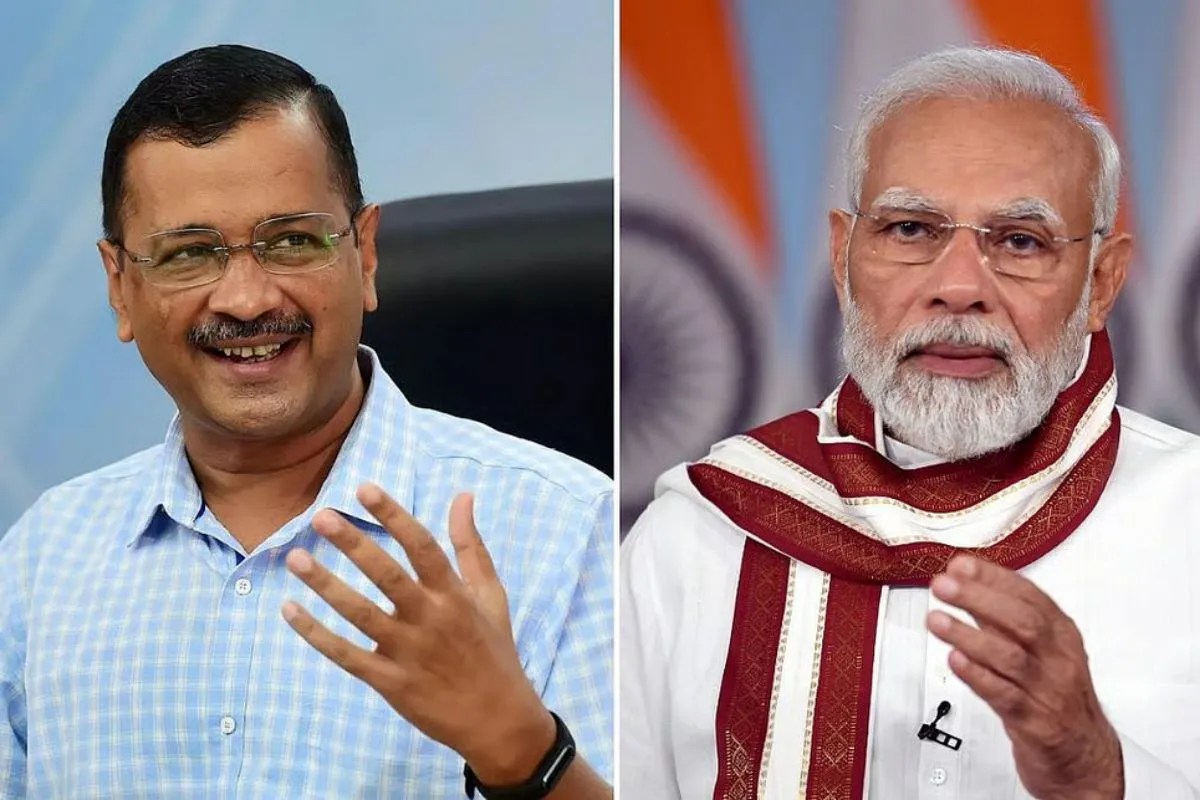
Political rhetoric in India moves fast, but the latest showdown between AAP chief Arvind Kejriwal and Prime Minister Narendra Modi has reached a boiling point that goes way beyond standard election banter. When news broke about the tragic deaths of three innocent Indian seafarers in the Gulf of Oman after a US military strike, it didn't take long for the opposition to jump on the government's response. Arvind Kejriwal didn't hold back. He slammed PM Modi for praising US President Donald Trump and offering congratulations while the country was mourning its citizens.
But if you think this is just another regular political spat, you're missing the bigger picture.
The Breaking Point in the Gulf of Oman
Let's look at what actually happened on the ground. A Palau-flagged oil tanker named Settebello, carrying a crew that included 24 Indian nationals, was struck by US military forces over an alleged blockade violation. Three Indian mariners lost their lives. It's a massive tragedy. The bodies of these seafarers returned home, leaving their families shattered and the country demanding answers.
Instead of an immediate, aggressive diplomatic confrontation, the initial response from New Delhi felt subdued to many. What made things worse politically was the timing. Around the same time, Donald Trump sent a congratulatory message to PM Modi, and the Prime Minister naturally replied with a public thank you.
That's exactly where Kejriwal found his opening.
He didn't just criticize the move; he went full throttle. Taking to social media platform X, Kejriwal called Donald Trump a "cowardly, cold-blooded murderer" and openly questioned why PM Modi remained silent. He asked why India was saying "thank you" when its own citizens were being killed. It's a heavy accusation, and it struck a chord with a public that's increasingly sensitive about how India protects its people abroad.
Beyond the Rhetoric: What Really Happened Behind Closed Doors
When External Affairs Minister S. Jaishankar reached out to US Secretary of State Marco Rubio to lodge a protest, the interaction didn't go as smoothly as people hoped. Reports emerged that the American response lacked any real remorse or sympathy. Opposition leaders like Congress's Manish Tewari pointed out that Rubio’s stance felt abrasive and confrontational, almost implying that the Indian sailors were responsible for their own fate.
This added heavy fuel to Kejriwal's fire.
He argued that nations like Russia or China would never let another country get away with killing their nationals without a massive uproar. By staying quiet or keeping diplomatic responses polite, Kejriwal claimed that the current leadership was compromising India's global standing and sovereignty.
Why This Debate Matters in 2026
The political opposition is using this moment to challenge the entire narrative of India as a "Vishwaguru" or world leader. For years, the ruling government has built its reputation on strong foreign policy and ensuring that Indians worldwide are respected and protected. By highlighting the silence over the seafarers' deaths, the opposition is trying to dismantle that exact image.
It's a clever strategic move, but it's also a high-stakes gamble. Foreign policy is incredibly complex. You can't just cut ties or launch verbal assaults against a major superpower like the US without looking at the long-term economic and strategic fallout. India and the US are currently in the final stages of a massive bilateral trade deal, and they're negotiating critical energy partnerships to protect global supply chains.
PM Modi eventually did raise the issue of seafarer safety directly during his address at the G7 summit in France, right next to global leaders, including Trump. He talked about the human and economic toll in the Strait of Hormuz and emphasized that protecting maritime trade and seafarers is a shared global responsibility.
But for critics like Kejriwal, general statements at a summit aren't enough. They want direct, blunt condemnation.
The Reality Shift in Indian Political Discourse
This entire clash shows that Indian foreign policy is no longer a bipartisan, quiet affair handled behind closed doors. It's now center stage in domestic politics. Every tweet, every handshake, and every silence is scrutinized by voters back home.
Whether Kejriwal's fierce words will force a permanent shift in how India handles diplomatic crises remains to be seen. What's certain is that the expectations of the Indian public have changed drastically. People want a government that projects power globally, but they also want to see that power used to protect the individual citizen working far away from home.
If you want to understand where Indian politics is heading next, keep your eyes on how the government handles these moments of international tension. The old ways of quiet diplomacy are being pushed to their limits by a hyper-connected, vocal opposition that knows exactly how to channel public anger.