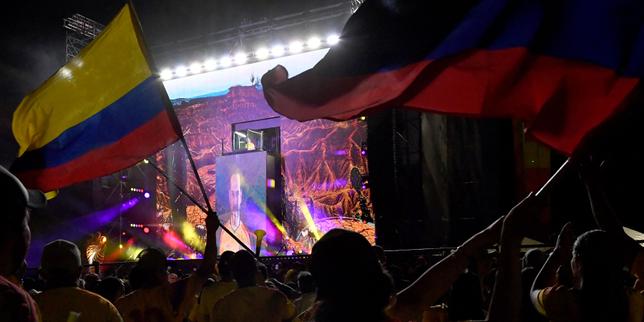
Colombia just underwent its most seismic political shift in decades, and the international press is missing the real story. Abelardo de la Espriella, the fiery right-wing populist lawyer nicknamed "The Tiger," has narrowly captured the presidency in a razor-thin runoff. He pulled off a stunning win against Iván Cepeda, the candidate backed by outgoing leftist President Gustavo Petro. While headlines scream about a sudden slide to the far right, they ignore the deep-seated frustration that made this moment inevitable.
The final tally shows de la Espriella at 49.66% and Cepeda at 48.70%. It is the closest margin in the history of the country's presidential elections. Turnout hit a record high because voters felt the very survival of their communities was on the line. Cepeda and Petro are already threatening legal challenges across 30,000 voting stations, but history shows no Colombian presidential recount has ever flipped a result. The reality is simple. The era of Petro's progressive experiment is over, and a radically different chapter has begun.
Beyond the right wing label
Mainstream analysts love simple boxes. They look at de la Espriella, see his endorsement from Donald Trump, his vow to restore broken ties with Israel, and immediately brand him as a carbon copy of external political movements. That is a lazy reading of Colombian reality. De la Espriella did not win because of a tightly orchestrated global populist wave. He won because he created an intense emotional identity with citizens who feel completely abandoned by the current government.
For four years, everyday people watched armed groups expand their territory. They watched street crime rise in major cities like Bogotá and Medellín. When de la Espriella promised a heavy hand, people listened. He ran under a brand-new movement called Defenders of the Homeland. He bypassed traditional political machinery entirely, using social media to project an image of absolute strength. He spoke directly to a population exhausted by empty talk.
The end of total peace negotiations
The biggest casualty of this election is Petro's flagship policy of negotiating disarmament with various guerrilla and criminal factions. Cepeda campaigned on continuing those talks, but voters clearly lost patience with the lack of results. The Tiger is bringing a completely different approach to the presidential palace.
His manifesto reads less like a traditional government plan and more like a direct declaration of war on crime. He plans to deploy the military directly into urban centers and conflict zones to confront drug traffickers head-on. He has committed to eliminating 330,000 hectares of coca farms using every tool at his disposal, including aerial spraying and aggressive manual eradication. To his supporters, this is necessary force. To his detractors, it is a recipe for renewed internal conflict.
Economic promises and the business reality
Corporate leaders in Bogotá spent the days leading up to the vote board-up windows and preparing for mass protests. Yet, the local business community is quietly breathing a sigh of relief regarding fiscal policy. De la Espriella, a millionaire who proudly flaunts his private jets and premium rum businesses, wants to anchor the national debt-to-GDP ratio at a strict 55%.
To achieve his vision, he is targeting annual economic growth of at least 3%, with an ultimate goal of pushing past 5%. He wants to inject fresh capital into creative projects and shift public education toward technology by providing free computers and setting up a virtual university system. Critics rightly point out that the details on how he will pay for these promises remain incredibly thin. He will also have to negotiate with traditional parties like the Conservadores and Cambio Radical in Congress, and they will certainly demand a steep price for their cooperation.
What happens next on the streets
The immediate future will be messy. Cepeda is refusing to concede quietly, and social networks are overflowing with allegations of voting irregularities, particularly along the Caribbean coast where de la Espriella managed to erode the left's historic dominance. Protests are practically guaranteed to hit the major cities this week.
The President-elect has already laid down a clear marker for his opponents. In his victory speech on Sunday night, he declared that he will govern for everyone but warned that there will be no third round played out on the streets. He directly told Petro to pack his bags and get ready to join the opposition. When he takes the oath of office on August 7, 2026, he will inherit a deeply fractured nation.
If you want to understand how deep the political divide runs, keep a close eye on the upcoming congressional alignments over the next month. Watch whether traditional centrist parties fall in line behind the new administration or join the left to block his military deployments. The true test of his strength will not be his rhetoric on social media, but his ability to pass laws without triggering an uncontrollable wave of civil unrest.