The British Royal Family knows exactly how to play the long game of soft power, but their latest move in Scotland is raising eyebrows for reasons that have very little to do with literature.
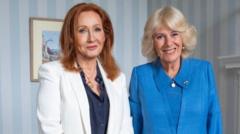
As King Charles III kicked off the traditional Holyrood Week in Edinburgh by participating in the ancient Ceremony of the Keys, Queen Camilla was busy inside the Palace of Holyroodhouse holding a private audience with Harry Potter creator J.K. Rowling.
Officially, the palace framed the meeting as a simple gathering of two influential women who share a deep, lifelong passion for children's literacy. They smiled, they stood side-by-side for the cameras, and they talked about how books can open doors for future generations.
But let's be real. In the current cultural climate, no meeting with J.K. Rowling is just about children's books. By granting Rowling a highly publicized royal audience, Queen Camilla didn't just promote reading. She handed one of the most polarizing figures in modern British culture a gold-plated stamp of institutional validation.
The Reading Room vs The Culture War
To understand why this meeting matters, you have to look at who Queen Camilla is when she is away from the flashbulbs. She is an obsessive reader. During the global lockdowns, she launched an Instagram book club that eventually grew into a fully registered charity called The Queen's Reading Room. This isn't a superficial vanity project. Her charity fundraises for phone box libraries in rural communities, partners with food banks to distribute thousands of books to people facing extreme poverty, and even funds neuroscientific research showing that just five minutes of reading fiction can cut stress levels by nearly 20%.
Rowling, meanwhile, is a literary titan who essentially taught an entire generation how to read. On paper, their pairing is a perfect match.
But Rowling is also a lightning rod. Her outspoken stance on biological sex and gender identity has made her a hero to the gender-critical movement and a villain to trans-rights activists. She has funded legal cases for women fighting to retain sex-based rights and publicly protested Scottish gender reform bills.
The BBC and other mainstream outlets covered the Holyroodhouse meeting as a standard piece of royal calendar fluff, briefly tacking on a paragraph at the end about Rowling’s "outspoken views." They missed the real story. The palace doesn't do accidents. Every audience is vetted, timed, and calculated.
A History of Royal Pushback Against Censorship
This isn't the first time Queen Camilla has quietly signaled where she stands on the modern cultural battleground. Back in February 2023, during a speech at Clarence House celebrating her literary charity, she blindsided the media by mounting a fierce defence of free speech.
At the time, publishers were actively airbrushing classic children's books by Roald Dahl, stripping out words like "fat" or "ugly" to make the texts more palatable to modern sensibilities. Camilla didn't mince words. She looked out at a room of 150 writers and told them to remain true to their calling, "unimpeded by those who may wish to curb the freedom of your expression or impose limits on your imagination."
She finished that thought with a punchy, unscripted remark.
"Enough said! But let there be no squeaking like mice about your achievements, but only roaring like a pride of lions."
When you view the J.K. Rowling meeting through the lens of that Clarence House speech, the palace's strategy becomes crystal clear. The royal family is using its platform to back traditional literary freedom, even when the author in question is toxic to a massive chunk of the public.
What the Palace Gets Right and What Critics Hate
Monarchy survives by staying above politics, but it thrives by aligning itself with deep-seated cultural values. By hosting Rowling in Edinburgh—the very city where the author wrote the early chapters of Harry Potter while surviving on welfare—the Queen tapped into a powerful narrative of Scottish creative achievement.
King Charles has historically entertained his grandchildren by sitting on the edge of their beds and doing all the dramatic, mimicked voices for Harry Potter characters. The family genuinely likes the work.
But the mistake critics make is thinking the palace didn't foresee the backlash. They did. They just weighed the options and decided that standing up for British literary royalty was worth the internet anger. It signals to a quiet majority that the crown won't abandon its cultural icons just because they become controversial on social media.
If you want to support grassroots literacy the way the Queen's charity does, you can't just look at the high-profile palace photos. The real work happens quietly. Take a page out of the royal playbook by looking into local literacy initiatives or supporting independent bookbanks that put actual physical paperbacks into the hands of kids who need them most.