Political dynasties are notoriously hard to pull off in Australia. Just ask the major parties. But Pauline Hanson thinks she has found the key to keeping her populist brand alive, and it involves keeping things strictly in the family.
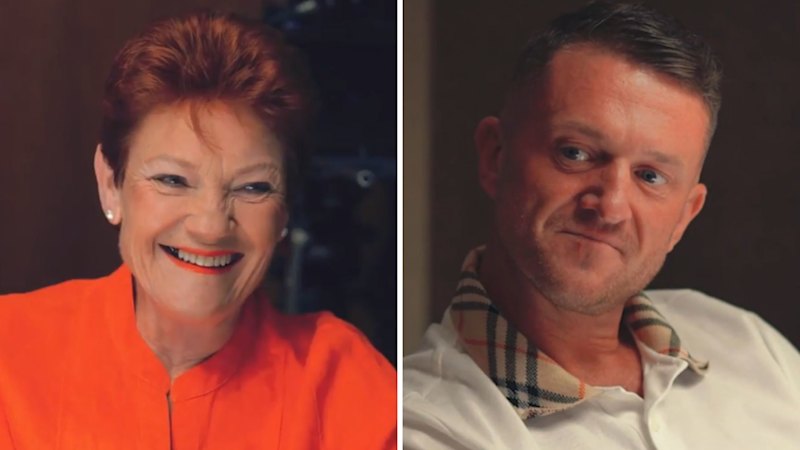
During a sit-down interview with British far-right activist Tommy Robinson, the 72-year-old One Nation founder formally anointed her daughter, Lee Hanson, as the party's next big hope. It is a move that has set off alarm bells among political purists, but anyone paying attention to the party's internal shifting of gears saw this coming from a mile away.
What Hanson calls "the future," others see as a desperate bid to protect a political franchise that cannot survive without the Hanson name on the ballot. Here is why this family handoff is much more complicated than a simple mother-daughter transition.
The Softer Approach to Right-Wing Populism
Let's look at what Pauline Hanson actually said about her daughter. She called Lee a "cluey kid" who is highly respected and possessor of a "softer approach" to politics.
That last part is critical. For nearly three decades, Pauline Hanson has been a political lightning rod. She built her brand on sharp-edged, divisive rhetoric, starting with her infamous 1996 maiden speech. It was loud, abrasive, and highly polarizing.
But One Nation is trying to evolve. The party knows it needs to capture suburban and regional voters who might agree with its policies on immigration and local manufacturing but are turned off by Pauline's vintage, aggressive delivery.
How the Two Hansons Compare:
- Pauline: Loud, combative, highly polarizing, Brisbane-born.
- Lee: "Softer approach", national executive manager, Tasmania-based.
By pitching Lee as a calmer, more tactical version of her mother, One Nation is attempting a massive rebrand. The ideas stay the same—strict immigration curbs, economic nationalism, and pushing back against what they label "globalist agendas"—but the packaging gets a polished, professional upgrade.
The Hypocrisy of the Nepotism Defense
During her chat with Robinson, Hanson was quick to insist that she does not "believe in nepotism" and that Lee still has to "prove herself" before taking the top job.
It is a tough argument to buy.
Lee Hanson is already deeply embedded in the taxpayer-funded political machine. In late 2025, she was appointed as a senior adviser to One Nation’s New South Wales Senator, Sean Bell, in a role carrying a salary of up to $180,000.
The setup raised eyebrows across the political landscape for a couple of reasons:
- The Geography: Lee Hanson lives and campaigns in Tasmania. Yet, her taxpayer-funded job is to advise a senator representing New South Wales.
- The Loophole: Federal politicians cannot hire their own immediate family members under the Members of Parliament (Staff) Act. But they can hire the family members of other MPs.
When journalists asked Hanson about this obvious workaround at the National Press Club, she went on the attack, accusing her critics of being obsessed with her family. It is classic Pauline. Deflect, counter-attack, and play the victim. But no matter how she spins it, a $180,000 taxpayer-funded salary for her daughter looks exactly like the kind of political insider behavior One Nation usually rails against.
The Looming Clash with Party Heavyweights
Passing the torch to Lee is not going to be a smooth ride, mostly because One Nation is no longer just a one-woman band.
In 2025, former Deputy Prime Minister Barnaby Joyce defected from the Nationals to join One Nation, immediately giving the party a massive profile boost in regional New South Wales. Joyce is a political heavyweight with immense name recognition, a proven media presence, and a deep understanding of parliamentary tactics.
If Pauline Hanson steps down, does she honestly expect a seasoned political operator like Joyce to take orders from her daughter, who has never held public office?
And then there is Senator Sean Bell, the very man employing Lee. Bell is a key player in the party's future, alongside the always-vocal Senator Malcolm Roberts. By signaling that the leadership is essentially a hereditary title, Hanson risks alienating the ambitious men who actually keep her parliamentary wheels turning.
Can the Brand Survive Without Pauline?
This is the ultimate question for One Nation.
Historically, personality-driven populist parties in Australia have a terrible track record of surviving their founders. When the leader goes, the party usually collapses into infighting and irrelevance.
Pauline Hanson is One Nation. Her face is on the logo, her name is literally in the registered party name, and her personal struggles—including her overturning of a brief prison sentence in 2003—are baked into the party’s folklore.
Lee Hanson might have the right pedigree, but she lacks her mother's battle-tested scar tissue. Surviving a decades-long media storm is not something you can inherit. Without Pauline’s raw charisma and ability to command a news cycle, a "softer" One Nation run by her daughter risks becoming just another minor party sliding slowly into political history.
If you want to track where this goes next, keep an eye on Tasmania. Lee Hanson is building a base there to run for a Senate seat. If she cannot win a seat on her own merits in the next federal election, this grand succession plan will be over before it even starts.