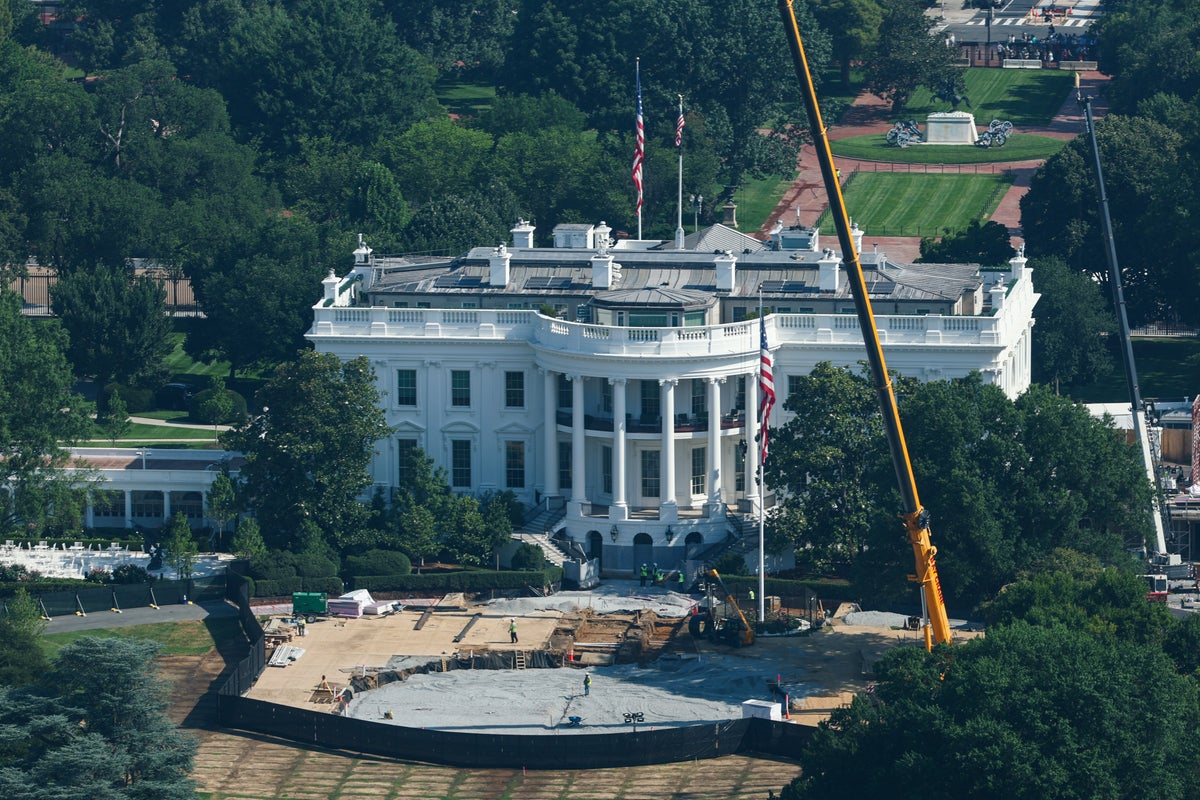
The symbolic image of Marine One lifting off directly from the lush green grass of the White House South Lawn is officially coming to an end. It's a visual tradition that has defined presidential departures for nearly seven decades, but reality has finally caught up with nostalgia.
President Donald Trump recently confirmed that construction crews have already broken ground on a permanent, multimillion-dollar granite helipad positioned right near the South Portico. While critics are quick to label it as just another flashy, aesthetic vanity project, the true backstory involves a massive engineering oversight, multi-million dollar defense contract blunders, and a scorched-earth problem that the Pentagon spent years trying to hide.
The Lawn Scorch Problem the Military Couldn't Fix
If you're wondering why the White House suddenly needs a slab of rock in the middle of its most historic lawn, the answer comes down to pure physics. The military recently rolled out its next-generation presidential helicopter fleet: the Sikorsky VH-92A Patriot. On paper, it's an incredible machine with upgraded speed, range, and defensive capabilities. In practice, it has a glaring, embarrassing design flaw.
The exhaust vents on the VH-92A are positioned toward the back of the aircraft, directing intense, high-velocity heat straight downward. Every time the heavy helicopter tries to land on the South Lawn, it doesn't just discolor the grass. It literally scorches the turf, ripping the sod out by its roots.
For decades, Marines manually carried out a temporary metal sheet for older helicopters like the VH-3D Sea King to land on. But pilots sometimes miss that small mark, and the massive downward propulsion of the new fleet makes the metal sheet method completely useless. The grass gets utterly destroyed. Because of this, the $215 million Patriot helicopters have faced severely limited service at the executive mansion, forcing the administration to keep relying on aging, 45-year-old Vietnam-era choppers just for White House arrivals and departures.
Who is Footing the Multi-Million Dollar Bill
Whenever a massive construction project begins on federal property, the immediate question is always about taxpayer money. Trump noted that the helipad will cost between $5 million and $6 million, but claims that the public won't be paying the base price. Instead, defense contracting giant Lockheed Martin, via its subsidiary Sikorsky Aircraft, is covering the full cost.
According to Trump, the manufacturer stepped up because they felt guilty about failing to warn the government just how incredibly destructive the engine downwash would be to the historic grounds. Lockheed Martin later confirmed they made this specific financial contribution directly to the Trust for the National Mall and the National Park Service to keep the project compliant with federal ethical and procurement regulations.
However, the financial narrative isn't without controversy. Internal government documents reveal that the administration recently ordered a massive acceleration of the construction timeline to ensure the helipad is completely finished by late September. This sudden rush—allegedly aimed at finishing the project before a high-profile state visit from Chinese President Xi Jinping—has reportedly tacked on an additional $875,000 in expedited labor and logistics fees, drawing heavy criticism from congressional lawmakers who argue that taxpayer funds shouldn't be used to speed up a private landing zone.
Carved Granite Over Plain Concrete
True to his background in luxury real estate development, Trump rejected the military's initial proposals for a basic, utilitarian setup. When the Air Force and a group of generals agreed that a permanent landing pad was the only way to save the lawn, the initial suggestion was to pour basic concrete and slap on a coat of white paint.
Instead, the final design calls for a highly durable, polished slab of carved granite featuring the official White House seal embedded directly into the stone. Granite boasts a compressive strength of roughly 35,000 pounds per square inch, giving the pad a lifetime rating of well over a million years. Beyond the extreme structural durability required to handle a 20,000-pound military aircraft, the administration plans to utilize the heavy stone pavilion as a multi-use space for outdoor press conferences and formal events.
What to Do Next
If you want to track the actual development and political fallout of this historic White House structural shift, here are the best steps to take:
- Monitor the National Park Service regular updates to see the final compliance and environmental impact filings regarding the South Lawn alterations.
- Keep an eye on the House Oversight Committee announcements to see if formal inquiries are launched regarding the $875,000 expedited construction fees.
- Watch the upcoming diplomatic state visits in late September to see if the granite pad makes its official operational debut on global television.
The days of presidents walking across a pristine, uninterrupted green lawn to board their chopper are officially over, replaced by a permanent monument to modern defense engineering realities.