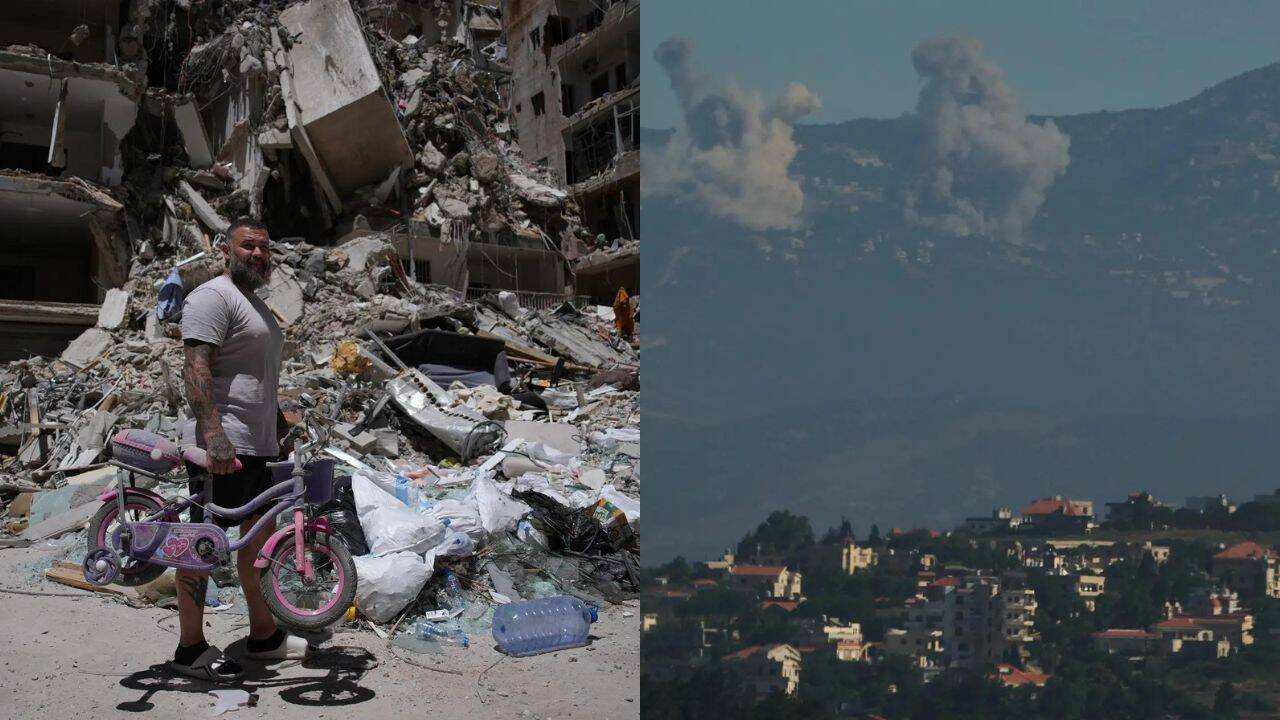
The ink wasn't even dry on the framework agreement between Washington and Tehran before the bombs started falling again in southern Lebanon.
If you thought the breakthrough memorandum of understanding announced days ago meant an immediate end to the regional war, the last 48 hours have been a brutal reality check. Intense fighting between the Israeli military and Hezbollah killed dozens of people in Lebanon and four Israeli soldiers. The flare-up completely derailed the opening of high-stakes direct talks in Switzerland. Iranian negotiators refused to board their planes, US Vice President JD Vance postponed his trip, and mediators from Qatar and Washington had to spend Friday scrambling just to patch up a broken truce. Recently making headlines recently: Why The Iran Ceasefire Just Crumbled Before The Swiss Talks Even Started.
They managed to secure a renewed ceasefire. But let's be honest, it feels like putting a band-aid on a tectonic fault line. The structural flaws in this peace process aren't accidental; they're baked right into how the deal was made.
The Crucial Flaw in Trump's Grand Strategy
The biggest misconception about the current peace plan is that it's a comprehensive regional settlement. It isn't. The framework negotiated by the Trump administration is fundamentally a bilateral deal between the United States and Iran. It successfully halted direct hostilities in the Persian Gulf, calmed global energy markets, and reopened the blockaded Strait of Hormuz. Further insights on this are covered by Reuters.
But there is a massive, gaping hole in the strategy. Israel wasn't a party to the negotiations.
When Pakistani Prime Minister Shehbaz Sharif and US officials announced the initial deal, they declared a permanent termination of military operations on all fronts, explicitly including Lebanon. The problem? Nobody got Benjamin Netanyahu to sign on the dotted line.
Iran insists that a total Israeli withdrawal from Lebanon is a non-negotiable condition of the broader peace. Meanwhile, Netanyahu's government has formally declared a "security zone" encompassing hundreds of square miles of southern Lebanese territory. The Israeli stance is clear: troops aren't leaving until the threat from Hezbollah is entirely eliminated. Far-right National Security Minister Itamar Ben-Gvir openly slammed the diplomatic pressure, stating that "Trump's agreement does not bind us" and that the security of Israeli citizens isn't up for bargaining.
You can't broker a permanent ceasefire when the two primary combatants on the ground don't agree on who is allowed to stand where.
What Actually Happened on the Ground This Week
The narrative coming out of official military briefings often sanitizes what is a chaotic, fluid mess on the front lines. The latest collapse of the truce started near the strategic Ali al-Taher hilltop, high ground that overlooks the southern city of Nabatiyeh.
Hezbollah claimed Israeli forces tried to push past the agreed lines to secure the hilltop. In response, Hezbollah targeted an Israeli tank with anti-armor fire and launched explosive drones, killing four soldiers, including a lieutenant colonel.
The retaliation from the Israeli Air Force was swift and devastating. Wave after wave of airstrikes slammed into residential areas across Nabatiyeh, the Bekaa Valley, and the coastal city of Tyre. Lebanon's Health Ministry reported at least 21 people killed in those overnight strikes, with state media later confirming additional casualties—including a family of four in the village of Barish and five people in Arabsalim.
Recent Conflict Escalation Timeline (June 2026)

[June 14] -> Pakistani PM announces landmark US-Iran framework deal; claims it includes Lebanon.
[June 17] -> Outbreak of initial violations; Israeli jets strike Nabatiyeh; Iran warns against presence.
[June 19] -> Hezbollah hits Israeli tank (4 soldiers dead); Israel launches 150 retaliatory airstrikes (21+ dead).
             US-Iran Switzerland peace talks officially suspended.
[June 19 Night] -> Emergency mediation by US, Qatar, and Iran secures a fragile, renewed ceasefire.
For the civilian population in southern Lebanon, the diplomatic back-and-forth matters far less than the immediate reality of survival. Local residents describe a state of total lawlessness on the roads as families pack into pickup trucks to flee villages that were supposed to be protected by an international agreement.
The High Stakes for Both Washington and Tehran
Neither the US nor Iran wants this deal to die. The initial blockade of the Strait of Hormuz caused global economic chaos and sent domestic energy prices skyrocketing—a political nightmare for the current US administration. For Tehran, the interim deal offers vital sanctions relief and a way back from the brink of a devastating direct war with a superpower.
Iran's chief negotiator, Mohammad Bagher Ghalibaf, has tried to project strength, warning of a "decisive response" to any breach of the framework. But behind the rhetoric, Iranian officials are walking a tightrope. They need to protect Hezbollah, their most vital regional proxy, without letting local clashes in the hills of Nabatiyeh destroy the broader diplomatic prize they just negotiated with Washington.
By pulling out of the Switzerland talks until the fighting stops, Tehran sent a clear signal: they will not decouple the Lebanon front from the main US-Iran peace track.
Why a Real Peace Remains Unlikely Anytime Soon
Watch what the leaders do, not what they say. While diplomats talk about a permanent settlement, the underlying political drivers point toward continued friction.
Netanyahu faces critical domestic elections in the coming months. He is under intense pressure from political rivals and far-right coalition partners who view any concession to an American-brokered deal with Iran as a strategic surrender. For the Israeli leadership, maintaining a forward defense zone in southern Lebanon isn't just a military preference; it's a domestic political necessity.
On the other side, Hezbollah cannot accept a permanent Israeli occupation of southern Lebanese villages without losing its core legitimacy as a resistance movement.
The international community can broker all the temporary truces it wants, but until someone bridges the gap between Israel’s security demands and Lebanon’s territorial sovereignty, these brief moments of quiet will remain exception, not the rule. Expect more emergency mediation, more fragile ceasefires, and unfortunately, more sudden outbreaks of violence in the weeks ahead.
Israel and Hezbollah renew ceasefire after deadly flareup
This video provides an on-the-ground report from France 24 regarding the intense 24-hour escalation in Lebanon and the domestic political reactions within Israel that threaten the broader peace process.