Diplomats love signing ceremonies, but the piece of paper just finalized in Washington might not survive the weekend. On Friday, June 26, 2026, U.S. Secretary of State Marco Rubio stood alongside Israeli Ambassador Yechiel Leiter and Lebanese Ambassador Nada Hamadeh Moawad to announce a trilateral framework agreement. It is being pitched as the first major step toward ending months of brutal warfare in West Asia.
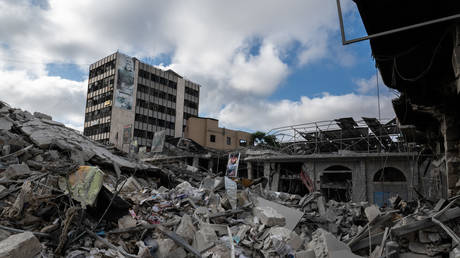
Don't buy the premature celebration. While the State Department spins this as a historic breakthrough, the reality on the ground is a chaotic mess. At the exact same time these diplomats were smiling for the cameras, the U.S. military was dropping bombs on Iranian missile storage sites, Iran was retaliating against U.S. Gulf positions, and Hezbollah was openly threatening a civil war in Beirut.
If you want to understand what is actually happening behind the headlines, you have to look at the glaring flaws in this agreement and the fresh violence threatening to rip it apart.
What the Trilateral Framework Actually Says
The document released by the State Department outlines a multi-step plan to formally end the state of war between Israel and Lebanon.
The core of the deal relies on a pilot program. The Lebanese Armed Forces (LAF) are supposed to take full, exclusive security control over two specific pilot zones. One zone sits south of Lebanon's Litani River, and the other lies just north of it. Once the LAF secures these areas, international reconstruction funds will flow in, and displaced civilians can finally return home.
As the Lebanese army asserts control, the Israel Defense Forces (IDF) are supposed to progressively pull back out of Lebanese territory. To sweeten the deal, Washington is putting up $100 million in humanitarian aid and throwing $30 million to the LAF to help beef up its operational capacity.
The Fatal Flaw in the Peace Plan
The biggest problem with this deal is who didn't sign it. Hezbollah was completely excluded from the talks.
You can't negotiate a sustainable peace while ignoring the heavily armed group that actually controls southern Lebanon. Right after the signing ceremony, Israeli Prime Minister Benjamin Netanyahu released a video making it clear that the IDF will not leave an inch of Lebanese soil until Hezbollah is verified to be completely disarmed.
Good luck with that. Hezbollah chief Naim Qassem fired back immediately, stating that Israel must withdraw unconditionally from every single inch of Lebanese land. Worse, Hezbollah officials inside Beirut are already warning that any attempt by the official Lebanese government to forcibly disarm them will trigger a bloody civil war.
The LAF is weak. Expecting a cash-strapped, fragile state military to successfully disarm a massive, battle-hardened militia just because Washington signed a framework pact is dangerously naive.
The Broader War is Intensely Bleeding In
The Israel-Lebanon deal doesn't exist in a vacuum. It is deeply tied to the larger war involving the U.S. and Iran, and that front is currently exploding.
Just a week ago, Washington and Tehran reached a fragile interim understanding to pause their months-long conflict and reopen the blocked Strait of Hormuz. That ceasefire lasted all of a few days.
- The Provocation: A cargo ship transiting the United Nations-backed alternate shipping route near Oman was struck by a drone projectile.
- The U.S. Response: President Donald Trump called the attack a foolish violation of the truce. On Friday, U.S. Central Command launched heavy airstrikes against Iranian drone depots and coastal radar positions.
- The Retaliation: By Saturday morning, Iran’s Revolutionary Guards struck back, targeting U.S. military bases in the Gulf region.
This immediate escalation has completely halted the United Nations maritime evacuation of stranded merchant ships. The International Maritime Organization explicitly stated they won't resume operations until they get ironclad guarantees that civilian crews won't be blown out of the water.
How to Track What Happens Next
This situation is moving fast, and the next 48 hours will determine if the region slides back into total war. If you want to keep an accurate watch on where this crisis goes, focus on these three specific indicators instead of vague political statements.
Watch the Troop Movements in the Pilot Zones
Keep an eye on whether the Lebanese Armed Forces actually deploy south of the Litani River. If Hezbollah blocks their deployment, or if the IDF refuses to yield checkpoints to the LAF, the framework agreement is effectively dead.
Monitor Shipping Data in the Gulf of Oman
The real health of the U.S.-Iran ceasefire shows up in maritime transit numbers. Watch whether commercial shipping firms continue to reverse course and avoid the Strait of Hormuz, or if the UN can successfully restart its ship evacuation initiative.
Listen to the Rhetoric Out of Beirut
Pay close attention to internal political friction inside Lebanon. If the Lebanese government tries to enforce the U.S.-backed disarmament mandate, look for immediate signs of civil unrest or domestic military clashes within the capital.