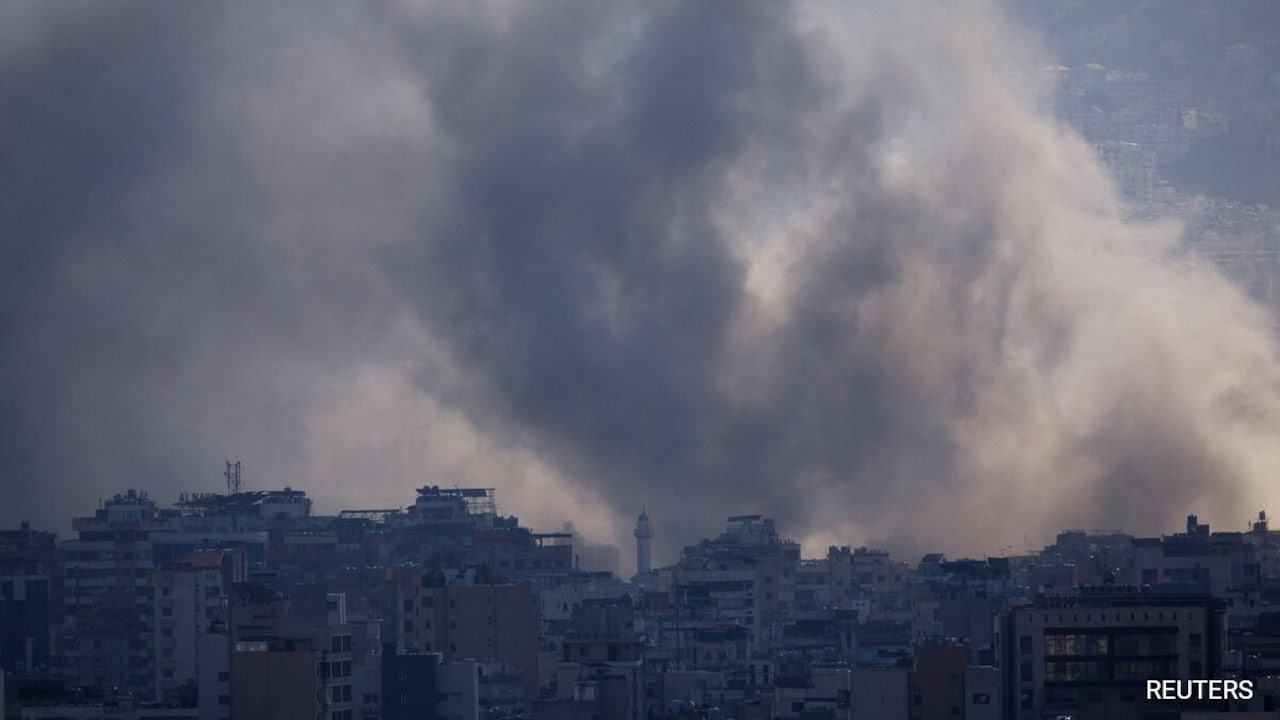
The ink on the United States and Iran memorandum of understanding wasn't even dry before southern Lebanon went up in flames. On Friday, regional officials and Washington insiders confirmed that Israel and Hezbollah agreed to a sudden ceasefire starting at 4 p.m. local time. It looks like a win for diplomacy on paper. In reality, it's a frantic damage control operation to save a broader Washington-Tehran peace process that almost shattered before it could begin.
Don't let the official announcements fool you. This isn't a long-planned, carefully structured treaty. It's an emergency brake pulled after a ferocious 24-hour cycle of violence that left dozens dead, grounded diplomatic flights, and exposed the massive flaws of trying to build peace over the heads of the people actually pulling the triggers.
The Friday Flare Up That Almost Broke the Peace
The scale of the fighting right before the 4 p.m. deadline tells you everything you need to know about the level of trust between these two sides. There isn't any.
The Israeli military launched a massive wave of strikes hitting more than 150 targets across southern Lebanon and the Bekaa Valley. Lebanon's Health Ministry reported that the overnight and Friday morning bombardments killed at least 47 people and left nearly a hundred wounded. Entire residential structures were flattened. The Israeli defense establishment claimed it was hitting command centers and launch positions to neutralize threats before any freeze took effect.
Hezbollah didn't sit back. Their fighters targeted Israeli units operating near the Ali al-Tahir area. The militant group claimed to have destroyed three Merkava tanks and inflicted heavy casualties. The Israel Defense Forces confirmed that four of their soldiers were killed in action, including a lieutenant colonel, with five others wounded by an explosive drone strike.
This wasn't clean-up operations. It was a full-scale war compacted into a few bloody hours.
Why Washington and Tehran Forced the Hand of the Combatants
The real pressure to halt the Friday slaughter didn't come from Beirut or Jerusalem. It came from Washington, Doha, and Tehran.
Earlier in the week, the Trump administration and Iranian leadership signed a highly anticipated memorandum of understanding. The document was supposed to signal a massive de-escalation of the wider regional conflict. Technical talks between American and Iranian officials were scheduled to start in Switzerland on Friday to hammer out the details.
Then the bombs started falling in Lebanon.
The immediate fallout was swift. The Iranian delegation abruptly postponed its travel to Switzerland. Iranian officials reportedly told Hezbollah that negotiations with the U.S. could not move forward while Israel flattened southern Lebanon. The Swiss authorities had to formally cancel the Friday sessions.
The entire grand diplomatic strategy of the U.S. was on the verge of collapsing within 48 hours of its announcement. Vice President JD Vance had to cancel a scheduled European trip and went on the record during a White House briefing to publicly push the Israelis back to the table. Vance made it clear that Israeli leadership had to respect the diplomatic process.
Qatar, acting alongside Washington and Tehran, worked the phones frantically through the night to assemble the 4 p.m. truce. The underlying message to both sides was simple: stop shooting because you are ruining a much bigger deal.
The Fatal Flaw of the Security Zone
The terms of this ceasefire are incredibly murky, but one detail stands out as a guaranteed trigger for future conflict. Prime Minister Benjamin Netanyahu and Defense Minister Israel Katz made it undeniably clear that Israeli troops aren't going anywhere.
Israel intends to maintain its occupation of a security zone in southern Lebanon stretching from the Mediterranean coast all the way to the Beaufort area. Netanyahu stated explicitly that forces will remain in this zone for as long as necessary.
Think about what that actually means on the ground. You have thousands of Israeli troops occupying sovereign Lebanese territory. You have Hezbollah fighters who view the total expulsion of Israeli forces as their primary reason for existing. You are asking these two groups to stand yards away from each other, heavily armed, and just look at each other without firing a shot.
An Israeli official stated that the ceasefire holds as long as Hezbollah doesn't attack. If they do, the official warned, it's war time again. Meanwhile, Hezbollah released statements pointing out that Israel has consistently violated previous understandings for nearly two years by attempting to infiltrate and control border villages.
This isn't a peace agreement. It's a temporary pause where both sides are keeping their fingers on the triggers while occupying the exact same space.
What Happens on the Ground Right Now
If you want to know whether this arrangement has a chance of lasting through the weekend, you have to look past the political statements and look at the immediate logistics.
First, the Lebanese government needs to show some form of presence. President Joseph Aoun condemned the latest Israeli escalation but his administration has historically lacked the military muscle to control Hezbollah or protect its own southern borders. For any deal to transition from a temporary halt to a lasting framework, the formal Lebanese army has to step into the vacuum.
Second, the U.S. and Iran have to salvage their technical talks. The Swiss negotiation tracks need to be rescheduled immediately to show that the diplomatic framework is real. If the broader Washington-Tehran dialogue stalls, the incentive for either Israel or Hezbollah to maintain restraint vanishes.
Third, the local commanders on both sides need to establish clear lines of communication through UN peacekeepers. Without a mechanism to handle minor misunderstandings, a single stray mortar or a nervous sentry firing a rifle could re-ignite the entire front. Journalists traveling through southern Lebanon right after 4 p.m. reported that while the heavy bombardments slowed, artillery fire and minor skirmishes didn't stop completely. The Israeli military openly states it retains operational freedom to hit back whenever it perceives a threat.
Watch the border towns of Khiam and Nabatieh over the next 48 hours. If the displaced civilians trying to return to their homes are met with gunfire, the ceasefire will disintegrate before Monday.
The strategic reality is brutal. This truce was manufactured to save a political timeline in Washington and Tehran. It was not built on a fundamental resolution of the issues dividing Israel and Lebanon. Enjoy the silence while it lasts, because the foundation beneath it is entirely hollow.
This analytical broadcast on the peace agreements offers an essential deep dive into the historical skepticism and regional dynamics underlying the modern truce efforts between the two factions.

,webp/024/987/765/v2/2560x1440.209.webp)