Earth's atmosphere is currently swats satellites out of the sky faster than usual, and NASA is forced to try something crazy.
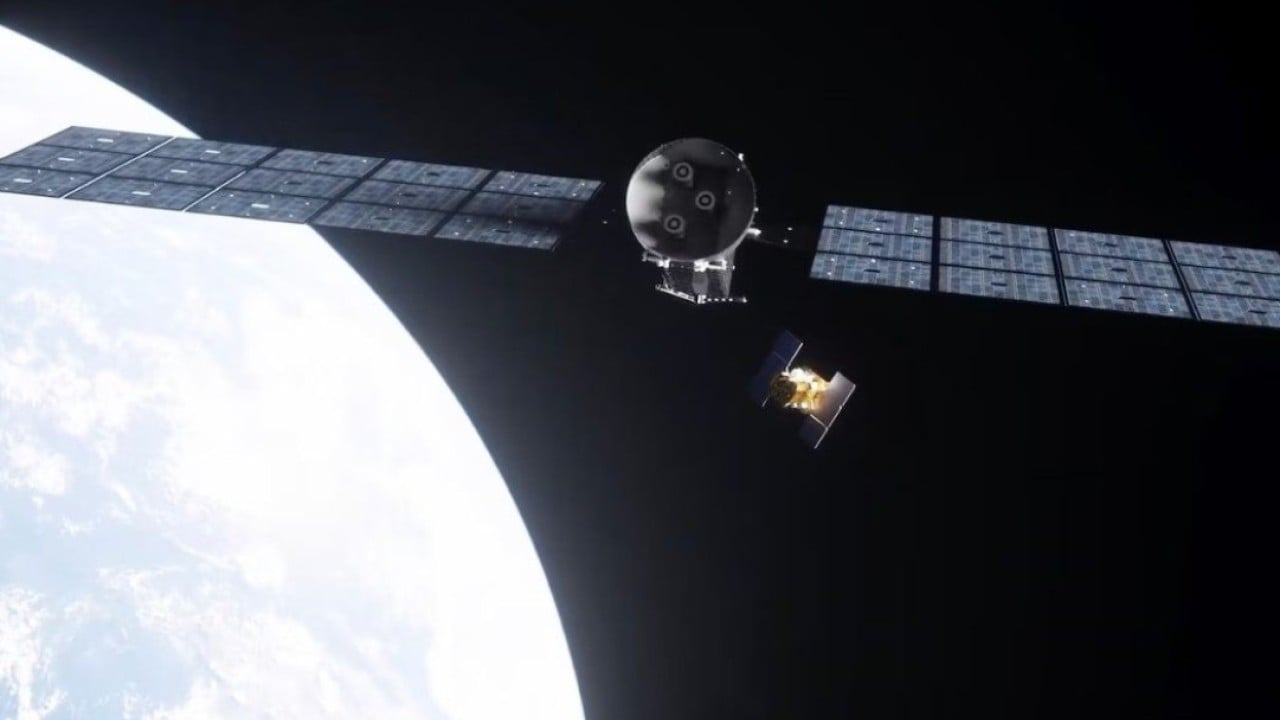
On Friday, July 3, 2026, a modified jet dropped a rocket over the Pacific Ocean, sending an experimental space tug named LINK on a high-stakes rescue mission. The target? The Neil Gehrels Swift Observatory, a twenty-two-year-old space telescope that's literally falling toward its doom. You might also find this related story insightful: Why The New Bytedance Scaling Law Might Just Save The Ai Boom.
If this $30 million rescue succeeds, NASA extends the life of a legendary $250 million cosmic explorer by a decade. If it fails, Swift burns up in the atmosphere by the end of the year, and the US loses its premier first responder for deep-space explosions.
But this isn't just about saving one telescope. It's the moment space flight transitions from an era of disposable hardware to on-orbit roadside assistance. As extensively documented in recent articles by Ars Technica, the results are significant.
The Sun is Swallowing Our Satellites
We're currently living through a period of intense solar activity. While solar storms give us beautiful auroras, they also wreak havoc on low Earth orbit. The sun's tantrums heat up the upper atmosphere, causing it to swell like a balloon.
More atmosphere at higher altitudes means more friction.
For aging satellites without propulsion systems, this extra drag is a death sentence. Swift was launched back in 2004 for a two-year mission. It lasted over two decades because it's a masterpiece of engineering, but it lacks onboard thrusters. It can't fight back against the drag.
NASA realized the telescope was plummeting much faster than anyone predicted. The agency actually shut down Swift’s science instruments back in February just to buy time. Swift needs to stay above 185 miles (300 kilometers) for a rescue to even be possible. The clock is ticking, and we are dangerously close to that threshold.
A High-Risk Blind Date in Orbit
NASA doesn't have the budget to build a replacement for Swift right now. So, in a rapid-fire move last September, they threw $30 million at a startup called Katalyst Space Technologies. The mandate was simple yet terrifying: design, build, and launch a robotic savior in less than a year.
The resulting spacecraft, LINK, is essentially a refrigerator-sized space tug.
Now that LINK is in orbit, the real anxiety begins. This isn't like the old Space Shuttle missions where astronauts could nudge things into place. This is entirely robotic, and the tech is flying blind in more ways than one.
Here is the kicker: engineers don't actually know what the back of the Swift telescope looks like.
Nobody took highly detailed, 3D scans of the docking interface before launching it in 2004 because it was never meant to be caught. LINK has to use three robotic arms to grab onto a generic launch-retaining flange. It’s an improvised handshake in the vacuum of space. NASA astrophysicists are openly calling the odds of success a 50-50 coin toss.
Once LINK catches Swift, it won't just blast it backward into a higher orbit. It uses low-power, high-efficiency electric ion thrusters. The process of gently pushing the telescope roughly 186 miles higher will take up to two months of continuous, agonizingly slow pushing.
The Playbook is Changing Forever
If you look at the history of space tech, everything is built to be thrown away. When a satellite runs out of gas or drops too low, we let it turn into shooting stars. Only China has pulled off a similar robotic relocation when it shoved a dead satellite into a graveyard orbit a few years back. This is America's first real shot at orbital mechanics maintenance.
If Katalyst pulls this off, the implications are massive.
A success here completely validates the market for on-orbit servicing. We aren't just talking about pushing old telescopes. We're talking about refueling spy satellites, repairing broken antennas, and upgrading older tech without launching an entirely new platform.
The next target is already obvious. The iconic Hubble Space Telescope is also sinking due to the exact same solar activity. Hubble hasn't been serviced since the retirement of the Space Shuttle program. If LINK saves Swift this summer, a beefed-up version of this robot could be sent to rescue Hubble by 2028.
What Happens Next
The immediate focus is the rendezvous. Over the next few weeks, ground controllers will run health checks on LINK before it begins its slow approach to Swift.
Watch the mission tracking updates over the next month. The critical moment occurs when those three robotic arms attempt to lock onto a twenty-two-year-old piece of metal. If the lock holds, the ion engines fire, and space exploration officially enters its repair-and-reuse era. If it misses, we watch a billion-dollar piece of scientific history burn.