Don't believe the sporadic rumors about an imminent ceasefire in Eastern Europe. The reality on the ground is far colder. Despite occasional backchannel whispers or diplomatic posturing by neutral parties, Russia and Ukraine remain entirely locked in a war of attrition with zero shared ground for a diplomatic exit.
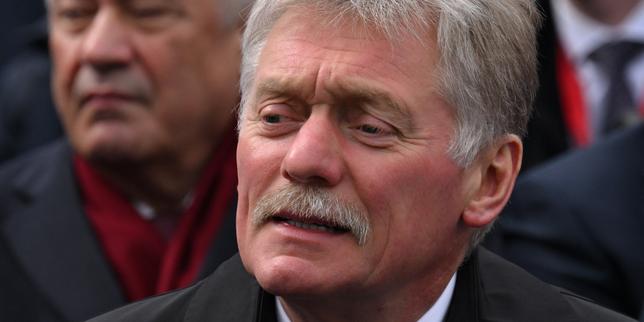
Kremlin spokesperson Dmitry Peskov made this explicitly clear during his address at the Primakov Readings forum in Moscow. He flatly stated that no agreements have been reached regarding a new round of peace talks. While international mediators try to spark a dialogue, the two warring nations are operating on completely incompatible survival strategies. Moscow treats its territorial conquests as non-negotiable legal realities, while Kyiv refuses to negotiate unless Russian forces pull back to recognized borders.
The gap isn't just wide. It's an unbridgeable chasm.
The Illusion of Backchannel Progress
Every few weeks, a new headline suggests a breakthrough is near. Recently, reports surfaced that European Council President Antonio Costa established quiet contacts with Kremlin representatives to see if Vladimir Putin could be brought to a negotiating table. Similarly, communications involving American representatives like Steve Witkoff and Jared Kushner continue behind closed doors.
Peskov acknowledged these American contacts but downplayed their immediate significance. He noted that the current U.S. administration is heavily focused on other internal and external priorities. The Kremlin expects further work to happen eventually, but right now, nobody is holding their breath.
The diplomatic noise doesn't match the strategic reality. Earlier this summer, Ukrainian President Volodymyr Zelenskyy published an open letter to Putin. He proposed a direct, face-to-face meeting to resolve the war in a format between the two leaders, even suggesting a willingness to freeze the front line temporarily to halt the daily bloodshed. Putin rejected the proposal out of hand.
The structural demands from both sides reveal why these efforts fail. The Institute for the Study of War has consistently pointed out that peace talks remain impossible because Russia demands total capitulation. Moscow expects Kyiv to cede entire provinces, including areas Russian troops don't even physically control. For Ukraine, agreeing to those terms means national suicide.
Nuclear Weapons as the Final Restraining Force
During his recent forum speech, Peskov raised eyebrows by shifting focus to global security, arguing that nuclear deterrence is the only thing preventing a full-scale world war. His view is bleak but reveals how the Kremlin views the global order. In his words, apart from nuclear deterrence, there is nothing left in the world to keep major powers from destroying each other.
This rhetoric serves a dual purpose. It acts as a warning to Western nations supplying long-range precision weapons to Ukraine, and it signals that Moscow views this conflict through an existential lens. The danger of escalation keeps NATO from entering the fight directly, creating a sanctuary for Russia to wage a grinding war inside Ukrainian territory.
At the same time, the strategic environment is shifting. Peskov pointed out that scientific progress will soon lead to new types of non-nuclear weapons systems. These future arms could eventually match the sheer destructive capability of nuclear weapons, complicating the global balance of power even further. For now, the nuclear umbrella remains the primary tool Moscow uses to isolate Ukraine from direct Western military intervention.
The Grinding Realities Inside Both Borders
While diplomats talk, the war continues to reshape daily life in brutal ways. Ukraine faces systemic infrastructure deficits from years of missile strikes, yet its military has managed to bring the costs of the war directly home to the Russian public.
Look at the Russian energy sector. Ukrainian drone strikes targeted a succession of Russian oil refineries over the winter and spring. The damage was severe enough to force major maintenance shutdowns across multiple facilities. To keep domestic fuel prices stable, the Kremlin had to restrict fuel exports and limit local sales.
The restrictions hit hard. In the Irkutsk region of Siberia, Governor Igor Kobzev recently conducted inspections and confirmed that numerous stations had to ration gasoline or shut down operations entirely. This problem isn't isolated to Siberia. Fuel limitations have expanded across 16 different Russian regions, including parts of the capital. Priority goes strictly to ambulances, fire trucks, and agricultural machinery.
These internal economic strains don't mean Russia is ready to quit. They just show how the war has turned into a total societal struggle. Both economies are warping under the pressure, but neither leadership faces enough internal resistance to force a change in course.
The Conditions for Peace Remain Deadlocked
To understand why a deal won't happen anytime soon, you have to look at the explicit preconditions both sides have set. These aren't minor disagreements over trade or borders. They are existential demands.
The current Russian negotiation checklist:
- Ukraine must completely withdraw its troops from the Donbas region.
- Kyiv must formally renounce any ambitions to join NATO.
- The international community must recognize Russia's annexation of occupied territories.
- Ukraine must reduce its military footprint to a level that leaves it defenseless.
The current Ukrainian negotiation checklist:
- Full withdrawal of all Russian military forces from international borders.
- Restoration of territorial integrity, including Crimea.
- Explicit security guarantees from Western powers to prevent future invasions.
- Financial reparations from Moscow to rebuild destroyed cities.
- Accountability for war crimes through international tribunals.
Neither list leaves room for a middle ground. You can't split the difference between territorial integrity and annexation. A frozen front line might offer a temporary pause, but Kyiv fears a freeze would simply give the Russian military time to retrain, rearm, and launch an even more devastating offensive a few years down the road.
Western Fatigue and the Long War Strategy
The Kremlin's strategy relies heavily on outlasting Western political will. Moscow bets that voter fatigue in the United States and Europe will eventually dry up the supply of ammunition, air defense missiles, and financial aid flowing into Kyiv. Without that Western lifeline, Ukraine's defense would rapidly collapse.
Yet, Western nations continue to adapt. While political debates rage in Washington and European capitals, manufacturing lines for artillery shells have slowly scaled up. The conflict has triggered a structural realigning of European defense priorities that won't easily reverse, regardless of individual election cycles.
This means the conflict has entered a self-sustaining cycle. Russia possesses the manpower and domestic resources to continue fighting for years despite economic sanctions and fuel shortages. Ukraine possesses the defensive determination and deep integration with Western intelligence to prevent a total Russian breakthrough. The result is a bloody equilibrium where thousands die to shift a front line by a few hundred meters.
What Happens Next on the Ground
Forget about grand peace summits or sweeping treaties. The near future will be defined by cold, hard military pragmatism. If you want to see where this conflict is heading, keep your eyes on three specific variables rather than diplomatic press releases.
First, observe the operational status of Russian oil infrastructure. If Ukraine continues to successfully strike deep inside Russian territory, the domestic fuel crisis across Russia's provinces will worsen. This forces the Kremlin to divert financial resources away from the front line to subsidize domestic stability.
Second, watch the delivery timeline of Western air defense systems to Ukraine. Kyiv's ability to protect its remaining industrial base and power grid determines whether its domestic economy can survive a prolonged war of attrition.
Third, monitor troop mobilization rates on both sides. Russia has relied heavily on lucrative financial contracts and regional recruitment drives to avoid a politically risky general mobilization, while Ukraine faces ongoing debates over its defensive draft laws. The side that manages its human resources more effectively over the next twelve months will hold the upper hand on the battlefield.
The path to a settlement doesn't exist right now because both leadership groups believe they can still win or at least improve their bargaining positions through force. Until that calculation changes on the battlefield, the diplomatic talk remains pure noise. Expect the trenches, the artillery duels, and the drone strikes to dictate reality for the foreseeable future. There are no shortcuts out of a total war. For now, the weapons will keep doing the talking.