When the earth ripped open along the Venezuelan coast, luxury meant absolutely nothing. High-rise apartment towers that once sold for premium prices collapsed into mountains of gray powder and twisted rebar within seconds. Yet, in the coastal town of Catia La Mar, a modest three-storey apartment block with just six units stood completely intact.
The building didn't just survive the twin disasters that struck on June 24, 2026. It practically mocked them. While neighboring structures became tomb-like ruins, this small property emerged with its windows uncracked, its staircases perfect, and every single resident completely unharmed.
The survival of this property highlights a massive lesson in structural survival. It exposes the deadly cost of ignoring localized geological risks in favor of quick profits and grand aesthetics. The building stood firm because its creators chose strict physics over architectural vanity.
The Brutal Realities of the La Guaira Disaster
La Guaira usually draws crowds looking for clear Caribbean waters and beachside relaxation just 40 kilometers from Caracas. That changed instantly when back-to-back earthquakes measuring 7.2 and 7.5 magnitude slammed the region. The official government toll quickly climbed past 3,685 dead and more than 16,740 injured, with tens of thousands still unaccounted for.
The San Sebastian fault system runs directly along the northern coastline of Venezuela. When it shifted, the energy pulverized structures across the state. In the middle of this chaos stood the Puerto Viejo residences, located near the Maiquetía international airport.
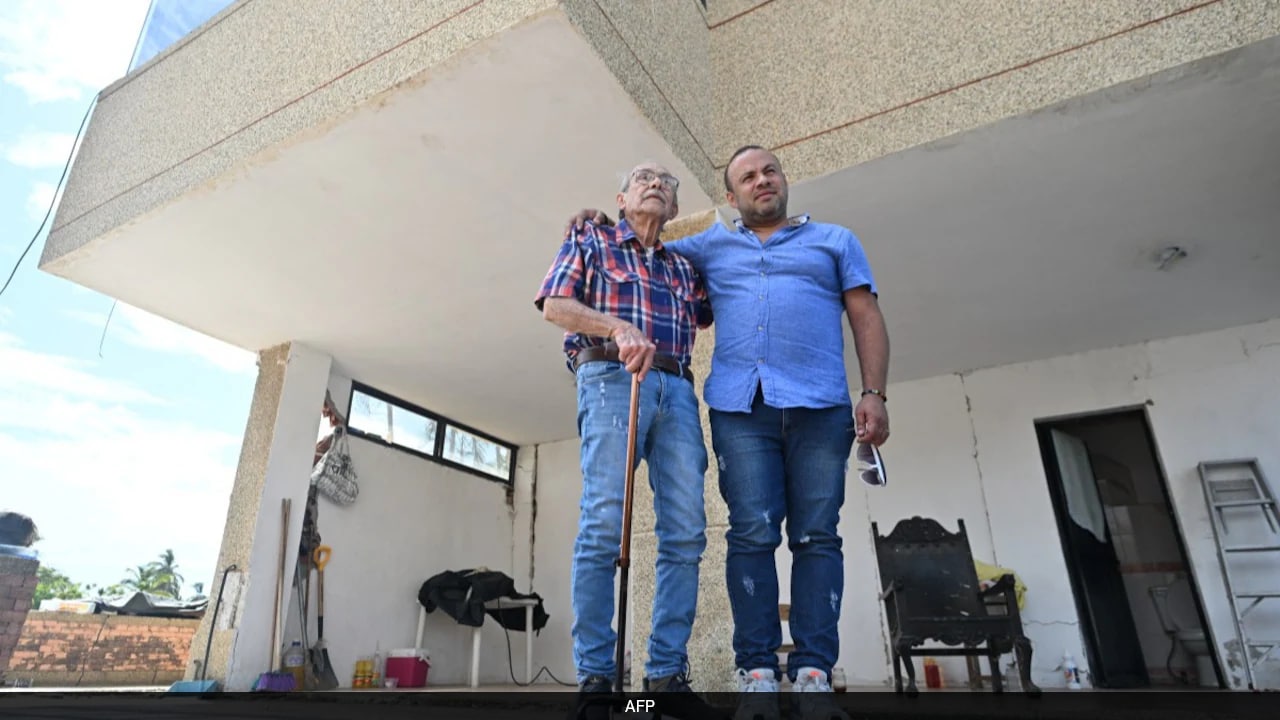
Elias Eduardo Chayeb, a 37-year-old engineer, helped his father construct this specific three-storey beachfront building two decades ago. Driving back to the site through fields of debris, he fully expected the worst.
"On my way here, passing all the destruction, when I saw that it was still standing, I thanked God," Chayeb said. His eyes filled with tears at the sight.
The building didn't escape without a scratch. Some non-structural interior walls showed minor cracking, which is normal under such intense tectonic stress. But the foundational core, the main columns, and the structural integrity remained completely secure. It proved that good engineering isn't about making a building completely rigid. It's about designing a skeleton that can absorb and dissipate massive shocks without snapping.
Why Height Resonates with Tectonic Force
The biggest factor in the survival of the building comes down to an engineering concept that many developers choose to ignore. Height kills in an earthquake zone if the building isn't perfectly tuned to the ground beneath it.
Elias Chayeb, the 86-year-old master builder and structural architect behind the project, has spent more than six decades working in construction. His family came to Venezuela from Syria during World War I, and he learned the local terrain the hard way. Throughout his long career, he repeatedly turned down lucrative contracts to build high-rise towers along the coast.
"The height had everything to do with it here," the elder Chayeb explained. "Those few meters more or less changed lives."
When an earthquake hits, the ground moves back and forth at specific frequencies. Every building has its own natural frequency, mostly dictated by its height and weight. If the ground's shaking matches the building's natural frequency, a phenomenon called resonance occurs. The building shakes exponentially harder than the ground beneath it.
High-rise buildings naturally sway with a slower, longer rhythm. When deep faults like the San Sebastian system produce prolonged, heavy ground movements, tall buildings act like massive inverted pendulums. The upper floors whip back and forth with terrifying force. If the structural columns at the base lack the flexibility to handle that sway, the lower floors simply pancake under the weight of the structure above.
A three-storey building has a much higher natural frequency. It shakes fast and moves in closer synchronization with the initial, sharp shocks of the earth. Because it lacks the massive upper weight of a ten-storey or twelve-storey tower, the structural load placed on its foundation columns remains manageable.
The Unstable Ground of the Caribbean Coast
Building safely in La Guaira requires understanding that the ground itself cannot be trusted. The coastal strip is a geological trap. The terrain consists of loose alluvial sediment washed down from the steep Ávila mountain range over thousands of years.
Elias Chayeb's refusal to build high-rises was cemented by history. He lived through the devastating 1967 Caracas earthquake, which collapsed several high-profile towers. He also witnessed the catastrophic 1999 mudslides in La Guaira, which buried entire neighborhoods under millions of tons of mud and boulders. He knew that when the earth gets wet or starts to shake, loose coastal soils behave almost like liquids.
"Many of the buildings that they asked me to take on, and that I rejected, collapsed," the elder Chayeb stated, pointing out the window toward hillsides where luxury high-rises once stood.
When an earthquake strikes loose, water-saturated sediment, the spaces between the soil particles collapse. The water pressure shoots up, and the soil loses all its strength, turning into quicksand. This process, known as liquefaction, causes heavy buildings to tilt, sink, or tip over entirely.
To survive on this type of soil, a building needs deep, tied foundations that act like a unified raft. The Chayeb building utilized a solid foundational grid that tied all the vertical columns together. If one part of the soil shifted or lost strength, the rest of the foundation supported the load, preventing the uneven settling that snaps concrete columns.
What Real Construction Standards Look Like
In recent years, the building boom along the Venezuelan coast was marred by shortcuts, political corruption, and cheap materials. After the quakes, rescue workers and independent engineers picking through the ruins made shocking discoveries. In several collapsed luxury towers, builders had used styrofoam blocks inside the concrete floor slabs as cheap filler to save money on actual concrete.
The Chayeb family took the opposite approach. They used premium raw materials and dense concrete mixes. They didn't skimp on steel reinforcement ties inside the columns.
During an earthquake, a concrete column handles vertical weight easily, but the horizontal shaking tries to shear it in half. To prevent this, engineers must wrap the vertical rebar with closely spaced horizontal steel loops called ties. If these ties are placed too far apart to save money, the vertical steel bars buckle outward under pressure, causing the column to burst and drop the building.
The Puerto Viejo building used properly detailed seismic ties, ensuring the columns could deform slightly without losing their capacity to hold weight. The building bent, but it never broke.
For Ingrid Palacios, a 61-year-old resident who rode out the violent shaking inside the apartment block, the experience was terrifying but eye-opening. She watched through her windows as the skyline around her changed forever.
"The La Guaira I knew is gone," Palacios said. She believes the future of the coast must mirror the building that saved her life, relying on small chalets, low-profile houses, and strict limits on height.
Next Steps for Coastal Rebuilding
The survival of this modest structure provides a clear blueprint for how cities along dangerous fault lines must rebuild if they want to avoid future tragedies.
If you are evaluating properties in known seismic zones or planning a build, you need to look beyond the surface cosmetics and focus on structural reality.
First, demand to see the soil mechanics report. Building on rock or dense clay is infinitely safer than building on loose sand, reclaimed land, or river sediments. If you must build on soft soil, the foundation must be a continuous reinforced matte or deep piles driven down to solid bedrock.
Second, respect the limits of height on unstable terrain. Low-rise buildings naturally experience lower seismic forces and are less prone to the catastrophic overturning moments that destroy high-rises.
Finally, ensure structural transparency. Every building plan must feature dense seismic tying in the columns and beams, with zero shortcuts on concrete quality. The columns must be designed to withstand lateral shear forces, not just the downward pull of gravity.
The San Sebastian fault remains a permanent threat along the Venezuelan coast. The rubble of the luxury towers proves that ignoring geology for the sake of a beautiful view is a fatal mistake. True luxury isn't a high-rise balcony. It's a building that stays standing when the world starts to shake.