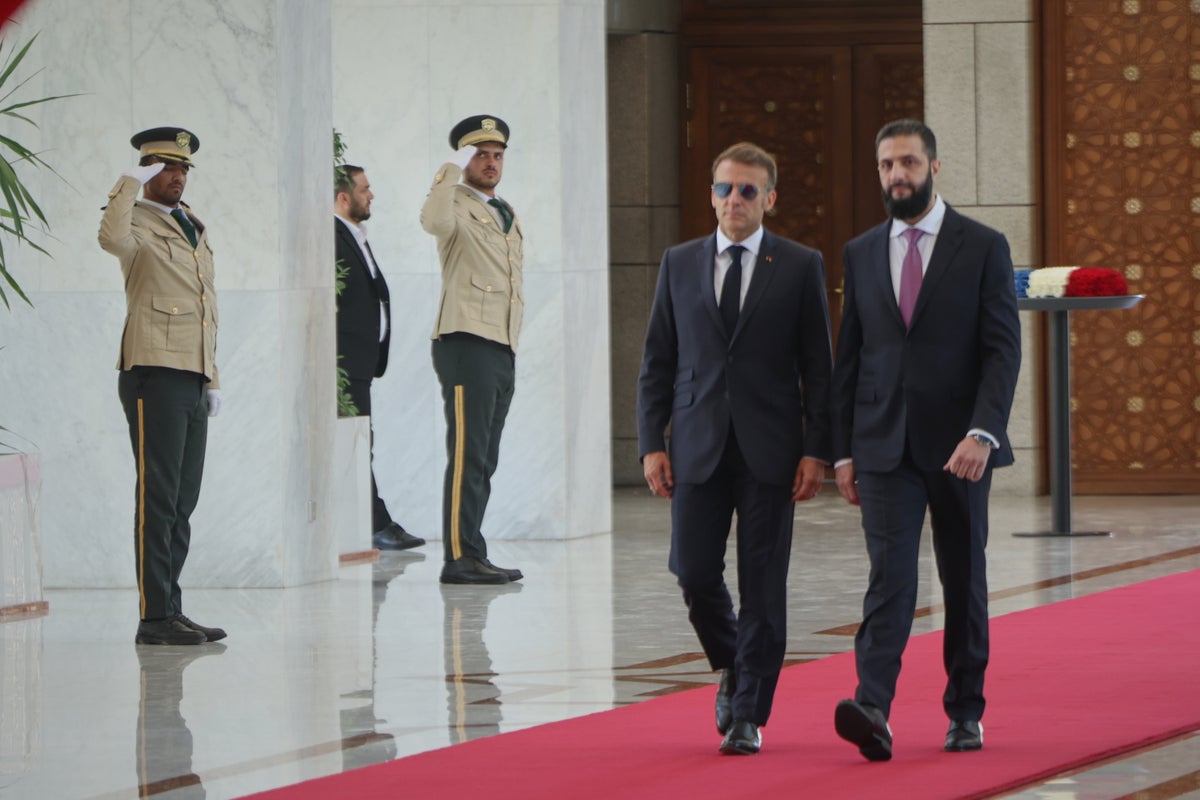
The smoke rising near the Four Seasons Hotel in Damascus this morning was a brutal reality check. Two bombs exploded on a busy street right outside the security zone where French President Emmanuel Macron was staying. The timing was not an accident. Macron had just left the building, heading toward the presidential palace to shake hands with Syria's new ruler, Ahmad al-Sharaa. The blasts wounded 18 people, including four police officers who were trying to defuse the devices. It was a loud, bloody message to the world that Syria’s transition is far from smooth.
Yet, the meeting went ahead. Macron did not pack up and fly back to Paris. He stayed. If you enjoyed this piece, you should read: this related article.
This tells you everything you need to know about France's high-stakes gamble in the post-Assad Middle East. Macron is the first major Western leader to step foot in Damascus since the dramatic collapse of the Assad regime in 2024. For years, Western powers treated Syria like a pariah state. Now, France is leading the charge to bring Damascus back into the international fold. The explosions show exactly how dangerous that path is, but the economic and geopolitical rewards are too massive for Paris to ignore.
The Illusion of a Safe Capital
For months, the new authorities in Damascus have tried to sell a narrative of stability. They want the world to believe that the dark days of the civil war are over. To a degree, the capital had been quiet compared to the brutal sieges of the last decade. But that quiet is shattering. Just days before Macron arrived, another bomb ripped through a cafe near the Justice Palace, killing 10 people. For another look on this event, check out the recent update from The Washington Post.
According to the Syrian Interior Ministry, today's twin blasts involved improvised explosive devices. One was tucked inside a parked car, the other hidden in a trash container. They blew up while specialized bomb squads were trying to handle them. The street where it happened is a vital nerve center of the city, sitting right by the Tourism Ministry and the Damascus National Museum.
This shows a glaring security gap. If insurgents can plant bombs right outside the hotel housing a visiting G7 head of state, nobody is truly safe. No group has claimed responsibility yet, but the suspects are numerous. Leftover Assad loyalists, Islamic State remnants, and disgruntled factions all want to see Sharaa fail.
Who is Ahmad al-Sharaa and Why is France Backing Him
To understand why Macron is risking his security and political reputation, you have to look closely at the man sitting across from him. Ahmad al-Sharaa is not your typical Western ally. He used to go by Abu Mohammad al-Golani, the leader of Hayat Tahrir al-Sham, a group that once had formal ties to al-Qaeda.
That history makes many people in Washington and Europe deeply uncomfortable. They see an Islamist who simply swapped his military fatigues for a tailored civilian suit.
France sees something else. Paris looks at Sharaa and sees the only guy currently capable of holding the country together. Since taking power in late 2024, Sharaa has bent over backward to rebrand himself. He promised a pluralistic state, reached out to nervous Christian and Alawite minorities, and even brought Syria into the US-led global coalition against the Islamic State.
Macron bought into this transformation early. He hosted Sharaa at the Elysee Palace back in May 2025, a move that shocked traditional diplomats. He then spent months lobbying Washington and European capitals to drop their heavy economic sanctions. It worked. Most of those sanctions are gone now, opening the door for the real reason Macron brought a massive delegation to Damascus: business.
The Massive Corporate Stakes Driving French Diplomacy
Western leaders rarely visit war zones just for photo opportunities. Macron arrived in Syria with a heavy squad of corporate executives. The CEOs of energy giant TotalEnergies and shipping titan CMA CGM are traveling with him.
Syria is a ruined country. It needs hundreds of billions of dollars to rebuild its roads, power grids, and ports after nearly a decade and a half of fighting. France wants the biggest piece of that pie.
TotalEnergies is eyeing the country’s energy potential and infrastructure recovery, while CMA CGM wants control of strategic transit corridors along the Mediterranean. For France, this is also about history. Paris ran Syria under a League of Nations mandate from 1920 until 1946. There is an old colonial familiarity here, and French businesses want to reclaim their historical footprint before Chinese or Gulf state investors lock up all the lucrative contracts.
The strategy is simple. France provides the political legitimacy that Sharaa desperately needs to survive on the global stage. In return, French companies get preferential access to the reconstruction gold rush.
The Red Lines Macron Cannot Ignore
Despite the warm handshakes, Macron is not giving Sharaa a blank check. French officials have made it clear that their support depends on strict conditions.
First, Sharaa must protect Syria's fragile minority communities. Symmetrical violence and sectarian revenge attacks broke out in the Druze and Alawite heartlands last year, proving that the threat of bloodletting is still very real. If Sharaa's government slides into exclusive, hardline Islamist rule, Macron will face an immense political backlash back home.
Second, Syria must stay out of Lebanon. The French presidential team explicitly warned Damascus against sending any forces across the border or interfering in Lebanese affairs. Sharaa promised he would not, but given the deep historical entanglements between the two countries, Paris remains highly vigilant.
There is also the messy issue of remaining French jihadists. A handful of French citizens who traveled to Syria to fight for radical groups are still held on Syrian soil. Macron needs Sharaa's security forces to keep them locked down or handle their repatriation without creating a domestic political circus in France.
What Happens Next for Global Powers in Syria
The explosions in Damascus will dominate the headlines, but they will not change the direction of French foreign policy. Macron is scheduled to fly straight to Ankara, Turkey, for a critical NATO summit. Sharaa is also expected to attend that summit, where he is angling for a high-profile meeting with US President Donald Trump.
If you want to track where this situation goes next, look for these specific developments over the coming weeks.
Watch the formal upgrading of diplomatic ties. France currently operates with a low-level charge d'affaires who splits time between Beirut and Damascus. Look for Paris to announce a full ambassadorial return soon to cement their influence.
Monitor the upcoming signing of memorandums of understanding between the Syrian government and French corporate entities. If TotalEnergies and CMA CGM sign concrete deals despite the security risks, it means the private sector believes Sharaa's government is stable enough to protect their investments.
Keep an eye on how Sharaa responds to these bombings. If his security forces launch a heavy-handed, indiscriminate crackdown in Damascus, it will alienate the very Western allies he is trying to impress. He has to prove he can maintain order without resorting to the brutal tactics of the regime he overthrew.
The reality on the ground is messy. Syria is no longer the closed dictatorship of the Assad era, but it is far from a stable democracy. Macron is playing a dangerous game of realpolitik, gambling that French money and political backing can stabilize a broken nation before the bombs blow it apart again.