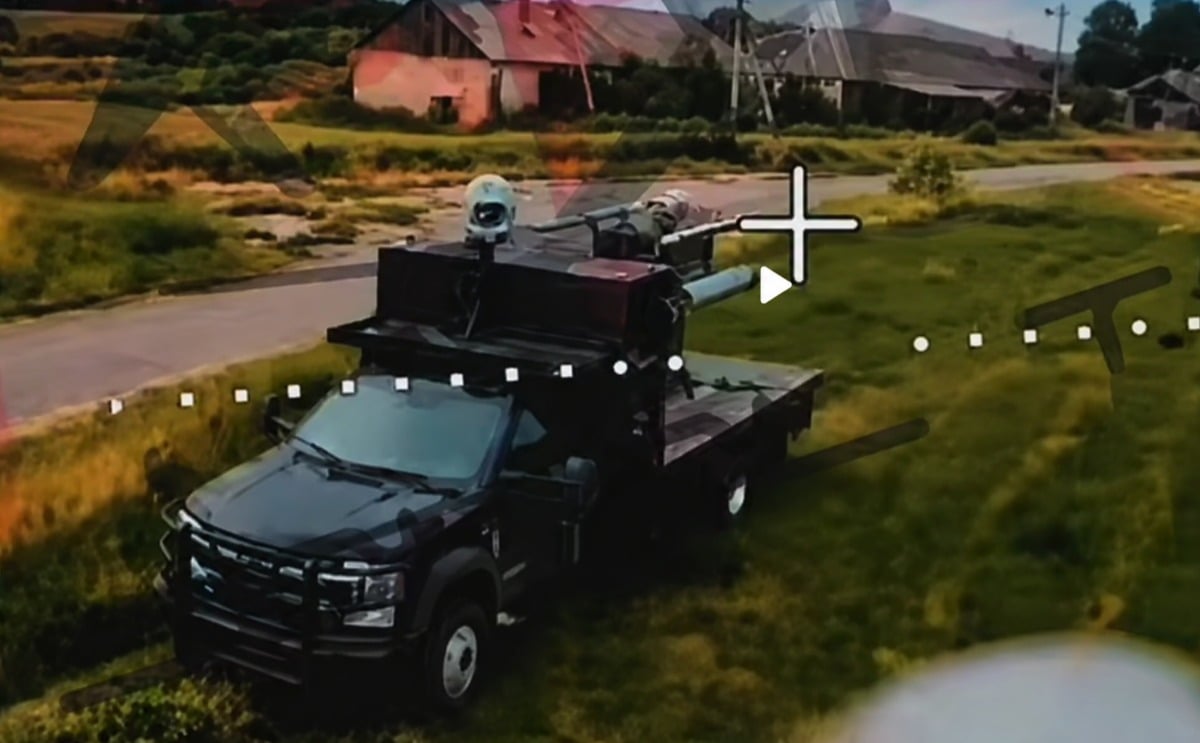
Videos circulating on Telegram channels like Severny Veter just showed something Western defense analysts hoped wouldn't pop up on Russian reconnaissance feeds anytime soon. A mobile anti-drone system, specifically Sierra Nevada Corporation’s Mobile Anti-Air Weapons Launcher – Reconfigurable, got caught in the crosshairs. For those tracking the evolution of low-altitude air defense, this is a massive development. It isn't just about a single vehicle getting hit. It's a reality check for how high-tech Western gear handles the brutal, drone-saturated skies of eastern Europe.
The system in question is one of the Pentagon’s newest answers to the cheap drone menace. Sierra Nevada Corporation, or SNC, only publically showed off this hardware in late 2025 at the Air, Space & Cyber Conference. Getting it into theater, testing it, and subsequently losing a unit to Russian strikes highlights the insane pace of this conflict. Weapons go from factory floors to the frontline in months, not decades. You might also find this connected coverage interesting: Why Western Europe Crumbles Every Time It Hits Forty Degrees.
What is the MAAWLR anyway
To understand why this loss hurts, you have to look at what SNC actually built. Most air defense systems are rigid. They fire one type of missile, use one proprietary radar, and require a massive logistical tail. If you run out of their specific ammunition, the whole multi-million dollar setup becomes an expensive paperweight.
SNC tried to solve that with a split personality system. The stationary ground-based setup is called BRAWLR, which stands for Battery Revolving Adaptive Weapons Launcher. Stick that exact same open-architecture platform onto a heavy-duty pickup truck or a trailer, and it becomes the mobile MAAWLR. As discussed in detailed articles by TIME, the results are worth noting.
The real trick is its lego-like adaptability. This thing doesn't care what you load into it. It can fire a massive menu of Western and even Soviet-heritage munitions.
- APKWS II: Advanced Precision Kill Weapon System rockets. These are basically cheap, laser-guided 70mm rockets meant to swat down Shahed-style kamikaze drones without wasting a million-dollar missile. It can pack up to 46 of these.
- AIM-9M and AIM-132 ASRAAM: Standard Western heat-seekers.
- AIM-120 AMRAAM: Radar-guided mid-range killers.
- IRIS-T: Highly capable German interceptors.
- R-27: Old Soviet medium-range missiles that Ukraine has in abundance.
Depending on what the crew stuffs into the tubes, the system hits targets anywhere from 6 to 15 kilometers away. It combines an RPS-82 X-band radar, an MX-15 FLIR electro-optical sensor, and an onboard generator. Two people can set it up in 20 minutes. It runs on Windows 10. Honestly, it's the ultimate MacGyver tool for modern air defense.
The combat record nobody talks about
SNC previously let slip some fascinating data before these field videos emerged. The company told reporters last year that a classified operator had been using the BRAWLR/MAAWLR ecosystem since 2023. That secret operator racked up more than 400 successful intercepts against aerial threats.
We can stop guessing who that operator was. Ukraine has been burning through air defense interceptors faster than Western factories can build them. The US Department of Defense even quietly handed SNC a $15 million contract back in late 2025 to support Ukrainian naval drone countermeasures. The pieces fit together perfectly. The system has been active, highly successful, and likely saved countless lives before Russian electronic warfare or surveillance drones finally caught one sitting still.
Why this loss was inevitable
Military hardware gets destroyed in high-intensity conflicts. That's just a reality of war. If you send 20 or 30 highly advanced mobile launchers to an active front, some of them won't make it back.
The Russian drone networks operate with terrifying efficiency right now. A reconnaissance drone spots a unique signature, passes coordinates to an Iskander missile crew or a Lancet drone operator, and the target is gone in minutes. The MAAWLR relies on an active X-band radar to track incoming threats. Turning on a radar in 2026 is like lighting a flare in a dark room. You see the enemy, but everyone else sees you too.
Losing a single launcher doesn't mean the system is a failure. It means it's being used exactly where it's needed most: right on the edge of the envelope where Russian drones are thickest.
The real takeaway for Western defense strategy
Western militaries love over-engineering things. They spend billions making a perfect system that takes ten years to field. The MAAWLR proves that the future belongs to rapidly deployable, commercially integrated tech. SNC built this system using a hybrid architecture. It plugs commercial subsystem parts right into military-grade sensors.
That means when one gets blown up, it doesn't break the bank or halt the assembly line. It's built to be disposable and easily replaceable. The real test is whether SNC and the Pentagon can take the data from this specific loss, update the software, tweak the radar emission tactics, and deploy the next batch faster than before.
If you are tracking Western military aid or drone defense technology, keep your eyes on how SNC responds to this frontline feedback. The hardware lifecycle has changed forever. Watch the deployment of the remaining units on the way to theater to see how tactics evolve after this strike.