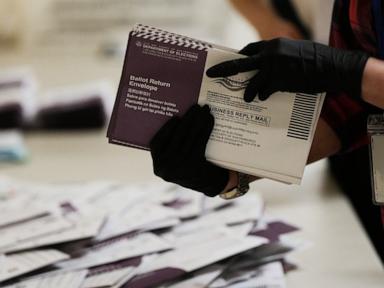
The rules governing how you vote by mail just got thrown into a blender, and the upcoming 2026 midterm elections are right in the splash zone.
On Friday, the D.C. Circuit Court of Appeals handed Donald Trump and the U.S. Postal Service a major temporary victory. The court paused a lower-court ruling that had blocked a highly controversial, Trump-backed mail ballot policy. If you think this is just standard beltway bureaucracy, think again. This decision fundamentally changes how the government can handle your mail-in ballot this November, and it exposes a massive push to insert federal oversight into local election administration.
Here is the real bottom line. The appeals court didn't officially rule that the new policy is legal. Instead, they just gave the USPS a green light to keep building the machinery for it while the broader legal war rages on. If this policy goes live, it could completely disrupt how votes are cast and counted across the country.
The Secret Weapon Inside the New Mail Policy
To understand why voting rights advocates are sounding the alarm, you have to look at what the proposed rules actually do. The policy stems from a March executive order targeting mail-in voting.
Under the new plan, individual states would be required to hand over detailed data to the USPS. This means sending lists of every single voter who requested an absentee or mail-in ballot, along with specific barcode data tied directly to those individual ballots.
The postal service would then use these state-provided lists to decide whether or not to transmit ballot mail.
If a state refuses to comply, or if a voter's name doesn't match the approved list perfectly, the USPS could theoretically halt the delivery of those ballots. That is a massive shift from how things normally work, where the post office simply delivers whatever properly addressed mail it receives.
The Legal Collision Over a Prior Settlement
The fight isn't just about privacy; it's about a broken promise. Back during the pandemic election, the NAACP sued the USPS over massive mail delays that threatened to leave thousands of ballots uncounted. That lawsuit ended in a 2021 court-enforced settlement. In that deal, the USPS legally bound itself to prioritize the timely delivery of election mail all the way through 2028.
Earlier this month, U.S. District Judge Emmet Sullivan looked at the Trump-backed proposal and decided it flew right in the face of that agreement. He issued an injunction, telling the USPS to freeze the rule immediately.
The D.C. Circuit just blew right past that roadblock. A three-judge panel decided that Judge Sullivan acted too early, arguing the NAACP's challenge wasn't "ripe" because the policy isn't fully finalized yet.
More importantly, the appeals judges bought into the postal service's sense of urgency. The judges wrote that if they kept the policy blocked now, the agency would never get the rules finalized in time for the November 2026 general election. In their words, when it comes to elections, “there can be no do over.”
What This Means for the 2026 Midterms
Don't let the dense legal jargon fool you. This isn't just an abstract debate about separation of powers. It has immediate, practical consequences for voters this year.
If the administration manages to fully implement this rule before November, we are looking at two major flashpoints.
First, you can expect a massive showdown between federal agencies and blue state governors. In separate challenges, judges have already noted that the Constitution gives states, not the president, the explicit power to set election rules. If states like California or Massachusetts refuse to turn over their voter lists to the federal government, we could see a standoff where the delivery of millions of ballots hangs in the balance.
Second, the administrative burden will likely fall on regular citizens. If your local election office makes a clerical error on a barcode, or if your name is spelled slightly differently on the state list than it is on your postal profile, your ballot could get flagged or delayed.
Your Next Steps to Ensure Your Vote Counts
You shouldn't wait around for the courts to sort out this mess. The legal battle is going to drag on for months, but election deadlines won't wait. If you want to make sure your voice is heard in the midterms despite this administrative chaos, you need to change how you approach mail-in voting.
- Request your ballot immediately. Do not wait until the final weeks before the election. The earlier your request is logged into your state's system, the more time you have to resolve any potential data mismatches.
- Track your ballot online. Most states now offer ballot tracking tools. Use them to see exactly when your ballot is printed, mailed, and received by election officials.
- Consider using an official drop box. If you are worried about the postal service handling your ballot under these new rules, bypass them entirely. Hand-deliver your completed ballot to an authorized drop box or your local election office.
- Check your registration details. Make sure your name, address, and signature match exactly across all government platforms to avoid getting flagged by automated lists.