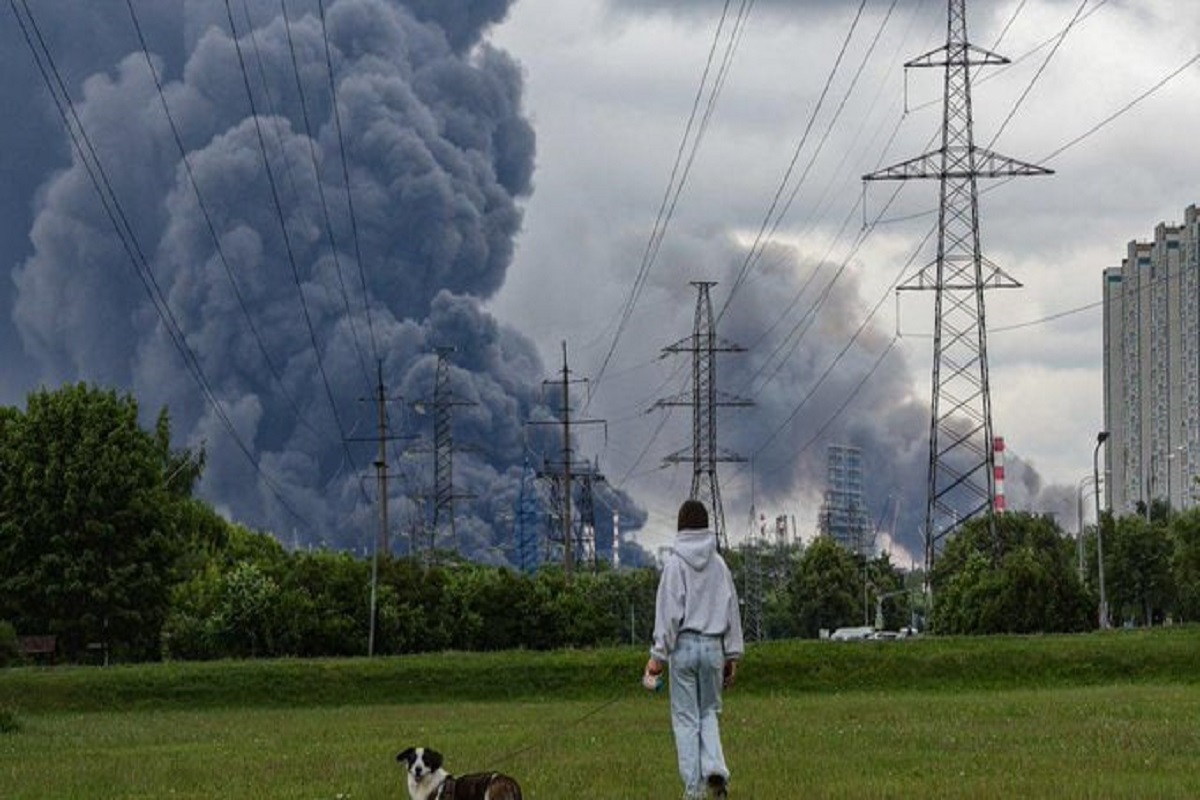
You wake up, scroll through your phone, and see a number that looks like a typo. Russia just claimed its air defense systems intercepted 660 Ukrainian drones in a single night. That's not a standard cross-border skirmish. It's an industrialized robotic swarm designed to choke the Kremlin's war machine. The scale of this overnight assault across 12 different Russian regions, annexed Crimea, and two seas shows that the nature of this conflict has shifted permanently. Ukraine isn't just defending its borders anymore. It's taking the fight deep into Russian territory, hitting the industrial heartlands that supply the front lines.
Let's think about why this matters to you. If you've been following the war, you're probably used to hearing about small drone strikes hitting oil depots. This is different. This is about a massive coordination effort that stretched all the way from the border to areas just south of Moscow. When Moscow Mayor Sergei Sobyanin admits that 47 drones were heading straight for the capital, you know the defensive shield is being pushed to its absolute breaking point. This massive operation follows Ukrainian President Volodymyr Zelenskyy's announcement of a targeted influence operation aimed at forcing a resolution to the conflict. It tells us that the battlefield is no longer confined to trenches in the Donbas.
Inside the Reality of the Massive Ukrainian Drone Attack
When the Russian Defence Ministry dropped the number 660, military analysts worldwide stopped what they were doing to check the math. To put this into perspective, the previous record for a major Ukrainian drone attack over the past year was 556 drones back in May. Striking twelve regions simultaneously requires massive logistical preparation, sophisticated flight path programming, and a lot of hardware.
The strategy behind a swarm this size is simple but brilliant. You don't expect all 660 drones to hit their targets. Honestly, you don't even expect most of them to get through. The primary goal is to completely overwhelm Russian radar and air defense systems like the S-400 and Pantsir complexes. Air defense systems have a limited number of tracking channels and interceptor missiles. When you flood the sky with hundreds of low-cost, fixed-wing drones, the defense systems are forced to fire expensive interceptor missiles at cheap targets. Once those batteries are empty or reloading, the specialized strike drones slip through to hit high-value targets.
This brings us to what actually got hit during the night. While Russian official media channels like TASS claimed total interception, independent outlets and local reports paint a much more chaotic picture. The heaviest damage focused on Novomoskovsk, an industrial city about 200 kilometers south of Moscow in the Tula region. Regional Governor Dmitry Milyaev tried to downplay the impact, mentioning a wounded woman and a damaged private home. Local Telegram channels and independent journalists quickly revealed that the real target was the Azot chemical plant, which caught fire after multiple drone impacts.
Why the Azot Chemical Plant Matters
The Azot facility in Novomoskovsk isn't just some random factory making everyday goods. It's one of the largest producers of ammonia and nitrogen fertilizers in Russia. More importantly, it provides critical raw materials for Russia's explosives industry. If you want to slow down Russian artillery production, you don't just target the shell factories. You go upstream. You hit the chemical plants that make the propellant.
Zelenskyy has previously pointed out how crucial this specific plant is to the Russian war effort. This wasn't the first time Ukraine targeted it, and it won't be the last. By launching repeat strikes against the same industrial targets, Ukraine makes it incredibly difficult for Russian engineers to carry out permanent repairs. Every time the factory gets close to restarting production, another wave of drones shows up to set it back to square one.
Beyond the chemical plant, the Ukrainian Security Service confirmed they targeted Russian navy ships and air defense radars in the port city of Kerch in occupied Crimea. They used specialized long-range maritime and aerial drones to strike two reconnaissance and mine-laying ships, the Volga and the Vyatka, along with a critical cargo-passenger ferry. If these claims hold up, it means Ukraine is successfully cutting down Russia's ability to move military equipment across the Black Sea, forcing them to rely on longer, more vulnerable land routes.
The Economic Strain of Drone Attrition
This strategy highlights a glaring asymmetry in modern warfare. A long-range Ukrainian strike drone might cost anywhere from twenty thousand to a few hundred thousand dollars to build, often using off-the-shelf components and fiberglass bodies. A single Russian surface-to-air missile used to shoot it down can easily cost over a million dollars.
When Russia has to defend dozens of industrial cities, oil refineries, and military bases deep inside its own territory, it runs into a resource problem. They simply do not have enough air defense batteries to protect everything. If they pull systems away from the front lines to protect chemical plants near Moscow, the Russian army in Ukraine becomes vulnerable to air attacks. If they keep the systems at the front, their domestic economy and military supply chain get torn apart. It's a classic dilemma that forces difficult choices.
| Attribute | Ukrainian Strike Drones | Russian Air Defense Interceptors |
|---|---|---|
| Average Cost | $20,000 - $100,000 | $1,000,000+ per missile |
| Production Speed | Days (Decentralized workshops) | Months (High-tech state factories) |
| Strategic Goal | Exhaust defense supply, destroy logistics | Protect high-value assets at all costs |
We should also look at the psychological impact on the Russian population. For the first few years of the war, people living in Moscow or Tula could easily pretend life was normal. The conflict was something happening far away on television. Now, with 47 drones being shot down on the outskirts of the capital and major chemical plants burning just a two-hour drive away, the reality of the war is arriving directly on their doorsteps. It changes public perception and complicates the state's narrative that everything is going according to plan.
What Happens Next
Ukraine is clearly doubling down on this long-range industrial campaign. They aren't waiting for western political debates to resolve before taking action. Instead, they are scaling up domestic drone production to levels we've never seen before.
If you are tracking where this conflict goes next, watch the Russian energy and manufacturing sectors closely. The continuous pressure on oil refineries, fuel depots, and chemical plants will eventually create localized shortages that slow down military movements. The next logical step for Ukraine will likely involve even larger coordinated swarms, combining aerial drones with electronic warfare assets to completely blind Russian radar networks before the strikes land.
For anyone analyzing global security, this massive raid is a blueprint for the future of conflict. It proves that a smaller nation can neutralize a massive military power's industrial advantages through smart, decentralized, and relentlessly scaled technology. Keep your eyes on the shipping and logistics hubs in western Russia over the coming weeks. That's exactly where the next major disruptions are going to hit.