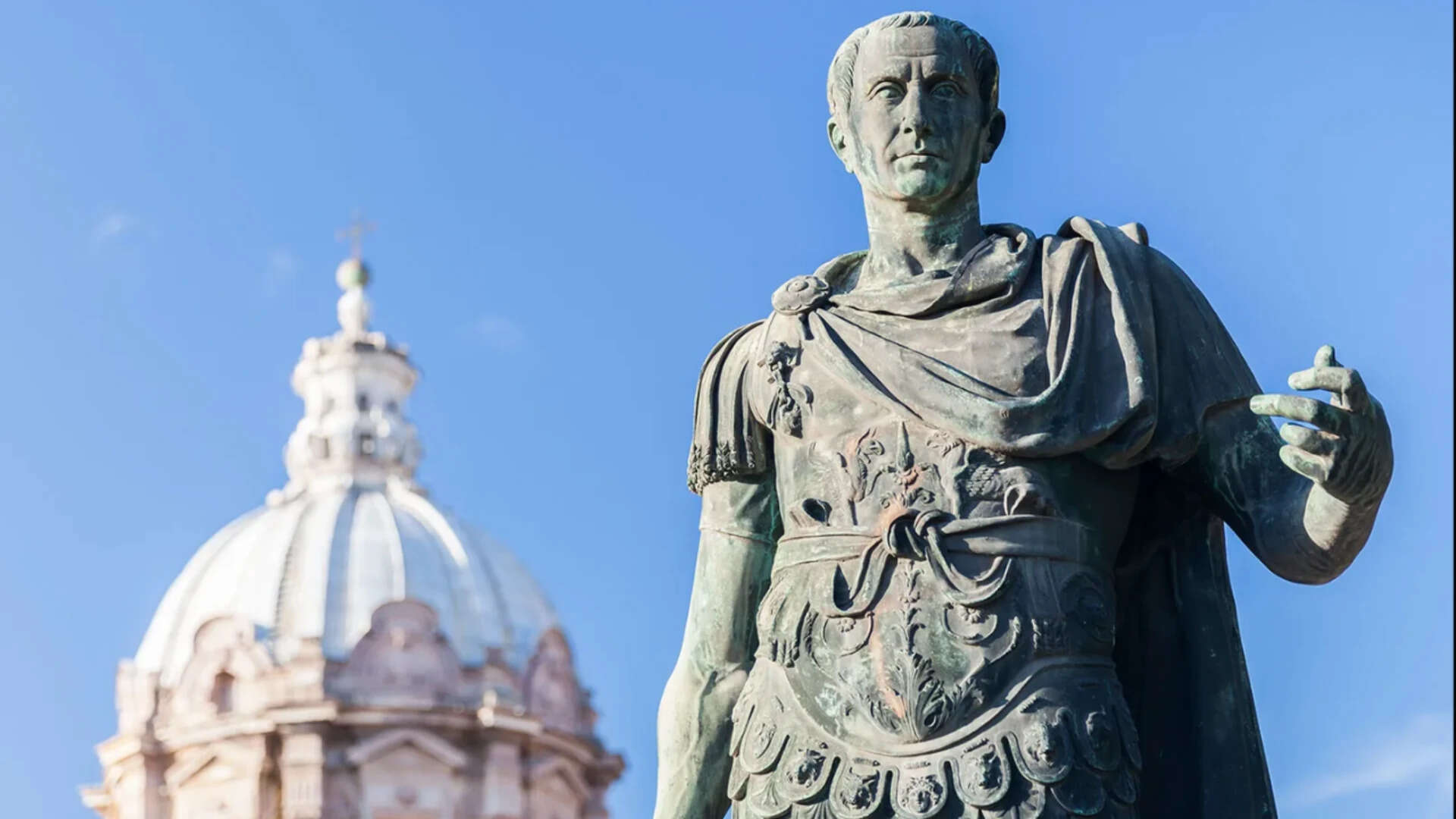
You have probably seen the internet graphic floating around with a stone-faced bust of Julius Caesar and a deeply profound quote: "The greatest power is not in defeating an enemy, but in making him no longer desire to fight you." It sounds brilliant. It sounds deeply strategic. It sounds exactly like something a legendary Roman general would whisper while staring out over a battlefield.
Except he never said it. Building on this topic, you can find more in: Why Delta Air Lines Fares Arent Dropping Anytime Soon.
If you scour the historical record, search through his own accounts in Commentarii de Bello Gallico, or comb through the surviving letters compiled by Roman historians, you won't find this sentence anywhere. The internet invented it, or at least misattributed it to him to give a random piece of self-help wisdom some historical weight.
But here is the real twist: even though the quote is fake, the strategy behind it was entirely real. Caesar built his entire empire on this exact psychological concept. He called it clementia—mercy—and he used it as a weapon far more lethal than any iron gladius. Observers at Harvard Business Review have shared their thoughts on this matter.
The Myth of the Empty Sword
A lot of modern commentary loves to talk about Caesar using the "strategy of the empty sword" to win endless civil wars without shedding blood. Let's set the record straight: Caesar shed plenty of blood. He crossed the Rubicon in March of 49 BC with the Thirteenth Legion, triggering a brutal civil war against his former ally Pompey the Great and the Roman Senate. He wasn't a pacifist.
What made Caesar terrifyingly effective wasn't that his sword was empty, but that he knew exactly when to put it away.
When Caesar marched down the Italian peninsula, towns expected a massacre. The standard Roman playbook for rebels and rivals was simple: mass executions, confiscation of property, and selling the survivors into slavery.
Instead, Caesar threw out the playbook. He marched into cities, pardoned the soldiers who had just taken up arms against him, protected their property, and let the captured senators return home completely unharmed.
In a letter to his adviser Gaius Oppius, Caesar spelled out his real strategy:
"Let this be our new way of conquering, to strengthen ourselves by mercy and generosity."
This wasn't kindness. It was cold, calculated psychological warfare. By refusing to create martyrs, he stripped his enemies of their will to fight. If your enemy promises you that a dictator will slaughter your family, and then that dictator hands you back your sword and tells you to go home to your kids, your desire to fight him evaporates pretty fast.
The Heavy Price of Forgiveness
In theory, making an enemy no longer want to fight you is the ultimate victory. In practice, humans are complicated creatures driven by pride, ego, and resentment.
Caesar's policy of clementia worked brilliantly to win the war, but it completely failed to secure the peace. When you forgive an enemy, you assert your superiority over them. You force them to live with the knowledge that they only exist because you allowed it. For the proud aristocrats of the Roman Senate, that debt was a bitter pill to swallow.
Many of the senators Caesar pardoned didn't go home to farm. They went into backrooms to plot. Marcus Junius Brutus, a man Caesar personally protected and elevated, was the ultimate product of this failed experiment in mercy. On the Ides of March in 44 BC, the very men Caesar refused to execute stood around him with daggers.
The historical lesson here is sharp: removing an enemy's immediate reason to fight doesn't mean you've removed their underlying hatred.
How to Use the Empty Sword Strategy Today
You probably aren't leading Roman legions across the Rubicon anytime soon, but you deal with conflict constantly. Whether it's a corporate turf war, a bitter legal dispute, or a toxic competitor trying to eat your market share, the temptation is always to go for the throat.
True crushing victory rarely comes from total destruction. If you ruin a competitor through aggressive, scorched-earth lawsuits, you often end up draining your own resources, ruining your public image, and inheriting a marketplace filled with bitter remnants.
Here's how you actually apply Caesar's real strategy to modern professional conflicts:
1. Build Golden Bridges for Retreat
Sun Tzu famously wrote about leaving a captured army an escape route, because a cornered animal fights with terrifying desperation. In business negotiations, never back your opponent into a corner where their only option is to fight to the death to save face. Give them a dignified way out. If they can walk away feeling like they preserved their honor, they won't feel the need to launch a counter-offensive later.
2. Conquer Through Generosity
When a rival project leader or competing firm makes a massive mistake, the natural instinct is to gloat or exploit it. Try the opposite. Offer assistance, provide resources, or step in to help steady the ship without demanding a pound of flesh. It sounds counterintuitive, but aligning your success with their stability makes it impossible for them to view you as the villain. You effectively disarm them by making yourself indispensable.
3. Focus on Incentives, Not Domination
Real leverage means changing the math for your opponent. Stop trying to prove you are smarter, stronger, or louder. Figure out what they actually want—status, security, or just a quick exit—and adjust the environment so that cooperating with you gives them what they need faster than fighting you ever could.
The internet might have botched the history by putting fake words in Caesar's mouth, but the core truth remains unchanged. Don't waste your energy trying to break your opponent's sword. Focus entirely on breaking their appetite for the fight.