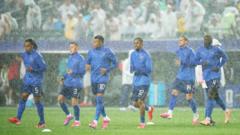
Tournament football is cruel. One bad afternoon ruins four years of meticulous planning, endless training sessions, and tactical charting. Elite teams often arrive at the World Cup thinking about the final before they even clear the group stage, and that's exactly how giants fall.
When Jules Koundé stood in front of the microphones and insisted that beating Iraq is France's only immediate focus, he wasn't just recycling standard media-trained clichés. He was showing a sharp awareness of how tournament dynamics actually work. France knows the road to the trophy is long, filled with unpredictable twists, heavy legs, and sudden knockout drama. But none of that matters if you slip on a banana skin in the opening rounds.
The French squad understands that every single game at this level presents a distinct threat. Fans and media love to map out potential quarterfinal matchups or guess who will win the golden boot. Players don't have that luxury. Koundé's message was loud and clear. Focus on the next ninety minutes or pack your bags early.
The trap of looking too far ahead in a tournament
Elite athletes face a constant psychological battle against distraction. It's incredibly easy to look at a group stage draw on paper, see a heavily favored matchup, and subconsciously take your foot off the gas. We've seen it happen to the absolute best teams in football history.
Think back to legendary tournament upsets. Remember Argentina losing to Saudi Arabia in 2022. Nobody saw it coming because everyone was busy calculating Argentina's path through the knockout rounds. The players are human. If the collective mentality drops by even two percent, tactical structures break down. Passing lanes get intercepted. Sprints become jogs.
Koundé pointed out that a World Cup consists of completely separate stages. You can't play a semifinal match in June if you don't secure your points right now. Winning a tournament requires a team to completely reinvent itself as the weeks progress, managing energy levels, yellow cards, and minor muscle strains. Trying to solve problems that are three weeks away is a recipe for disaster. You have to win ugly when conditions aren't perfect, and that requires absolute, undiluted focus on the immediate opponent.
Why teams like France slip up in the group stage
The gap in modern international football has shrunk drastically. There are no easy games left on the global stage. Countries that used to be considered pushovers now have players scattered across top European leagues, high-end sports science departments, and world-class tactical managers.
When a team like France takes the pitch, they carry an immense amount of pressure. Every opponent plays the game of their lives against Les Bleus. For an underdog, securing a draw or a surprise win against a powerhouse creates an instant national holiday. They will run until their lungs burst. They will defend in a low block with eleven men behind the ball, suffocating space and daring you to break them down.
If France enters a match expecting a comfortable stroll, they get shocked by the sheer physical intensity of the opponent. Koundé has spent years playing at the highest level with Barcelona and the national team, meaning he knows exactly how uncomfortable these matches get. When an underdog senses complacency, their confidence grows exponentially. A couple of missed chances from the favorites can quickly turn into panic as the clock ticks down.
The tactical reality of facing Iraq
Breaking down a highly motivated, defensive opponent takes an incredible amount of patience and tactical discipline. It isn't just about throwing talented forwards onto the pitch and hoping for a moment of individual magic. It requires precise positioning, rapid ball circulation, and total alertness against counterattacks.
Iraq enters this type of matchup with a very clear plan. They don't need to dominate possession to cause problems. Their strategy relies on defensive solidity, hard tackling, and exploiting set pieces or defensive lapses. If France turns the ball over carelessly in the midfield, they invite immediate danger.
- Ball speed matters Smooth, quick passing shifts the opposing defensive block out of position. Slow passing lets them reset easily.
- Counter-pressing is mandatory The moment France loses the ball, defenders like Koundé must squeeze the space to win it back before Iraq can launch a long ball to their forwards.
- Positional discipline saves energy Players must stay in their designated zones to avoid leaving massive gaps behind them.
When Koundé speaks about a short-term goal, he is talking about executing these specific details flawlessly for a full match. If you don't respect the tactical blueprint against an opponent like Iraq, you end up chasing the game, picking up unnecessary yellow cards, and burning valuable energy reserves that you desperately need later in the summer.
How Didier Deschamps builds this exact mindset
This hyper-focused mentality doesn't happen by accident. It's a direct reflection of Didier Deschamps and his management style. Deschamps won the World Cup as a player and as a manager, so he knows exactly what the locker room feels like during every phase of the competition. He values pragmatism over flashiness.
Deschamps has always been a manager who prioritizes results over style points. He doesn't care if the media complains about a boring performance as long as France leaves the stadium with three points in the bag. He instills a culture where the past is irrelevant and the future is unwritten.
Under his leadership, players get drilled on the specific strengths of their immediate opponents. The scouting reports don't focus on Brazil or Germany during the group stage. They focus entirely on the winger they will face on Wednesday afternoon. Koundé's public comments perfectly echo this philosophy. It shows that the manager's message has completely taken root inside the squad. The senior players are buying into the grinding, game-by-game reality of tournament success.
What this means for France moving forward
Taking a tournament step by step alters how a squad manages its emotional energy. The World Cup is an absolute pressure cooker, and teams that burn too much emotional fuel in the first week usually flame out when the knockout rounds begin. By treating every match as an isolated event, France keeps its emotional baseline steady.
This approach also gives younger squad members a clear framework to handle the intense global spotlight. Instead of worrying about the massive expectations of a whole nation demanding a trophy, they just have to focus on winning their individual duels in the next match. It simplifies the game.
Look at the teams that historically win tournaments. They rarely look like world-beaters in their opening match. They build momentum slowly, solving one problem at a time, surviving difficult moments, and peaking exactly when the quarter-finals and semi-finals arrive. Koundé and his teammates aren't looking to make a massive statement to the rest of the world right now. They just want to do their jobs, secure the points, and move on to the next phase of the plan.
To track how this strategy unfolds, watch the tactical discipline of the French backline in their upcoming matches. Pay attention to how quickly they shut down transitions and whether they maintain their intensity even if they get an early lead. The path to football glory is paved with ugly, disciplined group stage victories, and France seems perfectly content to take that route.