The fragile illusion of a quiet Middle East just shattered completely. When Iranian ballistic missiles and drone swarms breached air defenses at a military installation near Azraq in northeastern Jordan on Friday, July 17, 2026, it did more than just damage concrete. It cost American lives. Two U.S. service members are dead. One is missing in action. Four others had to be rushed to Jordanian hospitals.
This isn't just another minor skirmish in a long list of regional dust-ups. This is the first time serving American personnel have been killed in the open military conflict between Washington and Tehran that has been raging for several weeks. The stakes just went through the roof.
People watching the region knew things were tense. But the strike on the Muwaffaq Salti Air Base changes the entire political arithmetic for Washington. For weeks, the public heard about drones hitting fuel piers or minor infrastructure damage in places like Bahrain and Kuwait. Those felt distant. Those felt manageable. Dead soldiers in a country long considered a safe haven for American operations change everything.
The Sudden Reality of the Azraq Strike
The U.S. Central Command, known as CENTCOM, confirmed the casualties on Saturday. They kept details close to the chest. They always do when families haven't been notified yet. But the basic facts are stark enough. U.S. and partner forces spent Friday desperately trying to shoot down an incoming barrage of Iranian hardware. They didn't get them all.
Jordanian military officials later admitted that their air defenses managed to intercept ten Iranian ballistic missiles. That sounds impressive until you realize that some still got through. That breakdown in the defensive screen is exactly what caused the tragedy. It raises hard questions about how prepared these bases actually are for a sustained, high-tech assault.
The Islamic Revolutionary Guard Corps, or IRGC, didn't waste any time taking credit. They bragged about the Azraq strike as part of a wide, coordinated offensive that day. They claimed they also hit a U.S. fuel pier at Kuwait’s al-Ahmadi port and targeted the Sheikh Isa Air Base in Bahrain. They even claimed they destroyed two American fighter jets, though the Pentagon hasn't backed that up.
What we do know is that the conflict has evolved. We aren't dealing with local proxy groups anymore. This is direct, state-on-state violence, and the buffer zones are disappearing.
Inside the Muwaffaq Salti Security Failure
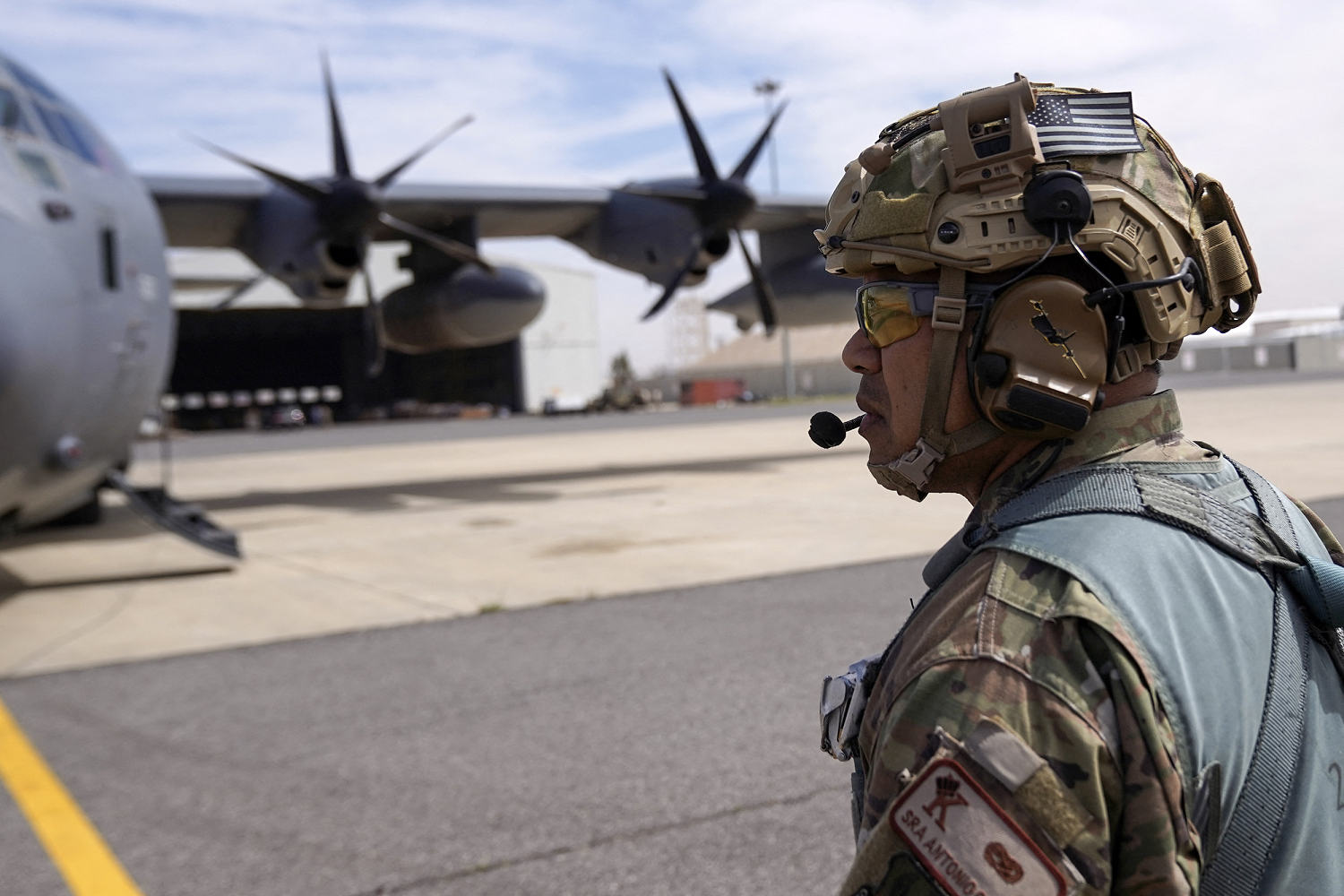
Muwaffaq Salti Air Base sits about 80 kilometers outside Amman, near Azraq. It’s a vital hub for American air operations across the region. Washington has poured money into this place. It’s supposed to be a hardened, secure launchpad. Instead, it became a target.
This wasn't an isolated fluke. A U.S. official, speaking anonymously, revealed that this was actually the third attack in Jordan to cause damage or injuries to U.S. troops in just a single week. The previous ones didn't make massive headlines because nobody died. But the warning signs were there. The defenses were being tested, probed, and mapped out by Iranian planners.
Think about what it means for a missile to slip through a modern air defense umbrella. We aren't talking about homemade rockets thrown by a ragtag militia. We are talking about guided ballistic missiles designed to overwhelm electronic warfare systems and physical interceptors. The fact that an attack succeeded at a primary facility like Muwaffaq Salti shows that Iran’s missile capabilities are far more sophisticated than many politicians want to admit.
The human cost is already mounting. These new casualties bring the total U.S. military death toll since the war kicked off on February 28 to 16 personnel. That number includes combat deaths, a Navy pilot who went missing after a helicopter crash earlier in July, and non-combat medical incidents. The slow drip of casualties is turning into a steady stream.
The New Regime in Tehran Asserts Itself
To understand why this is happening now, you have to look at who is running the show in Tehran. The political dynamics in Iran shifted dramatically earlier this year. Former Supreme Leader Ali Khamenei was killed during the opening U.S.-Israeli strikes on February 28. His son, Mojtaba Khamenei, took the reins.
Mojtaba Khamenei is out to prove he isn't weak. He needs to show the hardliners in the military and the IRGC that he won't back down under pressure from the West. Hours after the attack, Iranian state TV carried a direct statement from him. He openly mocked American leadership. He claimed the ongoing attacks showed the worthlessness of the American president's signature.
He didn't stop there. He warned that if the American enemy wants war, the Iranian nation and the axis of resistance have unforgettable lessons to teach. It’s classic wartime rhetoric, but it carries weight because it’s backed up by fresh American graves.
This aggressive posture shows why the Islamabad MoU completely fell apart. The tentative ceasefire engineered in April was supposed to create breathing room. It was supposed to let both sides talk. Instead, it gave everyone time to reload. The ceasefire didn't solve the underlying friction. It just delayed the inevitable explosion.
How Washington Is Responding Beyond the Rhetoric
The response from Washington was instant and violent. The U.S. military didn't just issue angry press releases. They launched heavy counter-attacks against targets inside Iran.
CENTCOM used a mix of fighter aircraft, armed drones, and warships to strike back overnight into Saturday. They hit surveillance installations, military logistics sites, underground weapons depots, and maritime facilities. The stated goal was to degrade Iran’s ability to threaten commercial shipping in the Strait of Hormuz and to punish the IRGC forces responsible for the Jordan attack.
This marks the eighth consecutive day that the U.S. military has dropped bombs inside Iran. The conflict isn't winding down. It’s expanding into a full-scale war of attrition.
The political fallout at home is growing too. President Donald Trump spoke to reporters, calling the deaths very sad. He noted that it’s a tragic thing to see happen in service to the country. Meanwhile, Defense Secretary Pete Hegseth took a more aggressive tone on social media. He stated that the sacrifice of the fallen heroes only stiffens American resolve.
But resolve doesn't automatically fix a broken strategy. Banging the drums of war and launching retaliatory strikes hasn't stopped the missiles from flying. If anything, the tit-for-tat cycle is accelerating. The U.S. strikes are hitting critical infrastructure too. Iranian state media claimed that recent American bombs hit a desalination plant and bridges in Jask, a southern Iranian county. Local utility officials say the damage will leave 10,000 civilians without water. That kind of collateral damage only hardens Iranian public support for the regime's military actions.
Strategic Steps to Take Right Now
The current approach isn't working well enough to keep troops safe. Protecting American personnel and stabilizing the region requires immediate, concrete adjustments.
First, the Pentagon must overhaul the air defense architecture at regional hubs. Relying on standard interceptor screens isn't enough when facing saturation attacks. Bases in Jordan, Kuwait, and Bahrain need immediate deployment of short-range defense systems alongside upgraded electronic warfare suites to scramble incoming guidance systems before they reach the outer perimeter.
Second, the diplomatic channel needs a total reset. The Islamabad MoU failed because it was treated as a temporary pause rather than a real framework. Washington needs to use backchannel intermediaries like Oman or Qatar to establish clear, hard red lines regarding state-directed strikes on sovereign bases.
Third, logistics and troop positioning must change. Keeping personnel packed into predictable, well-mapped hubs like Muwaffaq Salti makes them sitting ducks for guided missiles. Scattering assets and moving to highly mobile, smaller operational footprints will make it significantly harder for the IRGC to plan coordinated salvos.
The time for empty political posturing is over. Every day that passes without a shift in tactical defense and diplomatic strategy is a day we risk more flags draped over coffins. Action needs to happen today.