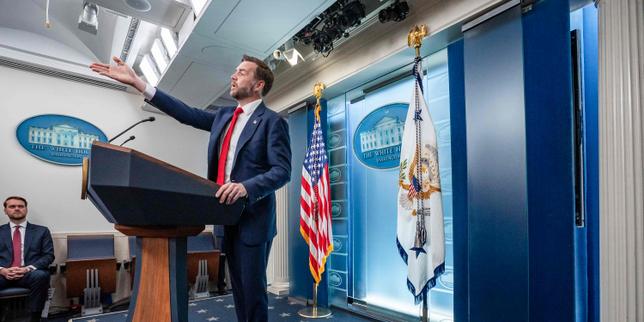
The illusion of unconditional geopolitical love just shattered on the White House briefing room floor. If Israeli officials thought Donald Trump wrote them a blank check for eternity, Vice President J.D. Vance just tore it up right in front of them. It didn't happen with quiet, behind-the-scenes diplomatic murmurs. It happened with a blunt public reality check that left diplomats scrambling from Washington to Jerusalem.
Vance didn't hold back. He looked right into the cameras and told America's closest Middle Eastern ally to wake up and smell the reality.
The immediate trigger for this sudden public explosion is the massive diplomatic shift that just took place. The United States and Iran have signed a memorandum of understanding to halt a four-month-old war that began back on February 28. This deal opens the Strait of Hormuz, lifts the American naval blockade on Iranian ports, and kicks off a tense 60-day negotiation window. It also dangles a potential 300 billion dollar economic rehabilitation fund for Tehran.
For Israel, this agreement feels like a knife in the back. Jerusalem wasn't a party to the talks. The deal leaves Iran's ballistic missile infrastructure mostly functional and drops key oil sanctions. Right-wing members of Prime Minister Benjamin Netanyahu's cabinet went nuclear with their rhetoric, launching personal attacks against Trump and accusing his envoys of selling Israel out for financial gains.
That's when Vance decided he had heard enough.
The Shocking Math of Israeli Dependence
Vance used his Thursday press conference to remind Jerusalem exactly who pays the bills. He dropped a data point that should make every military planner in Israel sweat. Over the past three months of intense regional combat, two-thirds of the defensive weapons protecting the Israeli homeland were built by American hands and paid for by American taxpayers.
Think about that number. Sixty-six percent of the iron dome interceptors, the artillery shells, and the smart bombs keeping Israel secure don't come from domestic factories. They come from Ohio, Pennsylvania, and Texas.
Vance used this statistic as a hammer. He made it clear that public insults directed at Donald Trump from within the Israeli cabinet are not just bad manners. They're an existential threat to Israel's own supply lines.
You can't bite the hand that feeds your air defense systems while fighting a multi-front war. Vance noted that Trump remains the only world leader with any real sympathy left for the Israeli position. If Israel alienates him, they stand completely alone on the global stage.
Inside the Fury over the Iran Deal
To understand why Israeli ministers are risking a blowout with Washington, you have to look at what Trump just signed. The agreement halts hostilities that have disrupted global energy markets since the late winter. The U.S. military is already lifting its blockade. Cargo ships are moving again.
But Israel sees the terms as a disaster. The deal extends a shaky ceasefire by 60 days to negotiate a permanent treaty. In exchange for halting nuclear enrichment, Iran gets immediate economic relief.
The White House defends the move by pointing out that the brief war successfully smashed a huge portion of Iran's missile launchers. Trump himself shrugged off criticisms about Iran retaining conventional weapons, saying you can't tell any country they have no right to self-defense.
Jerusalem doesn't buy it. Anonymous Israeli security officials say the White House is naive. They believe the sudden influx of oil cash will immediately flow down to Hezbollah in Lebanon and various proxy groups in Iraq and Yemen. They feel the deal forces Israel to scale back its operations against Hezbollah just when they have the militant group on its heels.
A Broken Cabinet and a Silent Prime Minister
The political fallout inside Israel is exposing deep structural cracks. Netanyahu has kept his mouth shut publicly about the specific terms of the U.S.-Iran agreement. He knows how Trump operates. He knows that criticizing the president directly invites a devastating counterattack.
But Netanyahu's coalition relies on far-right firebrands like Finance Minister Bezalel Smotrich and National Security Minister Itamar Ben-Gvir. These men don't do diplomatic subtlety. They took to social media and local airwaves to blast the American administration, claiming Washington blinked first in the confrontation with Tehran.
Vance took note of this internal dynamic. He explicitly praised Netanyahu for not going down that path, but he warned that the antics of the coalition ministers are pushing American patience to the edge. The vice president made it clear that the White House views these cabinet outbursts as a personal betrayal.
The calculation in Washington has changed. The administration believes it did the heavy lifting by degrading Iranian capabilities over the spring. Now, they want to secure the global economy, stabilize oil routes, and avoid an endless Middle Eastern quagmire. They expect Israel to fall in line, take the win, and use a softer touch in southern Lebanon.
The Dangerous Road Ahead for Jerusalem
Israel now faces a brutal strategic choice during the 60-day negotiating clock. They can continue to fight the deal openly, relying on their allies in the U.S. Congress to disrupt Trump's diplomatic track. Or they can swallow their pride, accept the new reality, and try to shape the final treaty from the sidelines.
Choosing open warfare with the Trump administration carries immense risk. If the White House decides to slow-walk ammunition deliveries or delay the transfer of spare parts for F-35 fighter jets, Israel's operational capacity drops significantly within weeks. The era of assuming Washington will always provide unconditional military backing regardless of political behavior is officially over.
The immediate next steps for Israeli leadership require a total overhaul of their diplomatic playbook.
First, Netanyahu must muzzle his cabinet ministers. Every rogue tweet or televised tirade from the far-right elements of his government directly weakens Israel's leverage in Washington.
Second, Israeli intelligence needs to compile concrete, undeniable data on Iranian non-compliance regarding missile production and proxy funding. Presenting Trump with hard intelligence that proves Iran is violating the spirit of the Geneva memorandum is the only way to shift the president's mind. Emotional appeals or historical arguments won't work with this White House. Only transactional facts matter.
Third, Israel must prepare a fallback defense strategy that assumes a fully funded Iran. If the 300 billion dollar fund becomes reality, Israel will have to counter a revitalized regional adversary with less direct American diplomatic cover. That means building deeper security ties with regional Arab states that are equally terrified of a resurgent Tehran, even if those states are currently keeping their distance.
The strategic landscape changed overnight when the U.S. and Iran put pen to paper. Israel can spend its energy complaining about the unfairness of the situation, or it can adapt to the cold reality Vance just laid out. Survival depends on choosing adaptation.