It isn't a plot from a spy thriller. It is happening right now on the streets of Toronto, Montreal, and Vancouver. Hostile foreign states are no longer just sending undercover agents to do their dirty work. They are hiring local street gangs, using encrypted apps, and paying cash for pull-the-trigger violence.
A recently leaked top-secret intelligence brief reveals that the Iranian government is likely directing and enabling acts of criminal violence right here in Canada. The document, compiled by Canada's Integrated Threat Assessment Centre (ITAC), lays out a terrifying shift in tactics. Tehran is actively utilizing domestic criminal networks to target Jewish communities, Israeli interests, and Iranian dissidents.
If you think national security is someone else's problem, think again. The spillover from Middle Eastern conflicts has officially landed in Canadian neighborhoods.
Street Gangs as Geopolitical Proxies
For decades, the standard playbook for state-sponsored espionage involved highly trained intelligence officers operating under deep cover. That era is over. The Iranian regime has realized that it is much cheaper, safer, and easier to outsource violence to local thugs.
The ITAC report states there's a realistic possibility that Iran is enabling criminal proxy actors to carry out operations across Europe and Canada. This isn't done out of religious or ideological alignment. The local shooters usually don't care about geopolitics. They care about the paycheck.
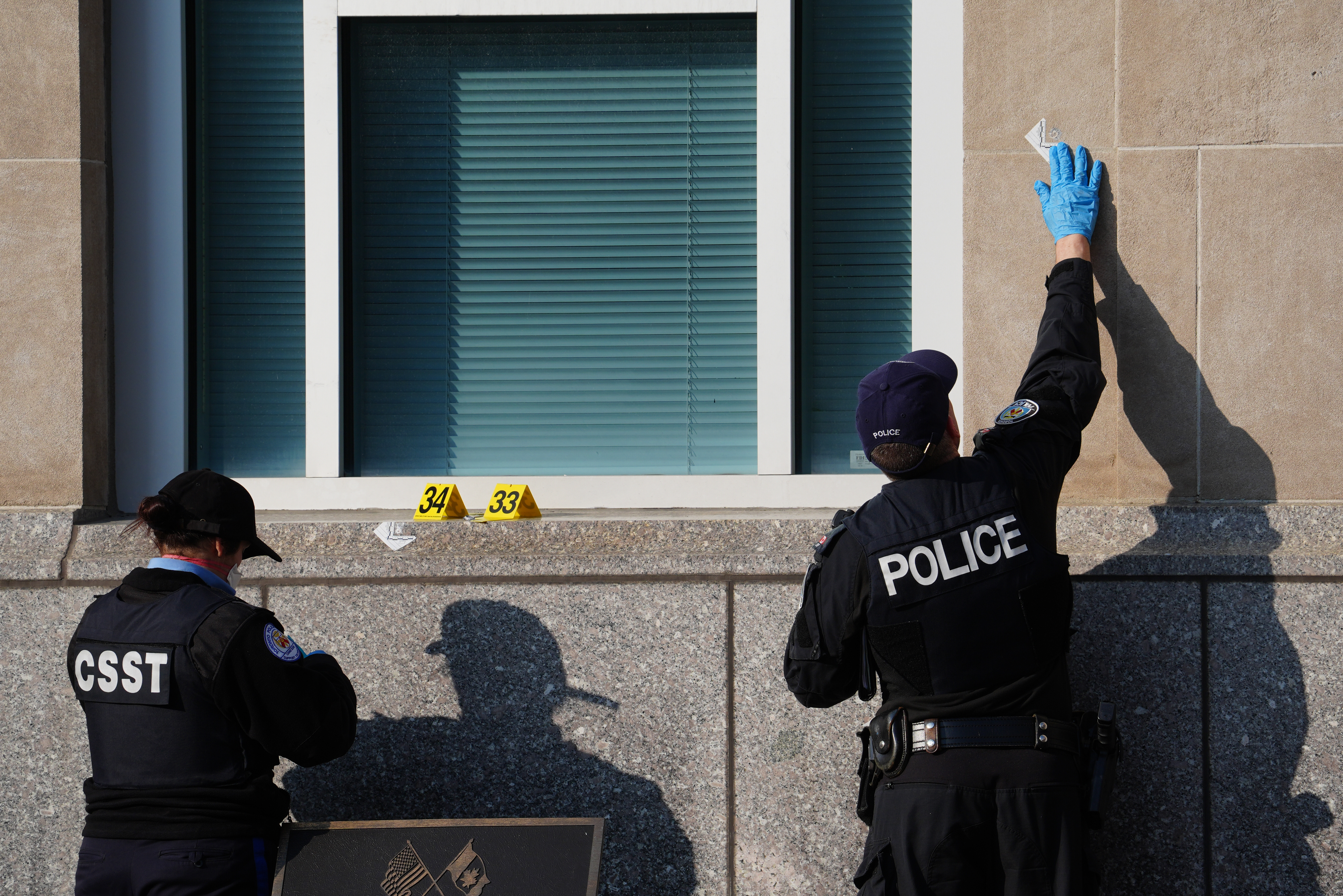
We saw this play out in real-time when Toronto police dismantled a sophisticated crime network. These individuals weren't radicalized zealots. They were hired guns recruited through encrypted messaging applications. Their assignment was to open fire on the American consulate in Toronto. To get paid, they had to record video evidence of the shooting as proof of performance.
This gig-economy model of terrorism gives foreign intelligence services a massive advantage. It provides instant deniability. If a shooter gets caught, the police see a local gang member with a long rap sheet, not an operative holding an Iranian passport. It masks the true source of the threat.
The Tragic Human Cost on Canadian Soil
This dirty alliance between foreign dictatorships and street crime isn't a theoretical risk. It kills people. During the sprawling investigation into the Toronto consulate shootings and more than two dozen related incidents, Const. Marc Pinizzotto was shot and killed. A Canadian police officer lost his life because a foreign state decided to turn our cities into a proxy battlefield.
Let's look at the numbers. Law enforcement agencies are currently tracking dozens of suspicious shootings and arson attempts targeted at synagogues, Jewish schools, and community centers. Toronto Police Chief Myron Demkiw openly described the modus operandi as a recurring pattern of criminals for hire.
The threat matrix became even clearer when U.S. authorities arrested Mohammad Baqer Saad Dawood Al-Saadi, a known member of the regional proxy group Kata'ib Hizballah. Al-Saadi didn't just operate in the Middle East. He allegedly boasted about directing two high-profile attacks in Toronto, specifically targeting a synagogue and the U.S. consulate.
This confirms what national security insiders have whispered for a long time. Canada is viewed by our allies as a soft target.
Dissecting the Strategy of Transnational Repression
Why is Iran focusing so heavily on Canadian soil? The answer lies in the concept of transnational repression. Canada is home to one of the largest Iranian diaspora populations in the world. The vast majority of these people fled the brutal regime in Tehran seeking freedom and safety.
Instead of finding peace, many dissidents find themselves looking over their shoulders. The Canadian Security Intelligence Service (CSIS) has repeatedly warned that Iranian agents monitor, harass, and intimidate critics living in Canada.
Think back to the families of the victims of Flight PS752, the commercial airliner shot down by Iran's Islamic Revolutionary Guard Corps (IRGC). When those families spoke out on Canadian soil demanding justice, they received death threats. Their families back in Iran were harassed.
The regime also targets prominent political figures. There was a foiled plot to assassinate former Canadian Justice Minister Irwin Cotler, a fierce critic of Tehran's human rights record. More recently, a gym in Richmond Hill linked to an Iranian dissident was sprayed with 17 bullets.
This is an explicit campaign to silence dissent globally. If you speak out against the regime, they will find you, whether you are in London, Washington, or Toronto.
The Digital Side of the War
The bullets flying on Canadian streets are only half the battle. The security perimeter extends into the digital space. The Canadian Centre for Cyber Security recently issued urgent alerts warning that Iran-aligned cyber threat actors are actively targeting Canadian infrastructure.
These aren't just script kiddies looking to deface websites. These are highly sophisticated state-backed hackers. Following major military tensions in the Middle East, these groups routinely launch disruptive attacks against critical supply chains, energy sectors, and government networks.
They use advanced social engineering and spear-phishing campaigns to steal data and compromise critical networks. For Alberta-based companies operating in the energy sector, the risk is incredibly high. A successful breach of an industrial control system could shut down energy pipelines or water treatment plants.
What Needs to Change Immediately
Canada's historical approach to foreign interference has been painfully slow. We tend to react to tragedies rather than preventing them. It took years of political pressure for the government to finally designate the IRGC as a terrorist organization. Even with that designation, experts estimate that hundreds of regime-linked individuals and their families are still living comfortably inside Canada, laundering money and establishing networks.
We can't rely solely on traditional policing anymore. When street crime becomes an extension of international warfare, the response must be systemic.
First, we must tighten our immigration screening processes. National security agencies recently flagged an Iranian doctoral student at Carleton University as a serious threat because his research directly advanced the regime's weapons and ballistic missile programs. This individual was offered a university scholarship before intelligence agencies stepped in. This kind of bureaucratic disconnect is a massive vulnerability.
Second, the legal system needs to adapt. When a local criminal takes money from a foreign intelligence agency to commit an act of violence, that shouldn't be treated as a standard assault or arson charge. It is an act of treasonous proxy warfare and needs to carry severe, non-negotiable federal penalties.
If you are a member of a vulnerable community or run an organization that could be targeted, take basic physical and digital security measures. Upgrade your access controls. Implement phishing-resistant multi-factor authentication across your business networks. Watch for unusual surveillance around community buildings.
The leaked ITAC report proves that the oceans protecting North America don't keep us safe from the reach of brutal regimes. The battle lines have shifted, and they are currently running right through our own neighborhoods.