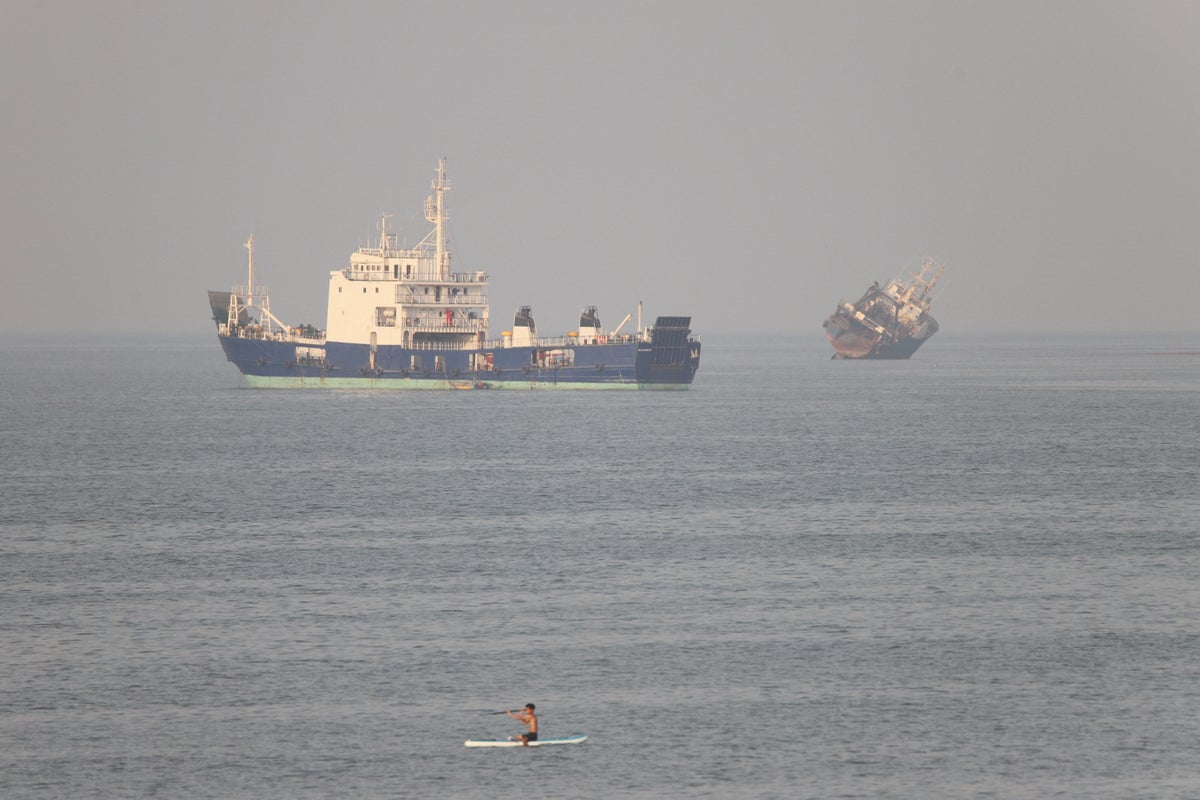
Global energy markets are in a full-blown panic. Washington says the crisis is under control, but the reality on the water tells a completely different story. The recent targeting of cargo vessels by Iran's Islamic Revolutionary Guard Corps (IRGC) has turned the world’s most important maritime chokepoint into a literal shooting gallery. Everyone is focusing on the political theater in Islamabad, where diplomacy is haltingly underway, but the real crisis is the gridlock at sea.
You can't just flip a switch to reopen an international shipping lane after anti-ship missiles start flying. It doesn't work that way. In related news, we also covered: Why Taiwan East Coast Typhoon Evacuations Are More Common Than You Think.
The ongoing Iran-US war has brought shipping traffic through the region to a near-total standstill. Even with a tentative, shaky two-week ceasefire on the table, global trade is frozen. Shippers aren't stupid. They aren't going to risk billion-dollar assets and the lives of their crews just because a politician signs a temporary piece of paper.
The Illusion of a Cleared Shipping Lane
The White House recently claimed that the Strait of Hormuz oil route would reopen fairly soon. That statement ignores the physical reality of maritime operations in a combat zone. The United Kingdom Maritime Trade Operations (UKMTO) keeps issuing warnings for a reason. The threats aren't theoretical. They are active, kinetic, and highly unpredictable. BBC News has provided coverage on this fascinating topic in extensive detail.
When the IRGC targeted an oil tanker attempting to pass through the strait, they sent a crystal-clear message to global commerce. It didn't matter that the vessel was in international waters. It didn't matter that it followed standard navigation rules. The ship was hit, it caught fire, and it sent shockwaves through the global boardrooms of every major maritime carrier.
Right now, over 700 non-Iranian tankers are marooned on either side of the 167-kilometer waterway. Think about that volume of stranded cargo. We are talking about roughly 334 crude oil tankers, over 100 dirty petroleum product carriers, and more than 260 clean product tankers just sitting in the water, burning fuel, and waiting for safety guarantees that no navy can completely provide.
A few vessels have tried to make the run. During the initial days following the truce announcement, only three tankers successfully squeezed through the passage. They carried a combined total of less than three million barrels of crude. In normal times, roughly a fifth of the world's petroleum consumption passes through this narrow gap every single day. The math doesn't add up. The route is effectively closed, no matter what official press releases claim.
Why Marine Insurance Companies Hold All the Cards
Politicians love to talk about military escorts and diplomatic breakthroughs. They forget about the underwriters in London. Commercial shipping relies entirely on the maritime insurance market, specifically Protection and Indemnity (P&I) clubs and war risk insurers.
When a combatant state fires missiles at commercial hulls, insurers don't just raise premiums. They withdraw cover entirely for that specific zone.
Strait of Hormuz Shipping Status
--------------------------------------------------
Stranded Crude Oil Tankers          : 334 vessels
Stranded Dirty Product Tankers      : 109 vessels
Stranded Clean Product Tankers      : 263 vessels
Average Normal Daily Transit Volume : ~21 million barrels
Recent Ceasefire Daily Transit Avg  : ~1.5 million barrels
--------------------------------------------------
If a vessel doesn't have war risk insurance, it cannot legally enter a port. It cannot load cargo. It cannot discharge its belly full of crude. Shipowners like the French Shipowners' Association have already instructed dozens of their flag vessels to seek safe anchorage in regional ports like those in the UAE or Oman rather than attempt the transit. They are prioritizing crew safety and corporate survival over political optimism.
The US military can reload its warships with high-tech ammunition all day long, but a destroyer cannot protect every single merchant vessel from asymmetric drone swarms or hidden shore-based anti-ship cruise missiles. The threat footprint is simply too wide.
The Strategic Mistake of Treating Iran Like a Symmetrical Enemy
Western military planners often make the mistake of viewing the Iranian military as a single, cohesive entity that obeys standard rules of statecraft. It isn't. You have the regular Islamic Republic of Iran Navy (IRIN), which generally operates conventional warships and adheres to basic maritime protocols. Then you have the IRGC Navy.
The IRGC operates independently. They use fast attack craft, civilian vessels converted into missile platforms, and low-cost loitering munitions. They don't care about international maritime law. They care about leverage.
When the US and Israel launched strikes against Iranian military targets earlier this year, Tehran didn't try to fight a traditional naval battle. They went straight for the economic jugular. By closing the strait and striking random commercial hulls, they created an instant global supply shock.
The strategy is working. By threatening the global supply of oil, Iran forces Western economies to deal with rising inflation and skyrocketing energy costs. It gives their delegation immense leverage at the negotiating table in Pakistan.
They are telling the world that if they can't export their own oil due to sanctions, nobody else in the Persian Gulf will export theirs either.
What the Islamabad Peace Talks are Getting Wrong
Vice President JD Vance and the American diplomatic team are currently trying to hammer out a long-term deal in Islamabad. The US wants a verifiable end to the shipping attacks and a permanent ban on Iran's nuclear weapons development. Iran wants an immediate lift of all oil sanctions and the unfreezing of billions of dollars in overseas assets.
The problem is the fundamental lack of trust. While diplomats argue in air-conditioned rooms, the situation on the water remains highly volatile. Trump has threatened fresh strikes if the talks collapse, stating that US warships are being loaded with the best weapons ever made. That kind of rhetoric might play well on social media, but it makes a diplomatic resolution incredibly difficult to sustain.
Even if a formal agreement is reached, the implementation phase will take weeks, if not months. You have to establish hotlines between naval commands. You have to clear potential sea mines. You have to convince skittish commercial captains that they won't be blown out of the water by a rogue IRGC commander who decides to ignore orders from Tehran.
The current two-week ceasefire has already shown cracks. Accusations of bad faith are flying from both sides. Trump openly criticized Tehran for doing a dishonorable job of allowing oil traffic to resume, while Iranian officials pointed to continued Western naval buildups as a direct provocation.
The Real Economic Impact Reaching Your Local Station
This isn't just a military conflict happening thousands of miles away. It impacts global supply chains immediately. When crude oil gets stuck behind a maritime blockade, refineries cut production. Fuel prices at the pump jump instantly.
Logistics companies are already rerouting container ships around the Cape of Good Hope at the southern tip of Africa. That detour adds up to 10 to 14 days of travel time to a standard voyage between Asia and Europe. It burns thousands of tons of extra fuel. It causes container shortages at major ports. It drives up the cost of everyday consumer goods.
The world economy can handle a temporary disruption. It cannot handle a protracted war of attrition in the world's premier energy corridor. The assumption that global commerce will naturally bounce back the moment a truce is announced is a dangerous fantasy.
Next Steps for Energy and Logistics Managers
If you run an operation dependent on global supply chains or energy stability, stop waiting for the news out of the Islamabad peace talks to tell you what to do. The situation is fundamentally unstable. Here is how you should actually prepare for the next phase of this crisis.
- Diversify fuel sourcing immediately: If your business relies heavily on Brent crude benchmarks, shift your exposure toward West Texas Intermediate (WTI) or alternative regional suppliers that don't rely on Persian Gulf transits.
- Audit your maritime insurance policies: Check the specific war risk clauses in your freight contracts. Make sure you understand exactly who bears the financial liability if a cargo vessel is delayed, rerouted, or damaged in a high-risk transit zone.
- Extend your inventory lead times: Add a minimum of two to three weeks of buffer time to all international shipments passing through or near the Middle East. Assume the Strait of Hormuz will remain a high-risk operational environment for the remainder of the year, regardless of any political declarations.


