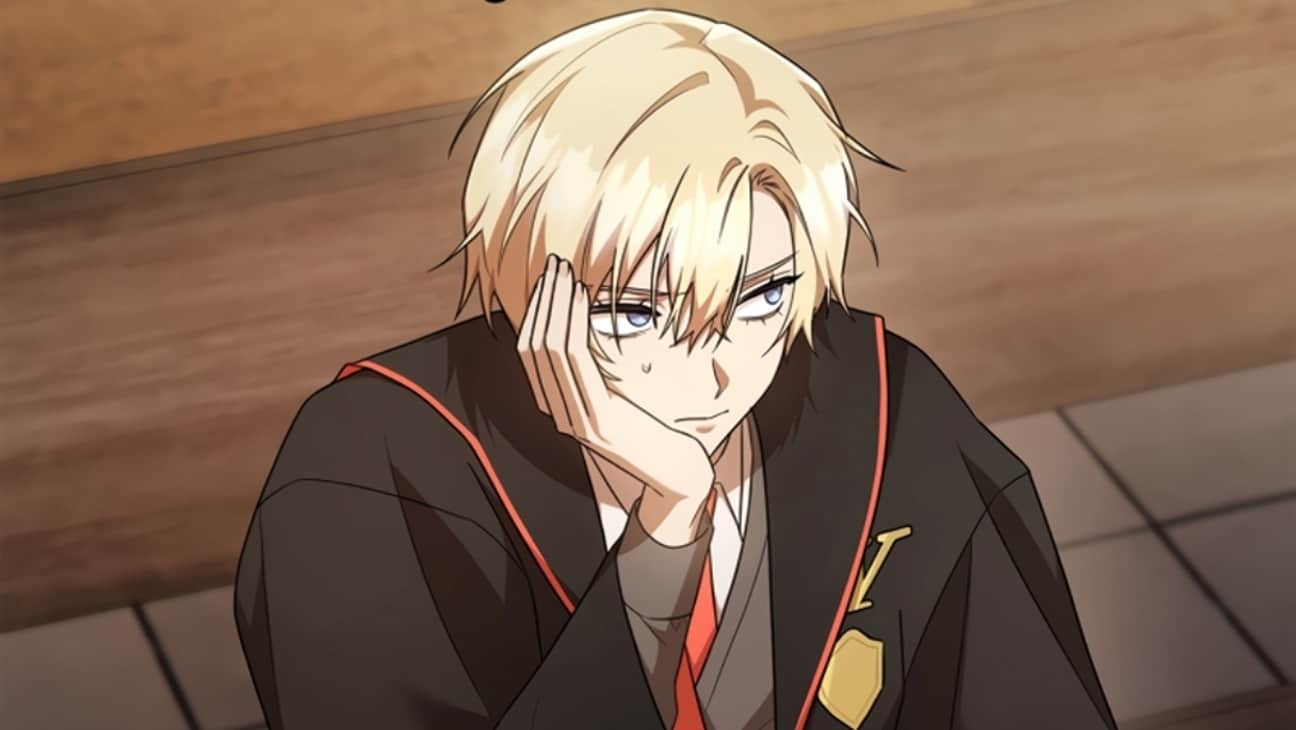
The prevailing wisdom suggests that magical fantasy stories are defined by the scale of their explosions or the height of their stakes, yet Infinite Mage - Chapter 134 proves that the most violent thing a story can do is force its protagonist to think. Most readers approached this specific installment expecting the standard catharsis of a power fantasy, a moment where the hero simply overcomes a physical wall through sheer force of will. They were wrong. This chapter isn't a celebration of power but a cold, clinical deconstruction of the intellectual cost of genius. While fans often treat magic systems as mere sets of rules to be exploited for cool visuals, the narrative here shifts the weight from the fingers to the mind, suggesting that the true burden of the "infinite" isn't the ability to do everything, but the inability to stop perceiving everything.
The Cognitive Trap in Infinite Mage - Chapter 134
When we talk about Shirone’s progression, we're usually talking about his climb through the social and academic ranks of the academy. However, the events within the story at this juncture suggest that the academy itself is a gilded cage designed to sanitize a terrifying natural phenomenon. The core of this installment isn't about learning a new spell; it's about the psychological horror of a mind that can no longer filter out the noise of reality. We've been conditioned to view high-level mana manipulation as a gift. In truth, the mechanics revealed in this specific beat show that it's closer to a sensory disability. The protagonist isn't gaining a tool so much as he's losing his protective ignorance.
Critics of this perspective might argue that I’m over-analyzing a serialized manhwa intended for entertainment. They’d say it’s just a transitionary beat meant to bridge the gap between two major combat arcs. That’s a shallow reading that ignores the specific visual language used by the artist and the pacing of the dialogue. The way the frames tighten around the character’s eyes and the deliberate slowing of the internal monologue indicate a shift into a more claustrophobic form of storytelling. The series isn't just showing us a boy who can see the world’s hidden math; it’s showing us a boy who is being crushed by the weight of every decimal point.
Why Technical Mastery is a Narrative Red Herring
In the world of webtoons, power creep is the standard death knell for tension. Once a character becomes too strong, the world stops being dangerous. What makes this particular turning point so effective is that it replaces physical danger with existential dread. Most stories would have the hero master a technique and move on. Here, the mastery of the technique is exactly what creates the new, more dangerous environment. It’s a subversion of the "training arc" trope. Usually, training makes you safer. Here, training makes the world more volatile because you're finally seeing how unstable the foundations of reality actually are.
The logic follows a trajectory similar to real-world physics. In the early 20th century, as physicists like Max Planck and Werner Heisenberg peered deeper into the subatomic world, they didn't find a more solid reality. They found a world of probability and uncertainty that defied common sense. This narrative arc mirrors that descent. Shirone isn't finding more solid ground; he’s realizing the floor he’s standing on is made of vibrating strings and empty space. The thrill of the chapter doesn't come from his success, but from the realization that his success has made him a stranger to his own species. He can no longer relate to people who see a tree as just a tree.
The Myth of the Relatable Hero in Infinite Mage - Chapter 134
We love a protagonist we can see ourselves in, but this chapter is where Shirone stops being relatable and starts being a specimen. It’s a bold move for any creator to alienate their audience from the main character’s internal experience. By leaning so heavily into the "Spirit Zone" and the specific mathematical abstractions of his magic, the story forces us to acknowledge that the protagonist is becoming something fundamentally non-human. This isn't just about being smarter than the average student. It’s about a physiological shift in how he processes time and space.
If you look at the history of the genre, the heroes who remain popular are the ones who keep their human flaws despite their god-like powers. Think of the way characters in other series still worry about dinner or their social standing. But here, those concerns are starting to feel like echoes from a distant planet. The narrative is daring us to keep following a character who is rapidly outstripping our ability to empathize with his plight. It’s a brilliant risk. Instead of a hero we want to be, we're given a hero we should probably be afraid for. The tension isn't whether he’ll win his next fight, but whether there will be anything left of the boy from the commoner’s district once the "infinite" is done with him.
Deconstructing the Aesthetic of Intellectualism
The visual delivery of the complex theories in this part of the story serves a purpose beyond looking smart. It uses the medium of the manhwa to simulate a feeling of information overload. The crowded panels and the intricate diagrams aren't meant to be fully understood by the reader; they’re meant to be felt. You’re supposed to feel the same dizzying vertigo that the character feels. This is "hard magic" done with a purpose. It’s not about the rules themselves, but the psychological impact of living in a world where those rules are visible.
I’ve seen readers complain that the pacing slows down too much when the story gets into the weeds of mana theory. I’d argue that the slowness is the point. You're being forced to sit in the discomfort of a mind that can’t stop calculating. If the story sped through these moments, it would be lying about the experience of the protagonist. The "Infinite" isn't a fast-paced adrenaline rush. It’s a slow, methodical drowning in data. The brilliance of the writing lies in its refusal to simplify the process for the sake of a quick dopamine hit. It demands that you pay attention to the friction of thought.
The Architecture of a Hidden Tragedy
When you look back at the earlier chapters after reading this one, the entire trajectory of the series changes. What looked like a classic "zero to hero" story now looks like a tragedy about a boy who traded his peace for a perspective he wasn't built to handle. The academy isn't a place of enlightenment; it’s a factory that produces high-functioning weapons by breaking their connection to the mundane world. This perspective recontextualizes every interaction Shirone has with his friends. Every laugh and every shared meal is now tinged with the knowledge that he’s seeing the caloric decay and the atomic vibration of the food while his friends are just enjoying a snack.
The expertise on display here isn't just in the magic system, but in the understanding of human limits. We have a biological ceiling for how much information we can process before our personality begins to erode. The story is charting that erosion with terrifying precision. It’s a study in the isolation of brilliance. You can be the most powerful person in the room, but if you’re the only one who can see the room for what it actually is, you're effectively alone in a void.
The False Promise of Unlimited Growth
The central deception of the genre is the idea that growth is always good. We're taught from a young age that we should strive to be more, do more, and know more. This narrative arc is a direct rebuttal to that cultural obsession. It asks: what if the "more" is too much? What if the pinnacle of human achievement is actually a point of total disconnection? The protagonist’s journey isn't an ascent to a throne; it’s a departure from the shared reality of his peers.
By the time you reach the end of this specific sequence, the triumph of the hero feels hollow, and that’s exactly why it’s a masterpiece of subversion. The creators aren't giving you the victory you wanted; they’re giving you the consequence you weren't prepared for. You're left not with a sense of excitement for the next battle, but with a lingering sense of loss for the simplicity of the character’s former life. It’s a reminder that in any exchange for infinite power, the thing you’re trading away is always the most valuable thing you own.
The brilliance of this narrative lies in the realization that the most dangerous thing about the infinite isn't its vastness, but the fact that once you’ve seen it, you can never go back to being small enough to be happy.