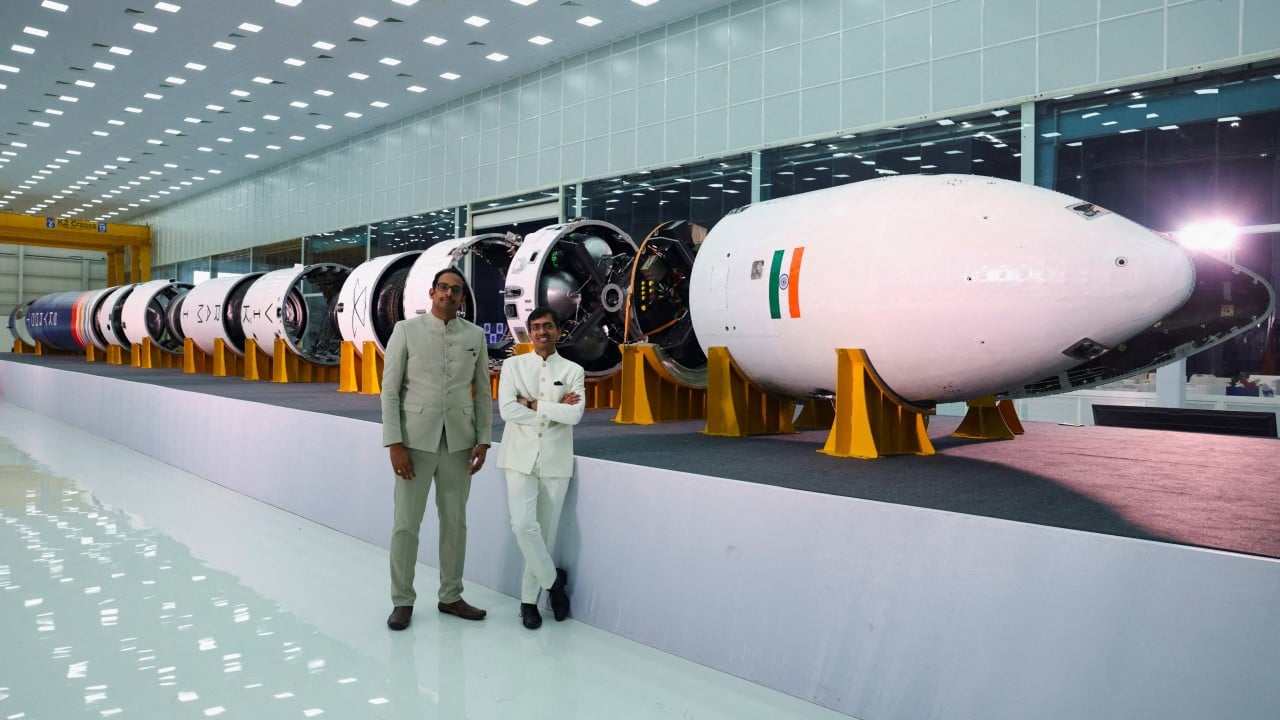
Stop looking at India's space program as just a government story. On July 18, 2026, a seven-story-tall rocket named Vikram-1 roared off the pad at the Satish Dhawan Space Centre in Sriharikota, ripped through a cloudy sky, and perfectly injected its payloads into a 450-kilometer orbit.
This wasn't the Indian Space Research Organisation (ISRO) doing the heavy lifting. The mission, named Mission Aagaman, belonged entirely to Skyroot Aerospace, a startup founded by two former ISRO scientists. With this single flight, India became only the third country in the world, alongside the US and China, to possess private orbital launch capability.
If you think this is just a cool engineering trick or a neat PR stunt, you're missing the bigger picture. The global small-satellite launch market is suffocating from a lack of cheap, reliable rides. SpaceX is busy with massive starships, and legacy players are too slow. Skyroot just proved that the private sector in India can build, test, and fly an orbital rocket from scratch.
The Tech That Actually Matters Under The Hood
Most media coverage gets bogged down in the romance of spaceflight. Let's look at the actual hardware because that's where the commercial advantage lives. Vikram-1 isn't a scaled-down government clone. It's a highly optimized four-stage machine engineered specifically for the hyper-competitive small-satellite market.
The rocket features an all-carbon composite structure. That matters because carbon fiber keeps the dead weight exceptionally low while maintaining the structural integrity needed to survive maximum aerodynamic pressure. The first three stages run on solid fuel, giving it the raw, reliable grunt needed to punch out of the atmosphere.
But the real magic happens at the top. The fourth stage—the orbit adjustment module—uses a restartable liquid-fuel engine. This engine is entirely 3D-printed. Skyroot didn't use 3D printing just to look tech-savvy; they did it because it slashes manufacturing time from months to days and eliminates dozens of failure points by printing complex fuel channels as a single piece. Because this stage can stop and restart its engine in the vacuum of space, it can drop off multiple satellites into entirely different orbits during a single mission.
Here is what Vikram-1 brings to the table:
- Payload capacity: Up to 350 kg into a Low Earth Orbit (LEO) at a 60-degree inclination.
- Sun-synchronous capability: Up to 260 kg for polar-orbiting imaging satellites.
- Turnaround time: Built for on-demand, rapid integration, meaning customers don't wait years for a rideshare slot.
Why The Orbit Matters More Than Suborbital Hype
Let's clear up some common confusion about India's private space race. Back in 2022, Skyroot made headlines by launching the Vikram-S rocket. In 2024, another prominent Indian startup, Agnikul Cosmos, successfully launched its Agnibaan rocket from a private pad.
Those flights were historic, but they were suborbital.
Going suborbital is like throwing a ball straight up into the air; it touches the edge of space, experiences a few minutes of weightlessness, and falls right back down. Getting to orbit requires reaching a blistering speed of roughly 28,000 kilometers per hour horizontally. The rocket must move so fast that as it falls toward Earth, the planet curves away beneath it, keeping the vehicle in a permanent state of freefall.
Vikram-1 didn't just touch space. It stayed there. It successfully deployed six technology demonstration payloads, including Grahaa Space's SOLARAS satellite, Cosmoserve Space's EMBRACE robotic arm for space debris removal, and Skyroot’s own experimental SCOPE satellite.
The Wild Growth Of India NewSpace Ecosystem
This success didn't happen in a vacuum. It's the direct result of a massive, deliberate policy shift. When the Indian government rolled out the Indian Space Policy in 2023, it effectively broke ISRO's monopoly. The state-run agency shifted its focus toward deep-space exploration, like the Chandrayaan moon missions, while handing the keys of commercial low-Earth orbit operations to private enterprises.
The regulatory body IN-SPACe acted as the gatekeeper, granting startups access to ISRO's world-class launchpads, testing facilities, and decades of foundational data.
The numbers show exactly how fast this dam broke. In 2014, India had exactly one space startup. By 2026, that number skyrocketed to more than 400. Companies like Pixxel are building advanced hyperspectral earth-imaging constellations, GalaxEye is developing multi-sensor imaging satellites, and Bellatrix Aerospace is creating innovative in-space electric propulsion systems.
India's space economy sits at roughly $8.4 billion today. With the private sector fully unlocked, conservative government projections expect that number to scale to $45 billion by 2030, before targeting a staggering $100 billion by 2040.
The Bottom Line For Global Satellite Operators
If you're managing a satellite constellation or developing space-based hardware, your main bottleneck has always been the launch manifest. You're either forced to pay a premium for a dedicated small rocket or you wait in a long line to be a secondary passenger on a massive rocket that might not drop you off exactly where you want to go.
The arrival of operational private Indian launchers changes your math completely.
Western satellite operators can now leverage a massive, indigenous supply chain. Skyroot utilized a network of more than 400 domestic vendors to source components for Vikram-1. This hyper-local manufacturing ecosystem keeps costs low enough to undercut Western small-sats while avoiding the political and regulatory hurdles of launching via adversarial nations.
Your next steps are clear. Stop treating Indian space tech as an exotic, experimental market. Review your upcoming launch manifests, assess the orbital flexibility offered by custom, multi-payload liquid upper stages, and start negotiating slots with the new wave of commercial operators who just proved they can deliver. Space isn't just for governments anymore, and the market waits for no one.



:max_bytes(150000):strip_icc()/essential-tools-for-drywall-work-1821508_02_drywall_knife-12d6a17b5fa948b78bd212579713ea9a.jpg)