Geopolitics isn't just about handshake photos and dry press releases. It's about hardware, deep-water geography, and economic survival. If you want to understand where the balance of power is shifting, look at Jakarta.
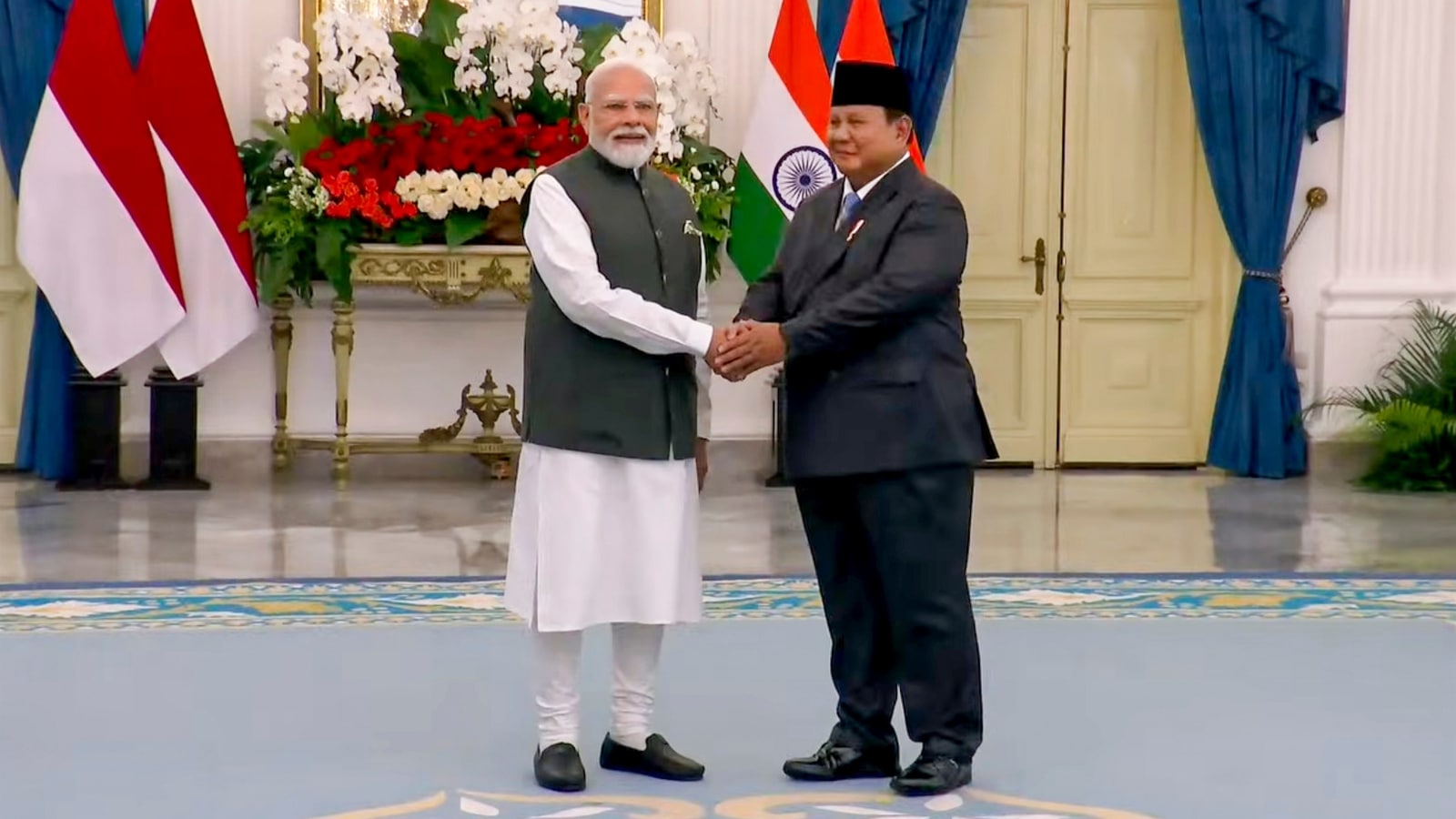
Prime Minister Narendra Modi just landed in Indonesia to meet President Prabowo Subianto. It isn't just another routine state visit. The massive stack of agreements signed on Tuesday fundamentally reshapes how maritime security and supply chains operate between South and Southeast Asia. Forget the vague diplomatic rhetoric about ancient cultural ties. The real story lies in supersonic cruise missiles, critical minerals, and digital infrastructure dominance.
Here is what went down behind closed doors in Jakarta, why it matters to you, and what everyone else is missing.
Weapons and Waterways
The headline grabbing news is the formalization of the BrahMos supersonic cruise missile deal. Indonesia has officially joined the club of Southeast Asian nations weaponizing their coastlines with Indian-Russian hardware. But that is only half the military story. Jakarta is also buying the Astra air-to-air missile system from Bharat Dynamics.
Why does this matter? Look at a map.
Indonesia sits directly on the Strait of Malacca, the absolute choke point of global trade and energy shipping. By placing high-speed, lethal anti-ship missiles on these islands, Jakarta gains immense leverage over maritime traffic. For New Delhi, this isn't just a commercial arms export worth hundreds of millions of dollars. It is a calculated strategic move. India is effectively building a friendly wall of missile batteries across the eastern entrance of the Indian Ocean, complicating foreign naval expansion without deploying a single Indian warship to those shores.
The two nations also finalized a framework on maritime safety and security. An Indonesian Liaison Officer will now sit at India's Information Fusion Centre for the Indian Ocean Region (IFC-IOR). This means real-time radar data and tracking of every vessel moving through these waters will be shared instantly.
Securing the Fuel of the Next Century
Beyond the missiles, the real quiet victory of this bilateral summit centers on industrial supply chains. Indonesia dominates the global critical minerals market, holding roughly 21 percent of the world’s nickel reserves alongside massive deposits of copper, bauxite, and tin. India desperately needs these resources to fuel its domestic manufacturing, electric vehicle transition, and electronics boom.
The agreements signed in Jakarta directly lock in this supply.
- The Steel Alliance: Steel Authority of India (SAIL) partnered with PT Krakatau Steel to build a stainless-steel slab manufacturing plant in Indonesia.
- Rare Earths: India’s Non-Ferrous Materials Technology Development Centre (NFTDC) teamed up with Midwest Ltd and PT Perminas to develop rare earth magnets.
If you control the magnets and the raw minerals, you control the tech manufacturing sector. India just secured a massive, non-aligned pipeline for these crucial components.
Exporting India Digital Footprint
While western economies struggle to modernize their financial systems, New Delhi is export-testing its digital state architecture.
During the talks, Modi and Prabowo agreed to integrate India’s Unified Payments Interface (UPI) directly with Indonesia’s retail payment systems. This means travelers and businesses will soon bypass traditional international banking networks entirely, using localized QR codes for cross-border transactions.
Even bigger is the announcement that Jakarta will launch the Indonesia Open Network (ION). This network is built entirely on the architecture of India's Open Network for Digital Commerce (ONDC). By adopting India's open-source digital marketplace blueprint, Indonesia is rejecting the monopolistic, proprietary models offered by Western big tech or heavily monitored state platforms from East Asia.
Education and Institutional Clout
Diplomacy that relies purely on business contracts can be fickle. It changes with the next election cycle. Real structural influence happens when you educate the next generation of leaders.
In a brilliant soft-power play, India secured an agreement to open an overseas campus of the Indian Institute of Management (IIM) Bangalore in Indonesia. The campus will be set up in the Singhasari Special Economic Zone in East Java. This isn't just for show. It will serve as a premier educational hub for students across the entire ASEAN region, embedding Indian institutional prestige, networks, and business methodologies directly into Southeast Asia's future corporate elite.
To top it off, President Prabowo conferred the Bintang Adipurna (Medal of Honour)—Indonesia's highest civilian award—upon Prime Minister Modi. It signals that this isn't just a transactional arrangement; Jakarta sees New Delhi as an indispensable partner for its long-term stability and growth.
What to Watch Next
The strategic realignment is moving fast, and businesses and analysts need to adapt. Here is how you can practically leverage this shift.
- Track the Logistics: Monitor infrastructure developments around the long-stalled Sabang-Nicobar corridor. If port development begins linking Indonesia's Sabang port with India's Nicobar Islands, shipping routes and maritime security protocols in the Malacca Strait will shift permanently.
- Position for Critical Minerals: If you are involved in automotive, electronics, or defense manufacturing, look closely at the newly formed supply chain pathways between Indian public sectors and Indonesian mining entities. New corridors for raw and semi-processed critical minerals are opening up.
- Prep Tech for Local Rails: FinTech developers and digital commerce platforms should prepare for the rollout of UPI integration and the ION marketplace in Indonesia. Early adopters who align their software with these open-source rails will have a massive head start in cross-border retail and regional B2B commerce.