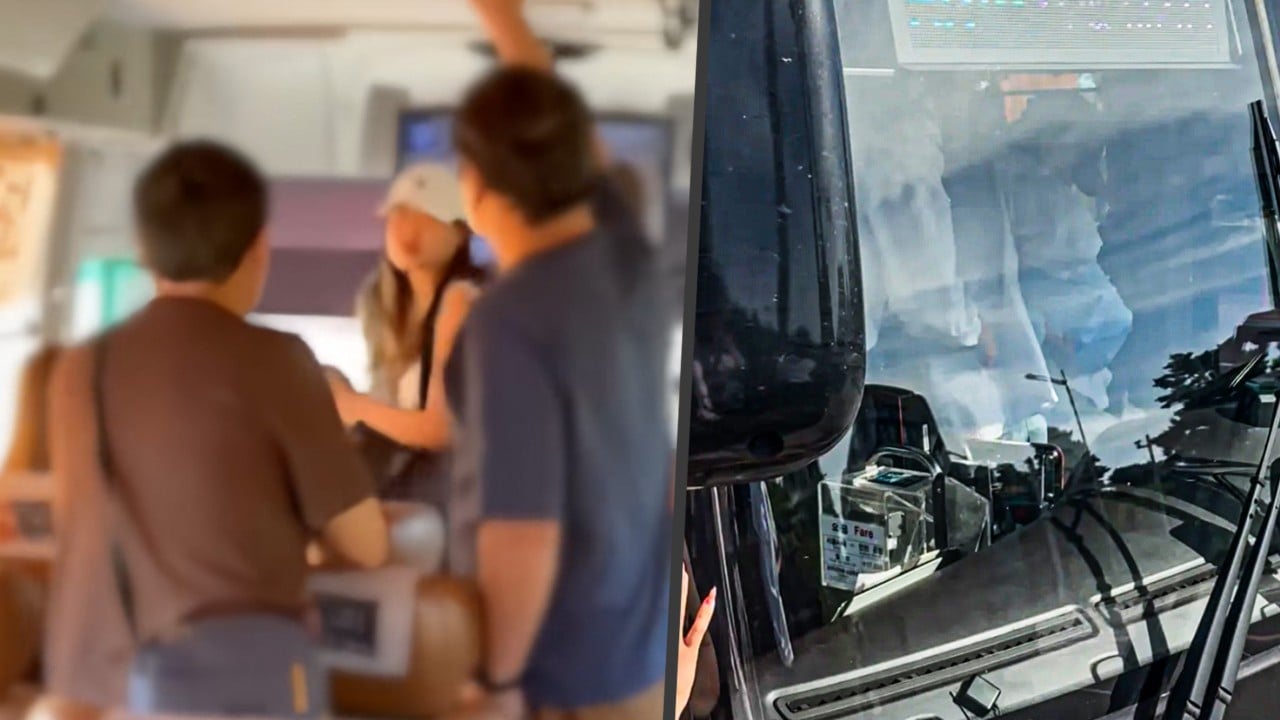
It’s a hot Saturday afternoon on July 11, 2026. You are on a bus, heading to Incheon International Airport. You are thinking about your flight, your luggage, and getting home. Then, you hear a loud, grating scrape.
Metal on metal. The massive vehicle swerves violently. Recently making headlines in related news: Inside The High Stakes Battle Over The Peterborough Hindu Temple Sale.
This isn't a minor bump. The driver has collapsed over the steering wheel. He is completely unconscious. The bus is hurtling down a highway at 60 kilometers per hour with about twenty people inside.
What happens next is not just a tale of raw courage. It is a masterclass in split-second decision-making under extreme pressure. While most people would freeze, a small group of Chinese tourists did the exact opposite. They stepped up, stopped a runaway multi-ton machine, and showed us exactly what human solidarity looks like when the stakes are life and deathThe Jeju Island Bus Incident That Had Everyone Praising Chinese Tourists Further insights into this topic are explored by The New York Times.
news
Imagine standing on a scenic street in Jeju Island, South Korea. You are taking in the salty ocean breeze, maybe looking for a place to grab some black pork barbecue. Suddenly, the peaceful afternoon shatters. A massive tour bus starts rolling backward down a steep incline.
You look through the windshield. The driver’s seat is completely empty.
The multi-ton vehicle is picking up speed, hurtling toward a busy intersection packed with cars and unsuspecting pedestrians. Most people would freeze, scream, or run away. That is just basic human survival instinct. But two visitors from China did something entirely different. They ran toward the moving disaster.
This incredible moment, where quick-thinking Chinese tourists prevented a major South Korea bus accident, became a viral sensation for all the right reasons. It is a story of pure, split-second bravery that bypassed language barriers, national borders, and the usual internet cynicism.
The split second decision that changed everything
Let's look at what actually went down on that slope in Jeju.
The tour bus was parked on a notorious incline. In heavy vehicles, failing to properly engage the parking brake or air brakes can turn a parked giant into a rolling weapon in seconds. That is exactly what happened here. The driver had stepped out of the vehicle, and the brake system failed or was not fully engaged.
As the bus began its terrifying backward slide, panic set in on the street. People on the sidewalk started shouting. Drivers in the cars behind the bus began frantically honking their horns, realizing they were about to be crushed.
Among the crowd were two Chinese women tourists. They did not have time to calculate the risks. They did not stop to think about whether they would get hurt.
One of the women sprinted toward the open door of the rolling bus. She scrambled inside the cabin, desperately searching the unfamiliar dashboard for the emergency brake controls. If you have ever looked at the dashboard of a foreign commercial transit bus, you know it looks like a spaceship. There are dozens of valves, switches, and levers, often labeled in a language you cannot read.
She did not panic. She located the emergency handbrake, pulled it with everything she had, and braced for impact.
The bus groaned to a halt. It stopped just feet away from a catastrophic pileup. Because of their fast action, absolutely no one was injured. Not a single car was scratched.
Why most of us freeze when disaster strikes
Honestly, we like to think we would be the heroes in these situations. We watch action movies and imagine ourselves jumping into runaway vehicles, saving the day. But science says we are usually wrong.
Psychologists talk a lot about the bystander effect and the freeze response. When a sudden, terrifying event occurs, our brains get overloaded with adrenaline. The prefrontal cortex, the part of the brain responsible for logical decision-making, basically goes offline. You are left with pure survival instincts: fight, flight, or freeze.
Most people freeze. They wait for someone else to take the lead.
What makes the actions of these Chinese tourists so remarkable is that they broke through that mental paralysis instantly. They saw a gap, realized no one else was moving, and stepped into the vacuum. That takes a rare kind of mental clarity. It is the sort of instinct you usually only see in trained first responders, firefighters, or military personnel. To see it in everyday tourists who were just trying to enjoy their vacation is nothing short of incredible.
When humanity overrides borders
It is no secret that international relations in East Asia can get pretty complicated. If you spend any time reading the comments sections on news sites covering China and South Korea, you will find plenty of bickering, cultural disputes, and political tension.
This incident wiped all of that away in an instant.
When the local South Korean media reported on the event, the praise was universal. South Korean netizens flooded social media platforms with expressions of deep gratitude. They called the women heroes, thanking them for saving lives on their streets. Back in China, the video of the rescue went viral, with millions of people expressing pride in their compatriots under the trending phrase "Great Chinese women."
It was a beautiful reminder of a simple truth. When the brakes fail and lives are on the line, we are not citizens of different countries arguing over history or politics. We are just humans sharing a street, trying to keep each other safe.
How to handle a runaway vehicle emergency
Let's get practical for a moment. What should you actually do if you find yourself in a situation where a vehicle is rolling out of control?
While we cannot all be action stars, knowing the basics of heavy vehicle mechanics can save your life or the lives of others.
Understand the parking brake
In modern passenger cars, the parking brake is usually a hand lever between the seats, a small foot pedal on the far left, or an electronic button marked with a "P." In buses and large trucks, it is often a yellow, diamond-shaped knob or a large lever near the steering wheel that controls the air brakes. Pulling or pushing this valve releases or applies the brakes.
Do not attempt to jump in front of the vehicle
The two tourists in Jeju ran alongside and entered the bus. They did not try to stand behind it to hold it back. Trying to physically block a rolling vehicle, even a small car, is a quick way to get crushed.
Alert everyone around you immediately
If you cannot safely access the cabin of the rolling vehicle, your priority should be making noise. Shout, wave your arms, and get pedestrians out of the way. If you are driving a car behind a rolling vehicle, blow your horn continuously to warn people who might have their backs turned.
Mind the steering wheel
If you do manage to get inside a rolling vehicle, remember that steering will be incredibly heavy if the engine is off. Power steering relies on the engine running. You will need to use significant physical strength to turn the wheel even slightly to avoid obstacles.
The takeaway from Jeju Island
We spend a lot of time consuming negative news. It is easy to get cynical about humanity when your feed is full of conflict and division. But then a story like this comes along and completely disrupts that narrative.
Two tourists went to South Korea to make memories. Instead, they made history by saving a street full of strangers. They did not ask for permission, they did not hesitate, and they did not care about national differences. They just saw a danger and stopped it.
Next time you are traveling and feel like a complete outsider, remember this story. The locals and the tourists are not as different as we think, and sometimes, a stranger from thousands of miles away might just be the person who saves your life.
If you ever find yourself witnessing a crisis, don't assume someone else has it handled. Check your surroundings, stay safe, but if you see a clear path to help, take it. You might not have to stop a runaway bus, but even small actions can change the course of someone's day, or in this case, save their life.