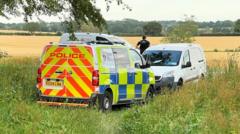
A peaceful Tuesday afternoon in Essex turned tragic when a light aircraft plunged into a field. The High Ongar flight experience plane crash has left two people dead and sparked an intense investigation. Emergency services rushed to Mill Lane after members of the public raised the alarm at 12.30pm on June 30, 2026. The two-seat Cessna 152 had taken off from North Weald Airfield just eight minutes prior. It never made it back.
This tragic event hits hard. Experience flights are often gifts. They are bought for birthdays, retirements, or bucket lists. You expect a thrill. You do not expect a fatal disaster. As an observer of general aviation safety, I know incidents like this shake public confidence to the core. People want to know how an everyday leisure activity turns fatal in less than ten minutes.
The Reality of the High Ongar Flight Experience Plane Crash
The facts we have right now are sobering. The aircraft involved was a classic two-seater Cessna 152, the backbone of flight training across the globe. According to flight-tracking data from Flightradar24, the plane departed North Weald Airfield at 12.22pm. It flew east. Five minutes into the flight, it turned back toward the airfield. By 12.30pm, the tracking signal went dark. That matched the exact moment witnesses called 999.
Detective Chief Superintendent Morgan Cronin, from the Kent and Essex Serious Crime Directorate, confirmed the grim news. Both individuals on board died at the scene. Formal identification is still pending. Cronin emphasized that identifying the victims is a complex process. Police are handling it with extreme sensitivity.
The aircraft had been busy. It had completed two successful flights earlier that same Tuesday. The day before, it logged five flights without any reported issues. This rapid turnaround is standard for flight schools during summer. It makes the sudden catastrophic failure or error even more puzzling. The weather in Essex was warm, and visibility was generally clear. Why did a routine short journey end in an Ongar field?
Unpacking the AAIB Response Team Actions
The Air Accidents Investigation Branch immediately deployed a multi-disciplinary team to the site. The AAIB does not play games. They treat every light aircraft crash with the same scientific rigor as a major airline disaster. Their team on the ground includes specialists in engineering, operations, and human factors.
The forensic phase is happening right now. Investigators are combing through the wreckage in the field off Mill Lane. They will document the impact angle. They will check the position of the cockpit controls. They look at the propeller blades. Bent blades usually mean the engine was producing power when it hit the ground. Straight, unbent blades suggest a dead engine.
They will also recover any onboard electronics. While small Cessnas do not carry commercial-grade flight data recorders, many pilots use GPS units or tablets running flight software. These personal devices can provide vital clues. They track altitude, ground speed, and exact positioning down to the second.
How Dual Control Systems Work in a Cessna 152
Most people booking these packages do not realize how the cockpit operates. A Cessna 152 features a dual-control setup. The person taking the experience package sits in the left seat. This is traditionally the pilot-in-command seat. The certified flight instructor sits in the right seat. Both seats have a full set of control yokes and rudder pedals.
The instructor can override the student at any moment. If the participant panics or pulls the control yoke too hard, the instructor simply takes over. It is built to be a safe learning environment.
But things happen fast in a light plane. If an aircraft is flying low, a sudden aerodynamic stall leaves very little room for recovery. At a standard cruising altitude of 3,000 feet, an experienced pilot has time to react to an engine failure. They can glide to a safe landing spot. If the plane is climbing or maneuvering at low altitude, those precious seconds vanish.
The General Aviation Safety Record in the UK
Light aviation carries an inherent risk. It is vastly different from flying on a commercial airliner. Commercial jets have redundant engines, highly automated systems, and two fully qualified transport pilots. Light aircraft rely on a single piston engine and visual flight rules.
The Civil Aviation Authority tracks these statistics closely. Over the last decade, general aviation in the UK has maintained a relatively stable safety record. Yet, fatal accidents do happen every year. The most common causes are well known to investigators.
- Loss of Control: This often happens when a pilot allows the airspeed to drop too low during a turn, causing the wings to lose lift.
- Engine Failure: Mechanical issues can happen, though rigorous pre-flight checks are designed to catch them.
- Controlled Flight into Terrain: This occurs when poor visibility or sudden weather shifts cause a pilot to misjudge their altitude relative to the ground.
In the High Ongar crash, the weather seemed favorable. That shifts the focus toward either a sudden mechanical failure or an unexpected medical emergency on board. The AAIB will look into the medical histories of the pilot instructor as part of their standard protocol.
Next Steps for the Local Community and Aviation Sector
The site near Mill Lane will remain cordoned off for several days. Essex Police, the local fire service, and Epping Forest District Council are assisting the federal investigators. Local leaders have expressed deep sadness. Alex Burghart, the MP for Brentwood and Ongar, publicly thanked the emergency services for their rapid response. St Mary’s Church in High Ongar has called on residents to pray for the families of the victims and the traumatized witnesses.
If you have a flight experience booked or are thinking about buying one, do not panic. These accidents are rare when compared to the thousands of hours flown safely every week in the UK. But you should remain informed.
Check the credentials of the flight school before you buy. Ensure they are fully certified by the Civil Aviation Authority. Ask about their maintenance schedules. A reputable school will happily talk about their safety protocols.
We must wait for the AAIB preliminary report. It usually takes a few weeks to publish. That document will give the first real look into what went wrong in those final three minutes over Essex. For now, the focus stays on supporting the families who lost loved ones in a tragedy that came out of nowhere.