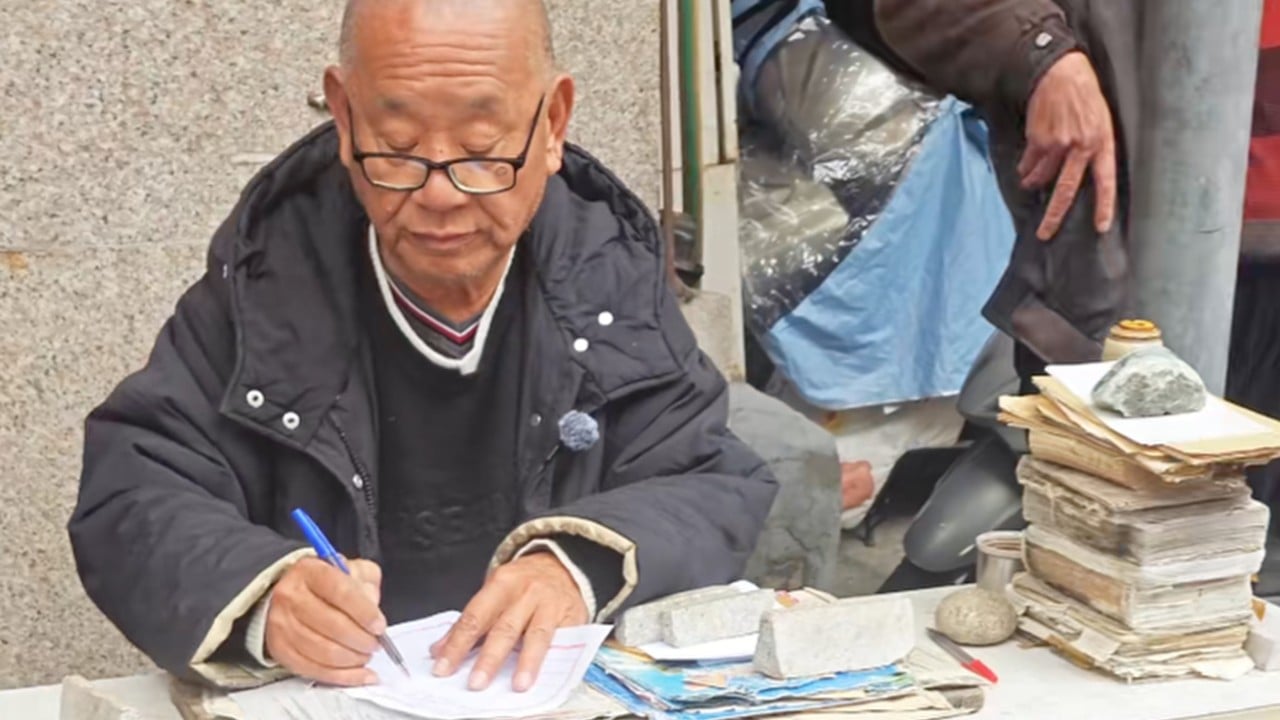
Ink on paper has a weight that pixels just can't match. In a world where we flash emojis across oceans in a millisecond, we've lost the slow, deliberate ache of waiting for a reply. But on a street corner in Quanzhou, a coastal city in China's Fujian province, 77-year-old Jiang Mingdian still runs a business built entirely on that wait.
He's one of China's last active professional letter writers. For 59 years, he's sat at a modest stall, translating the quiet heartbreaks, financial struggles, and unspoken longings of an entire community into words. He has penned over 100,000 missives since he started at age 18.
This isn't just about literacy or clerical work. It's about how a single person can become the emotional custodian of a city's diaspora. Understanding Jiang’s trade reveals a deeper truth about why we still need human gatekeepers for our most vulnerable thoughts.
The Art of Recasting Human Grief
Quanzhou has a deep history of emigration. Starting in the 1840s, waves of young people fled poverty and conflict, heading to Southeast Asia in search of work. They sent back money and letters, but their families at home were often trapped by illiteracy and local dialects. They could neither read the incoming mail nor write back.
Jiang's father was one of the city's earliest professional letter writers. Encouraged by his parents, Jiang stepped into the family business as a teenager. While his classmates earned a standard wage of 12 yuan a month in regular jobs, Jiang pulled in about two yuan a day cycling between villages. That was serious money back then, and it eventually helped him raise his three sons.
But the real work wasn't the mechanics of writing. It was the emotional translation.
Jiang spent decades writing for the fanke shen—the "bound-abroad wives" left behind to manage households alone while their husbands worked in the Philippines, Singapore, Malaysia, Thailand, or Indonesia.
"For these fanke shen, a whole life could be contained in just a few letters," Jiang recently observed.
One regular client married at 14, gave birth at 15, and lived to be 96. Her husband died overseas, leaving her a widow for the vast majority of her life. Another woman, exhausted by decades of isolation, would come to Jiang's stall venting bitter frustration and anger at her absent spouse.
If Jiang had written her words verbatim, it might have fractured the family permanently. Instead, he listened to the rage, found the underlying grief, and recast her grievances into lyrical lines of classic prose before sending them across the sea. He smoothed over the rough edges of human exhaustion to keep families together. A professional letter writer doesn't just copy down dictation. They protect the recipient from raw, destructive pain while preserving the love underneath.
Moving Beyond Simple Translation
To survive in this trade for six decades, Jiang had to become a self-taught polyglot. He used cassette tapes and thick dictionaries during his primary school days to learn the basics of English, German, Spanish, and Vietnamese.
As the decades rolled on, his role shifted. By the late 20th century, instead of just sending emotional updates, he was actively helping these isolated wives navigate complex bureaucracy to reunite with their husbands overseas. He translated legal documents, visa applications, and travel permits.
Today, his daily log looks less like a romantic poetry ledger and more like a grassroots legal clinic. He drafts:
- Wills and estate distributions
- Commercial contracts for local vendors
- Official legal petitions
- Formal family declarations
The Gen Z Pivot and the Need for Ritual
The rise of smartphones and instant messaging apps nearly wiped out Jiang’s traditional business. His elderly regulars gradually passed away. The diaspora now connects over video calls, rendering the traditional scribe obsolete. Or so it seemed.
In 2025, something unexpected happened. Snippets of Jiang’s work surfaced on Chinese social media platforms like Douyin. Suddenly, a new wave of clients began tracking down his Quanzhou street stall.
They aren't illiterate migrants. They're Gen Z university students and young urban professionals.
These young visitors don't want legal documents. They pay Jiang to write intimate letters addressed to themselves, their parents, or their romantic partners. Most of these letters are never dropped in a mailbox. They are taken home, tucked away in drawers, and kept as private artifacts.
This isn't a backward slide into old tech. It's a deliberate rejection of digital clutter. A text message can be deleted, ignored, or screenshotted and shared. A handwritten letter by a master scribe becomes an anchor. It forces the writer to slow down and forces the owner to keep it safe.
How to Reclaim the Power of the Written Word
You don't need to travel to Fujian province to bring this level of intentionality into your own relationships. If you want to move past the superficiality of instant digital communication, follow these principles from Jiang’s six decades of experience.
- Audit the emotion before you write. When you're upset or lonely, your initial thoughts come out raw and defensive. Take a breath. Figure out what you're actually trying to say—usually, anger is just fear or longing in disguise—and write to that deeper truth.
- Create a physical record for major milestones. Stop sending text blocks for birthdays, anniversaries, or condolences. Buy a heavy piece of paper, use a fountain pen, and write it by hand. The physical presence of your handwriting says more than the actual words on the page.
- Keep a personal letter ritual. Write a letter to yourself once a year on your birthday. Seal it. Put it away. Don't look at it until the following year. It grounds your perspective in a way a digital journal never will.
The professional scribes of the past are disappearing, but the human need for deliberate, careful expression hasn't changed. Stop hiding behind quick texts. Find a pen, sit down, and write something that lasts.