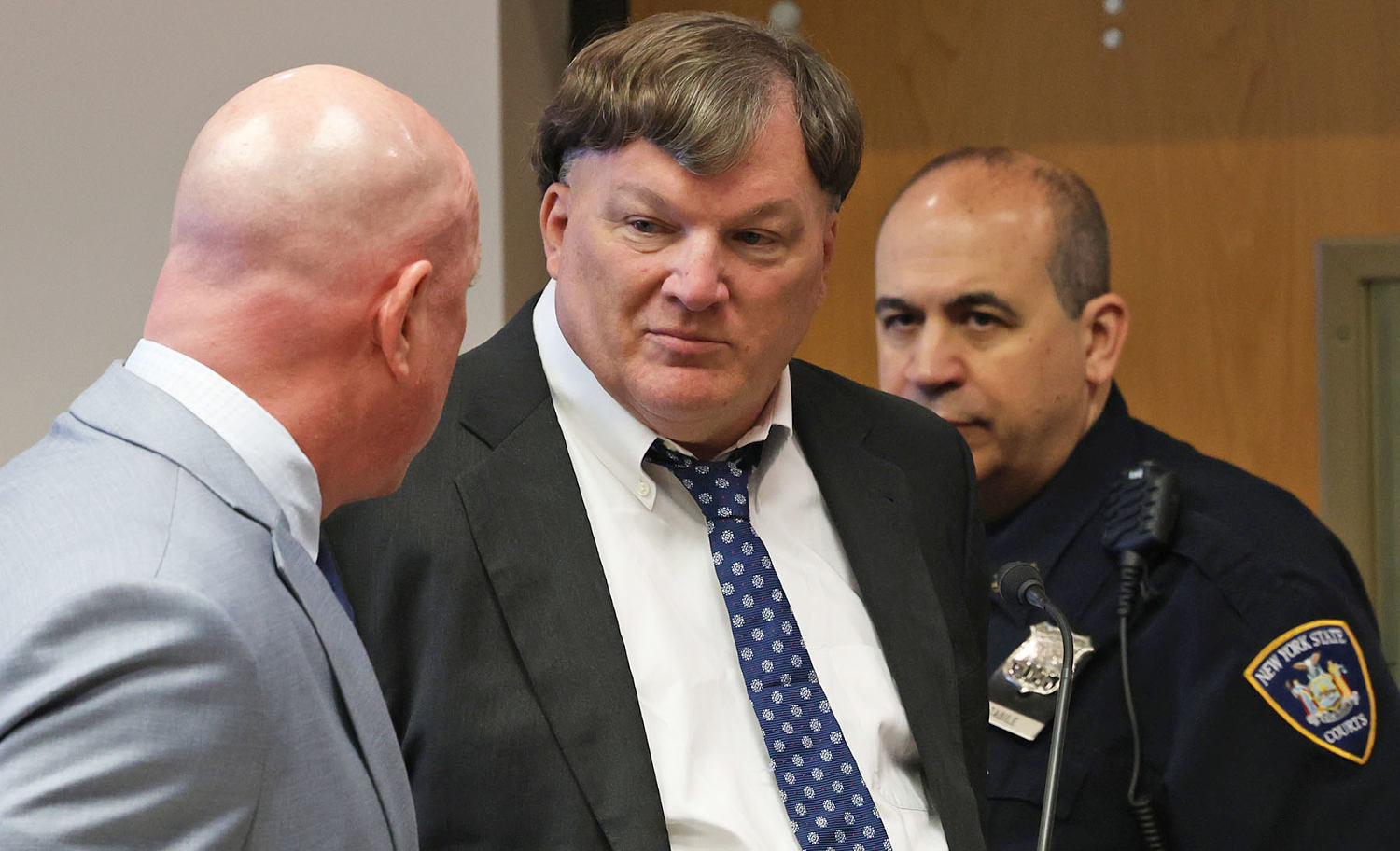
The courtroom in Riverhead, New York, was suffocatingly quiet on June 17, 2026. Rex Heuermann, a towering 62-year-old Manhattan architect who spent decades hiding a monstrous double life, sat with his hands clasped on the defense table. He lightly tapped his fingers. He looked straight ahead. He seemed entirely disconnected from the wave of raw grief and fury washing over him from the gallery. For more than thirty years, the families of his victims wanted answers. On this day, they got a final sentencing, but true closure remains an illusion.
Judge Timothy Mazzei handed down multiple life sentences without the possibility of parole. This brings a legal end to one of the most agonizing, botched, and terrifying serial killer investigations in American history. Heuermann pleaded guilty in April to murdering seven women and admitted to killing an eighth. His victims were daughters, sisters, and mothers. They were human beings discarded like trash along a remote coastal parkway.
The raw pain in that courtroom was palpable. Jasmine Robinson, a cousin of victim Jessica Taylor, looked directly at Heuermann and voiced what everyone felt. She told him a million years in prison isn't enough and that nothing will ever make this right. She described a feeling of pure repugnance just being in his presence. Heuermann barely flinched.
Understanding this case requires looking past the shocking headlines of the sentencing. You have to examine how a man could murder women for nearly twenty years while living as a suburban family man, why the police took so long to catch him, and what his final plea deal means for unsolved cold cases across the country.
The Voices He Tried to Silence
For years, media coverage focused heavily on the mystery of the killer. People called him the Long Island Serial Killer or the Craigslist Ripper. That focus was entirely wrong. The real focus belongs on the women whose lives he stole.
Amanda Funderburg, the sister of Melissa Barthelemy, demanded Heuermann look at her during her impact statement. He glanced over, eyes downcast. Funderburg was only 15 years old when Melissa disappeared in 2009. Days after the disappearance, Heuermann used Melissa's phone to call Funderburg. He taunted her. He told her what he did to her sister. That sadistic cruelty defined his methodology.
The timeline of his destruction stretches back further than many realize. Sandra Costilla was murdered in 1993. Her remains were found in the Hamptons. Karen Vergata disappeared in 1996, her remains scattered on Fire Island. Heuermann admitted to killing Vergata as part of his plea deal, though he wasn't formally charged in her death. Then came Valerie Mack in 2000, Jessica Taylor in 2003, and the "Gilgo Four" between 2007 and 2010.
These women were all young. Many worked as sex workers, a vulnerability Heuermann explicitly targeted. He believed society wouldn't look for them. For a long time, he was right.
JoAnn Mack, Valerie Mack's mother, reminded the court that her daughter had dreams before they were ripped away. Liliana Waterman was only three years old when her mother, Megan Waterman, vanished in 2010. She spoke of her childhood being shattered in an instant, haunted by questions of whether her mother was scared or in pain in her final moments.
The Dark Secrets of the Massapequa Home
How did an affluent architect maintain this illusion of normalcy? Heuermann lived in a rundown house in Massapequa Park with his wife, Asa Ellerup, and two children. Neighbors knew him as an eccentric, somewhat gruff man who carried large toolboxes and worked in Manhattan. Nobody suspected the horror hidden beneath the floorboards.
A Peacock documentary series recently exposed a terrifying detail. Ellerup revealed that Heuermann confessed to her during a jailhouse visit. He admitted he killed those women inside their family home. He waited until Ellerup and the children were out of town on vacation.
Imagine that reality. His family returned from vacation, slept in those bedrooms, and ate in that kitchen, completely unaware of the butchery that occurred days prior. Ellerup told her attorney she asked him how many women he killed, and he flatly replied eight. She didn't ask for names. She couldn't bear to hear them.
Ellerup and her children chose to stay away from the sentencing. Their legal counsel stated this absence was out of respect for the victims' families. Ellerup currently sleeps in the very basement where the torture and killings happened. The psychological fallout of this case extends far beyond the immediate circle of victims. It has permanently poisoned everyone who ever knew him.
Decades of Complete Institutional Failure
You cannot talk about the Gilgo Beach case without talking about how badly the local authorities failed. The investigation dragged on for over a decade. Families grew completely hopeless. They felt the Suffolk County Police Department didn't care because the victims were sex workers.
The truth is even more disturbing. In 2010, a roommate of victim Amber Lynn Costello gave police a highly specific lead. The roommate described seeing a towering, "ogre-like" man driving a distinctive first-generation green Chevrolet Avalanche. That vehicle belonged to Rex Heuermann. It was registered to his home address.
The police department had the description. They had the vehicle make and model. Yet, they did absolutely nothing with it for twelve years.
The institutional rot went straight to the top. Former Suffolk County Police Chief James Burke actively blocked the FBI from assisting with the investigation. Burke was later convicted of beating a handcuffed suspect who stole a duchel bag from his police SUV, which contained pornography and sex toys. The top cop was too busy covering up his own sleaze to hunt a serial killer.
The case finally cracked open in 2022 when a newly formed task force re-examined the initial case files. They found the green Chevy Avalanche note. Within months, investigators had Heuermann under surveillance. They matched DNA from a discarded pizza box outside his Manhattan office to a hair found on the burlap sacks used to wrap the bodies.
The Technological Shift That Ended the Nightmare
The defense tried desperately to toss out the evidence. They spent months in 2025 arguing against the validity of advanced DNA testing methods used by prosecutors. Judge Timothy Mazzei denied those motions.
Investigators used genetic genealogy and advanced mitochondrial DNA analysis. Standard DNA testing often fails when hair roots are missing or degraded by years of exposure to the elements along a sandy coastline. The new techniques allowed scientists to construct a profile from tiny, degraded fragments.
When Heuermann realized the genetic evidence was airtight, his legal strategy collapsed. He chose to plead guilty to spare his family and the victims' families the trauma of a massive trial. His attorney, Michael Brown, stated his client wanted to bring finality to the situation.
What Happens Now
This sentence provides a grim resolution, but the work is far from over. As part of his guilty plea, Heuermann agreed to cooperate fully with the FBI's behavioral analysis unit. He will spend his remaining days behind bars explaining his psychological motivations and methods. This cooperation is designed to help criminologists identify and catch other active serial killers before they accumulate such a massive body count.
If you are following this case or true crime investigations in general, the next steps don't involve waiting for more true-crime documentaries. They involve holding local law enforcement accountable. The Gilgo Beach murders remained unsolved not because the killer was a criminal genius, but because the system ignored vulnerable victims and brushed aside crucial evidence.
Demand transparency from your local police departments regarding cold cases. Support organizations like the National Center for Missing & Exploited Children or regional groups that advocate for missing sex workers and marginalized individuals. Public pressure is often the only force that compels authorities to reopen old files and utilize the modern DNA technology that finally brought Rex Heuermann down.

