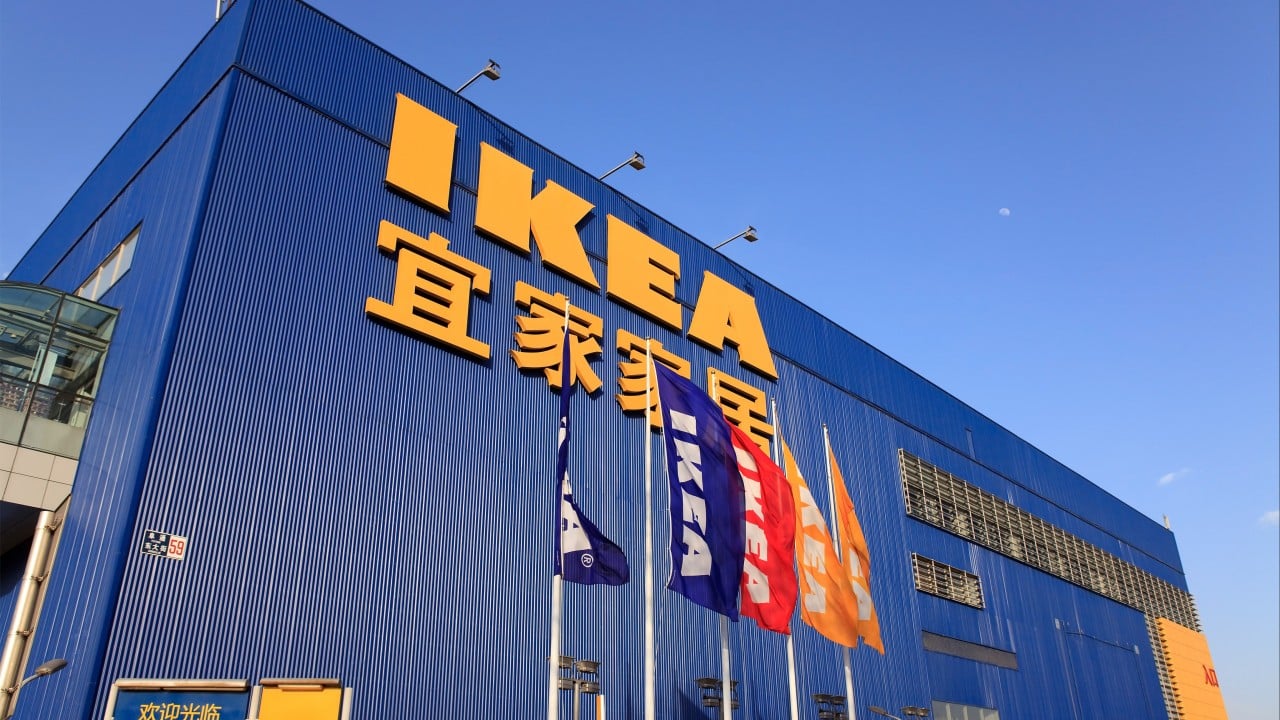
Building a massive, multi-story warehouse on the outskirts of a major city used to be a surefire way to dominate retail. For nearly three decades, this exact blueprint allowed Swedish furniture giant Ikea to plant its flag across China. But consumer behavior moves fast, and what worked a decade ago can quickly turn into an expensive real estate liability.
Ingka Group, the primary owner and operator of Ikea stores, has put eight of its former retail properties up for sale across mainland China. Commercial real estate firm JLL is handling the massive portfolio, which spans over 500,000 square meters of vacant commercial space. The list includes massive, empty storefronts in premier hubs like Shanghai, Guangzhou, and Tianjin, alongside properties in Harbin, Nantong, Xuzhou, Guiyang, and Ningbo.
This isn't just a simple real estate clearance. It's the final, tangible acknowledgment that the era of destination-driven, out-of-town big-box retailing in China is officially over.
The Downward Trend Behind the Empty Warehouses
To understand why these properties are on the auction block, you have to look at how hard the market shifted. By the end of the 2024 fiscal year, Ikea China's revenue had dropped by over 30% from its 2019 peak, falling to roughly 11.15 billion yuan ($1.6 billion). Seven of the eight stores currently listed for sale actually halted their retail operations simultaneously in February 2026, while the Guiyang location had already been sitting dark since 2022.
The problem isn't that Chinese consumers stopped buying furniture. The problem is where—and how—they buy it.
- The Property Slump: China's extended real estate downturn means fewer people are buying new apartments. Without a constant wave of new homeowners looking to furnish an entire flat from scratch, the need for a weekend-long trip to a massive suburban warehouse evaporated.
- The Friction of the "Blue Box": Spending four hours navigating a maze-like showroom just to buy a coffee table makes zero sense to a consumer base accustomed to frictionless commerce.
- Hyper-Local E-commerce: Local digital competitors, alongside instant retail services, have spent years chipping away at Ikea's traditional footprint. When you can get affordable, flat-packed furniture delivered to your door via a couple of taps on your phone, the suburban retail trip starts to feel like a chore.
Swapping Heavy Assets for Digital Speed
Instead of doubling down on holding massive pieces of real estate, the strategy has completely flipped toward an asset-light, precision-driven model. The goal now is to get closer to where people actually live and hang out, rather than forcing them to travel to the edge of the city.
The Rise of Small Formats
Following this massive offloading of property, Ikea will keep 35 offline locations across the mainland market. The future expansion budget is going directly into compact urban footprints. The company plans to launch more than 10 smaller-format stores over the next two years, concentrating heavily on core urban districts within Beijing and Shenzhen. These locations act more like design studios and order hubs than traditional warehouses, allowing consumers to plan their spaces without navigating miles of showroom floor.
Direct Digital Integration
You can't win in China today without embedding your brand into the dominant local digital ecosystems. To fight back against slipping offline foot traffic, the brand launched a flash-sale and instant-delivery pilot on Taobao, targeting highly connected urbanites in cities like Hangzhou, Beijing, and Shenzhen. If the consumer won't drive to the warehouse, the warehouse has to go directly into their social feeds.
What Happens to Half a Million Square Meters of Vacant Space?
Finding a single buyer for eight separate, massive retail facilities with highly specific architecture isn't exactly easy. According to JLL, the properties are being sold with clear ownership titles and no active lease restrictions, meaning a buyer can take delivery almost immediately.
Because these structures are typically situated in mature business districts or rapidly developing urban zones, the pitch to investors focuses entirely on adaptive reuse. We will likely see these former blue boxes carved up and transformed into:
- Community retail and mixed-use hubs that match modern neighborhood densities.
- Long-term rental housing or micro-apartments, capitalizing on the demand for urban living spaces.
- Corporate headquarters or creative office campuses that value open-floor architectural plans.
Next Steps for Retail Operators
If you're managing a retail portfolio or planning expansion in a fast-evolving market, there are clear, immediate steps to take from this shift:
- Audit Your Spatial Efficiency: Calculate your exact revenue per square meter across every physical location. If large-format sites are draining margins due to high overhead and dropping foot traffic, start planning consolidation before the properties become completely illiquid.
- Pivot to Hub-and-Spoke Distribution: Shift capital away from mega-showrooms. Instead, invest in smaller, experience-focused urban storefronts backed by localized, agile fulfillment centers.
- Integrate with Local Instant Delivery: Don't rely solely on proprietary apps or websites. Partner directly with regional on-demand delivery giants to offer immediate, same-day fulfillment options that match localized consumer expectations.