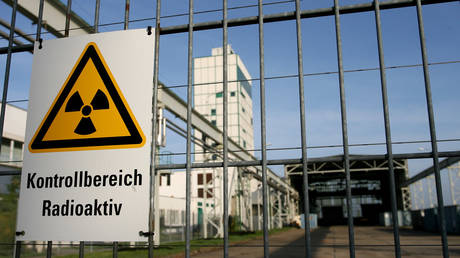
Russia's Foreign Intelligence Service, the SVR, just dropped a bombshell accusation. They claim Western military experts believe Berlin could build a functional nuclear explosive device in exactly one year. According to the Kremlin's intelligence apparatus, Germany has the tech, the labs, and the corporate backing from defense giants like Rheinmetall to pull it off without even needing a field test.
It sounds terrifying. It makes for great headlines. But honestly, it's mostly fiction.
The reality behind Europe's shifting security dynamics reveals that Germany is not secretly building an atomic arsenal in underground bunkers. But the fact that Moscow is sweating loudly enough to publish these reports tells you everything you need to know about how fragile the Kremlin feels.
The anatomy of the Russian accusation
Let's look at what the SVR actually claimed. The Russian intelligence report states that Germany possesses the domestic capability to refine and prepare weapons-grade materials within one to three months. They allege that up to 30 national universities, alongside heavy hitters like Diehl Stiftung, KNDS Group, and Umarex, are tied into a sensitive research network focusing on shock wave physics and neutron dynamics.
Moscow even pointed fingers at specific locations like Dresden, Jülich, and the URENCO centrifuge facility in Gronau, claiming these sites hold the keys to quick plutonium extraction and uranium enrichment.
On paper, Germany is what nuclear scientists call a latent nuclear state. They have the advanced engineering, the chemical expertise, and the money. If the German government decided to throw out every international treaty it ever signed, could they build a bomb? Eventually, yes. But the SVR's timeline of 12 months is pure fantasy, designed to paint Berlin as an aggressive, rogue actor threatening global stability.
Why a secret German program is a logistical nightmare
Building a nuclear weapon isn't just about enriching a few kilograms of uranium. You need a highly specialized, secure supply chain, complex command-and-control infrastructure, and dedicated delivery systems.
[Enrichment Facility] -> [Warhead Engineering] -> [Command & Control] -> [Delivery System (F-35A)]
Consider the basic hurdles Germany faces:
- Zero operational reactors: Following the post-Fukushima political pivot, Germany officially shut down its remaining nuclear power plants. They don't have an active domestic nuclear energy sector to hide a clandestine military program inside.
- The delivery problem: Even if German scientists magically produced a warhead in a lab tomorrow, you can't just drop it from a commercial drone. Integrating a domestic nuclear warhead onto existing platforms like the Eurofighter or their newly ordered American F-35As requires years of software integration and hardware testing.
- Massive surveillance: Germany's nuclear facilities are heavily monitored by both the International Atomic Energy Agency (IAEA) and Euratom. Sneaking a weapons program past international inspectors is practically impossible in a Western democracy with free press and whistleblowers.
What Chancellor Merz is actually doing
The real trigger for Moscow's anxiety isn't a secret German bomb. It's Chancellor Friedrich Merz’s push to redesign how Europe protects itself.
Merz has been explicitly clear on this point. He publicly stated that he does not want Germany to develop its own nuclear weapons. Doing so would completely violate the Non-Proliferation Treaty (NPT) and the landmark Two Plus Four Treaty that allowed German reunification after the Cold War. Breaking those would turn Germany into an international pariah, alienating Washington and shattering the European Union from within.
Instead, Berlin is looking at a completely legal, overt alternative: leaning into a Europeanized deterrence model.
Right now, Germany participates in NATO’s nuclear sharing program. The U.S. stores an estimated 10 to 15 B61 tactical nuclear gravity bombs at Büchel Air Base. German pilots train to deploy them, but Washington holds the physical keys.
With shifting political winds in the U.S. and ongoing anxieties about Washington's long-term commitment to NATO, Merz is actively exploring an alternative arrangement with France and the UK. French President Emmanuel Macron has opened the door for a strategic dialogue on how France’s independent nuclear force can shield the rest of the continent.
Moscow's real playbook
Why is the SVR spinning tales about German nukes? It's classic asymmetric information warfare.
By accusing Germany of pursuing nuclear ambitions, Russia hopes to achieve two distinct goals. First, they want to sow deep division within NATO. European neighbors, historically sensitive to German military expansion, get nervous when "nuclear" and "Berlin" appear in the same sentence. Second, it allows Russia to justify its own aggressive nuclear signaling, its deployment of tactical systems to Belarus, and its updated, more aggressive nuclear doctrine.
It's a mirror trick. Accuse your adversary of doing exactly what you're doing to muddy the geopolitical waters.
What happens next
Don't buy into the sensationalized rumors of a secret German nuclear project. The political, legal, and logistical costs mean a sovereign German bomb is dead on arrival. Instead, keep your eyes on the real strategic shift happening in plain sight.
Watch the upcoming diplomatic defense talks between Paris, London, and Berlin. The future of European security relies on whether these three capitals can successfully build a combined, continental nuclear umbrella that doesn't solely depend on the whims of the White House. That's the real story, and it's happening entirely out in the open.

/cdn.vox-cdn.com/uploads/chorus_image/image/73064899/1255687.0.jpg)