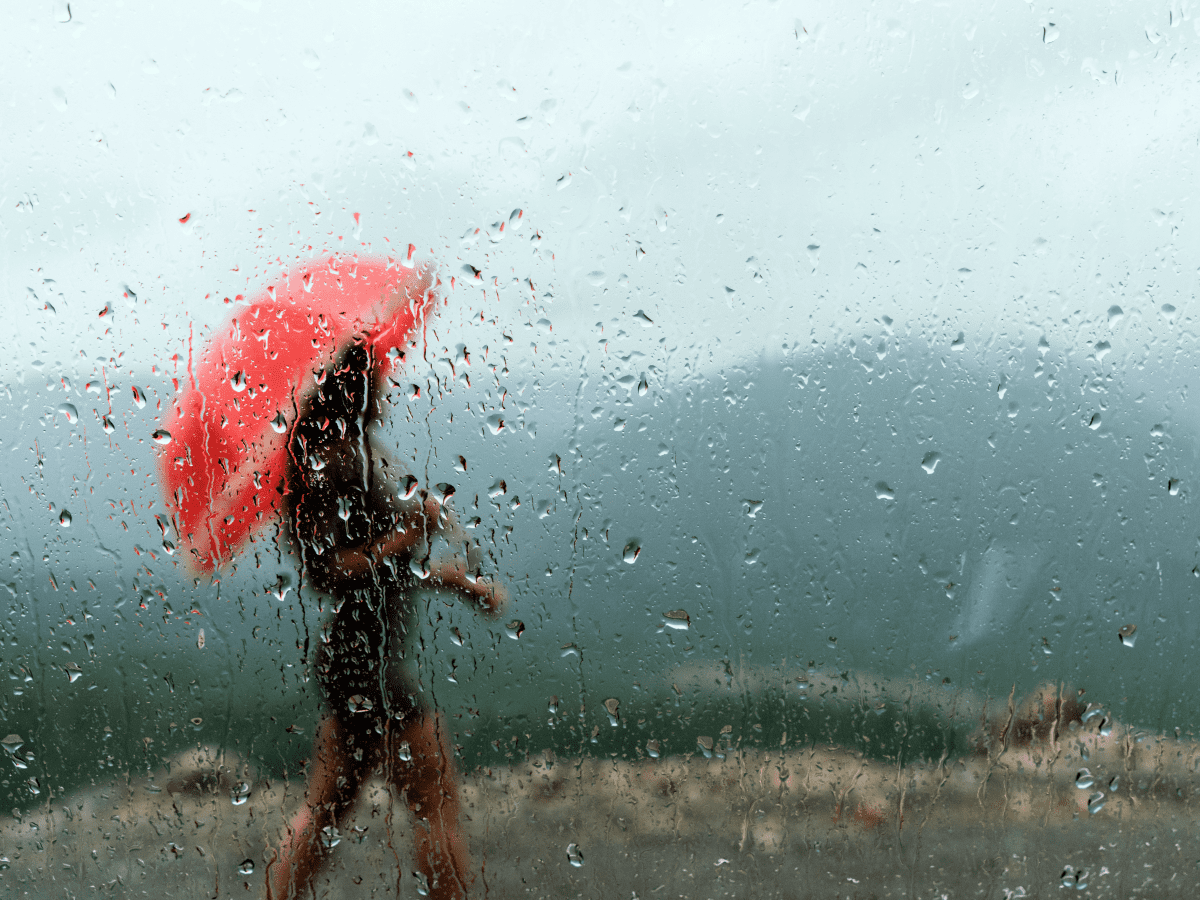
I watched a guy spend four thousand dollars on a sensory deprivation retreat in the desert because he thought it was the shortcut to mental clarity. He spent six days in a dark room, waiting for a revelation that never came. When he stepped outside on the seventh day into a rare thunderstorm, he didn't even notice the water hitting his skin because he was too busy checking his email to see if his business had survived his absence. He missed his chance to Feel The Rain On Your Dih because he treated presence like a line item on a spreadsheet. In my experience, this is where everyone trips up. You can't buy your way into a genuine sensory connection with the world, and you certainly can't schedule it between Zoom calls. If you try to force the experience through expensive gadgets or rigid meditation schedules, you'll just end up with a lighter wallet and the same cluttered mind you started with.
The High Cost of Performance Presence
The biggest mistake I see is people turning awareness into a performance. They want the "aesthetic" of being grounded without doing the actual work of being bored. I’ve seen influencers spend twenty minutes setting up a tripod in the mud just to film a ten-second clip of themselves looking thoughtful in a downpour. They aren't feeling anything; they're producing content. Read more on a related issue: this related article.
When you treat your life like a film set, you're constantly living in the third person. You're watching yourself live instead of actually living. This creates a psychological barrier that prevents any real sensory input from reaching your brain. I've worked with high-level executives who are so detached they literally can't tell you the temperature of the room without looking at a thermostat. They've outsourced their senses to technology.
The fix isn't a retreat. It's much cheaper and much harder. You have to stop performing. You have to be willing to look like an idiot standing in your backyard without a phone. If you're thinking about how you'll describe the moment later, you've already lost the moment. True sensory immersion requires a complete lack of an audience, including the one in your head that judges your progress. Further analysis by Refinery29 explores similar perspectives on this issue.
Why You Fail to Feel The Rain On Your Dih
Most people approach sensory awareness as if it's a muscle they can flex on command. It's not. It's more like a radio frequency that's always broadcasting, but your "receiver" is jammed by digital noise and over-intellectualization. I've seen people try to "think" their way into a feeling. They stand in the rain and tell themselves, "I am now experiencing water on my skin. This is restorative. I am feeling grounded."
That's just more noise. You're replacing the feeling with a description of the feeling. In the field of clinical psychology, researchers often point to "experiential avoidance" as a primary driver of anxiety. By trying to control the experience or categorize it immediately, you're actually avoiding the raw, unfiltered sensation.
The Intellectualization Trap
When you name a sensation, you kill it. The moment you say "that's cold," your brain files the experience away and stops processing the actual tactile data. You've moved from the physical world into the world of language. I’ve noticed that the people who struggle most with this are the ones who pride themselves on being "analytical." They want a manual. They want a 1-to-10 scale for how wet they should feel.
The fix here is to stay in the pre-verbal stage as long as possible. Don't label the cold as "cold." Don't label the wet as "wet." Just let the nerves fire. It sounds simple, but try doing it for sixty seconds without a single word popping into your head. It’s brutal.
Misunderstanding the Biological Requirement
People think presence is a spiritual state. It's actually a biological one. If your nervous system is stuck in a sympathetic "fight or flight" state because you've had six cups of coffee and three hours of sleep, you physically cannot engage with your environment in a meaningful way. Your brain is tuned to detect threats, not textures.
I've seen people try to practice this strategy while they're vibrating with caffeine. It doesn't work. Your skin is your largest organ, but its input is deprioritized by the brain when cortisol levels are through the roof. You're effectively numb.
The fix is physiological regulation. You need to get your heart rate down before you even attempt to engage with your surroundings. This isn't about "vibes." It's about giving your parasympathetic nervous system a chance to take the wheel. If you aren't willing to fix your sleep and your stimulants, you're wasting your time trying to feel anything deeper than a panic attack.
The Wrong Way vs the Right Way to Engage
Let’s look at a real scenario I witnessed last year. Two people were caught in a sudden afternoon storm during a hike.
The first person—let’s call him the Optimizer—immediately pulled out a high-tech Gore-Tex shell. He zipped it up to his chin, put on his waterproof gloves, and checked his smartwatch to see how the humidity was affecting his pace. He spent the entire walk complaining about the "conditions" and wondering if his expensive boots would leak. He was technically in the rain, but he was encased in plastic and anxiety. He finished the hike stressed, annoyed, and precisely as disconnected as he was when he started.
The second person—the Practitioner—did the opposite. She took off her hat. She slowed her pace. She didn't try to stay dry because she accepted she was already wet. She watched how the water pooled in the creases of her hands. She listened to the difference in sound between rain hitting leaves and rain hitting stone. She wasn't "braving" the weather; she was participating in it. She finished the hike with lower blood pressure and a clear head.
The difference wasn't the gear. It was the refusal to treat the environment as an adversary to be managed. The Optimizer spent three hundred dollars on a jacket to make sure he didn't feel a thing. The Practitioner spent zero dollars and got the full experience.
The Myth of the Perfect Environment
Stop Waiting to Feel The Rain On Your Dih
A massive mistake people make is waiting for the "right" time or place. They think they need a pristine forest or a private beach. I've seen city dwellers say they'll practice this once they get away for the weekend. This is a trap. If you can't find a way to connect with the world on a gray, exhaust-filled street in Chicago, you won't do it in the Maldives either. You'll just be a distracted person in a prettier location.
The Problem with Escapism
When you tie your awareness to a specific location, you make it fragile. You're essentially saying that your peace of mind is dependent on your external surroundings. That's a position of weakness. The most effective practitioners I know can find that raw sensory connection in the middle of a crowded subway station or a fluorescent-lit office.
The fix is to stop looking for beauty and start looking for reality. Reality is often ugly, loud, or uncomfortable. The rain isn't always a gentle mist; sometimes it's a freezing downpour that smells like wet asphalt. If you only want the "pleasant" sensations, you're not practicing awareness—you're practicing hedonism.
- Stop looking for "peaceful" spots.
- Engage with the environment you actually have.
- Practice in 30-second bursts throughout the day.
- Ignore the "vibe" and focus on the physics.
The Reality Check
Here's the part where I stop being nice. Most of you won't do this. You'll read this, think "that's interesting," and then go back to scrolling through your phone while you walk to your car. You'll continue to live in a muffled, plastic-wrapped version of reality because it's comfortable.
True sensory connection is uncomfortable. It requires you to put down your armor. It means feeling cold when it's cold and wet when it's wet. It means being bored and frustrated and noticing how those things feel in your chest. It means realizing that you've spent the last decade of your life completely numb to the physical world because you were too busy worrying about a digital one.
There is no "hack" for this. There is no app that can do it for you. There is no five-step program that guarantees success. It's a choice you have to make every single time you step outside. It's the choice to stop managing your life and start actually living it. It's expensive in terms of ego and cheap in terms of cash. Most people would rather spend the cash. If you're one of them, fine. Buy the four-thousand-dollar retreat. But don't be surprised when you come back just as empty as when you left. The world is right there, hitting you in the face every day. All you have to do is stop hiding from it.