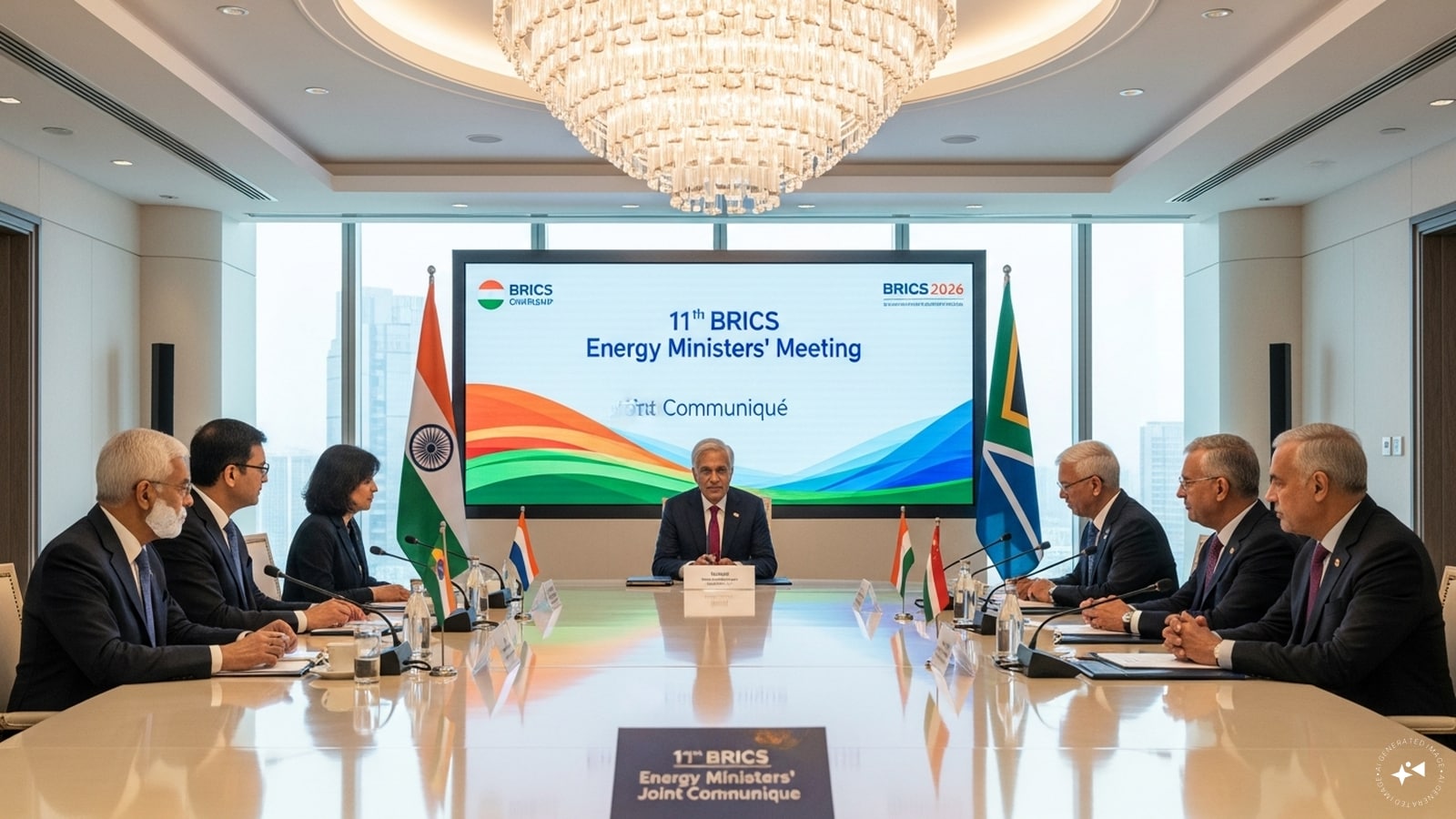
Western commentators love to dismiss BRICS as a dysfunctional club of rivals. They point at India and China's border disputes or the ideological gaps between oil monarchies and African democracies. But right now, something is happening in Gurugram that proves the skeptics wrong. India hosts BRICS energy meet as nations push plan for energy security and clean tech, and it’s not just another talk shop.
This 11th BRICS Energy Ministers' Meeting, running from June 25 to 26, 2026, marks a massive shift in how global power operates. We aren't looking at a minor diplomatic gathering. This bloc now represents eleven nations since Indonesia joined last year, covering almost half the planet's population and 40% of global wealth. When these countries sit down to rewrite the rules of energy, the rest of the world has to pay attention.
The real narrative isn't about lofty climate promises made in European capitals. It's about practical survival, economic expansion, and a blatant refusal to let western sanctions or green mandates dictate the growth of developing economies.
The Friction Inside the World's Biggest Energy Club
Putting Russia, Saudi Arabia, Iran, and the UAE in the same room with India and China creates an insane dynamic. You have the world's largest fossil fuel exporters negotiating directly with the fastest-growing energy consumers.
Think about the tension. Traditional oil giants want to protect their hydrocarbon revenues for as long as possible. Meanwhile, countries like India are drowning in energy import bills and desperately need to clean up their toxic city air.
Yet, they're finding common ground because their ultimate goals match. They want autonomy. They don't want Washington or Brussels telling them who they can buy oil from or how fast they must shut down their coal plants.
The Western media frames the energy transition as a moral crusade. For BRICS, it's a hard-nosed calculation. Security comes first. Sustainability comes second. Clean tech is seen as a tool to achieve independence, not just a way to hit a target in an international treaty.
What India Is Actually Trying to Prove in Gurugram
India didn't take the chairship of this group just to sign vague communiqués. New Delhi is using this event to show the Global South that you can scale up green power without crashing your economy.
The official theme chosen by the Indian hosts is "Energy for All," or सर्वेषां ऊर्जम्. It sounds like marketing, but the underlying numbers tell a different story. India is flashing its credentials to position itself as the undisputed voice of developing world infrastructure.
- The Smart Meter Deployment: India has put over 60 million smart meters in homes and factories, completely changing how grid distribution works.
- The Storage Blueprint: The government is targeting a massive 410 GWh of energy storage capacity by 2032 to handle the erratic nature of solar and wind power.
- The Biofuel Push: The country is already hitting its 20% ethanol blending targets in gasoline ahead of schedule, cutting down foreign crude reliance significantly.
India wants to export these blueprints to Egypt, Ethiopia, and Indonesia. If Indian companies can build cheap solar grids and efficient biomass supply chains in Uttar Pradesh, they can do it in East Africa or Southeast Asia too.
The Hypocrisy of Global Green Rules
Let's be blunt about why this BRICS meeting feels so urgent. The global financial system is failing the developing world when it comes to green funding. Rich nations promised billions in climate finance decades ago. Most of that cash never showed up, or it came with so many strings attached that it was useless.
Look at how the West reacted when the Ukraine conflict broke out. European nations immediately bought up global supplies of liquefied natural gas, pricing out poorer countries in South Asia. Then they turned around and lectured those same poor nations for burning coal.
BRICS leaders aren't blind to this. The discussions in Gurugram focus heavily on tech sharing because they know nobody else will hand over the keys to the future. If China has the cheapest solar manufacturing on earth, and India has the digital stack to manage a modern power grid, they don't need Western technology or Western approval.
Coal Is Not Going Away and Everyone Knows It
You won't hear this at a UN climate summit, but look closely at the side events happening at this Gurugram meet. One of the primary sessions is dedicated entirely to "Clean Coal Technologies."
To a Western environmentalist, that phrase is an oxymoron. To an Indian or Chinese factory owner, it's a lifeline.
Millions of people still lack reliable electricity. Turning off coal overnight means blackouts, poverty, and political chaos. India's approach recognizes that fossil fuels will remain part of the mix for decades. The focus here is on reducing the harm through efficiency and carbon capture, rather than pretending coal can disappear tomorrow. It's a pragmatic stance that infuriates Western activists but satisfies domestic voters.
The Reality of the New Eleven-Member Alliance
The expansion of BRICS has fundamentally changed the group's internal gravity. Look at who's at the table now.
Saudi Arabia and the UAE bring trillions in sovereign wealth. Russia holds some of the largest gas reserves on Earth. China controls the supply chains for lithium, cobalt, and rare earth elements needed for electric vehicle batteries. India provides the tech talent and the massive domestic market.
This creates a self-sustaining ecosystem. They have the fuel, they have the technology, they have the money, and they have the customers. They can build an entire alternative energy economy that bypasses the US dollar and Western shipping lanes. We are seeing early signs of this with bilateral trade in local currencies for oil shipments between India and the UAE.
The Massive Roadblocks Nobody Wants to Talk About
It would be naive to pretend everything is smooth sailing in Gurugram. Serious systemic issues threaten to undermine this entire plan.
First, trust is scarce. India remains highly suspicious of China's dominance in clean tech equipment. Relying on Beijing for solar components feels just as dangerous to New Delhi as relying on the Middle East for oil.
Second, the economic disparities are vast. What works for a hyper-wealthy state like the UAE doesn't apply to Ethiopia, where basic grid connectivity is still a luxury. Finding a unified policy that satisfies both a country with a $90,000 GDP per capita and one with less than $1,500 is nearly impossible.
Finally, the political systems are totally incompatible. Democracies like India and Indonesia have to deal with public pushback, environmental lawsuits, and electoral cycles. Authoritarian members can simply decree a policy change overnight. That friction slows down real execution.
Your Strategic Next Steps
If you're trying to figure out how this geopolitical shift affects your business, investments, or career, stop reading generic news summaries. Watch where the actual money is moving.
- Track the Global Biofuels Alliance: Keep an eye on how India integrates this initiative with new BRICS partners. The technology around ethanol and compressed biogas is scaling fast, creating major agricultural and supply chain opportunities.
- Monitor Energy Storage Tenders: With India chasing that 410 GWh target, battery infrastructure, grid-scale management, and related software systems are going to see a massive influx of capital.
- Watch Non-Dollar Trade Agreements: Pay attention to how energy contracts between these eleven nations are settled. Any shift away from the petrodollar changes global inflation dynamics and supply chain costs.
The old era of global energy governance is dying. The nations meeting in Haryana aren't waiting for permission to build the next system. They are building it right now, on their own terms.