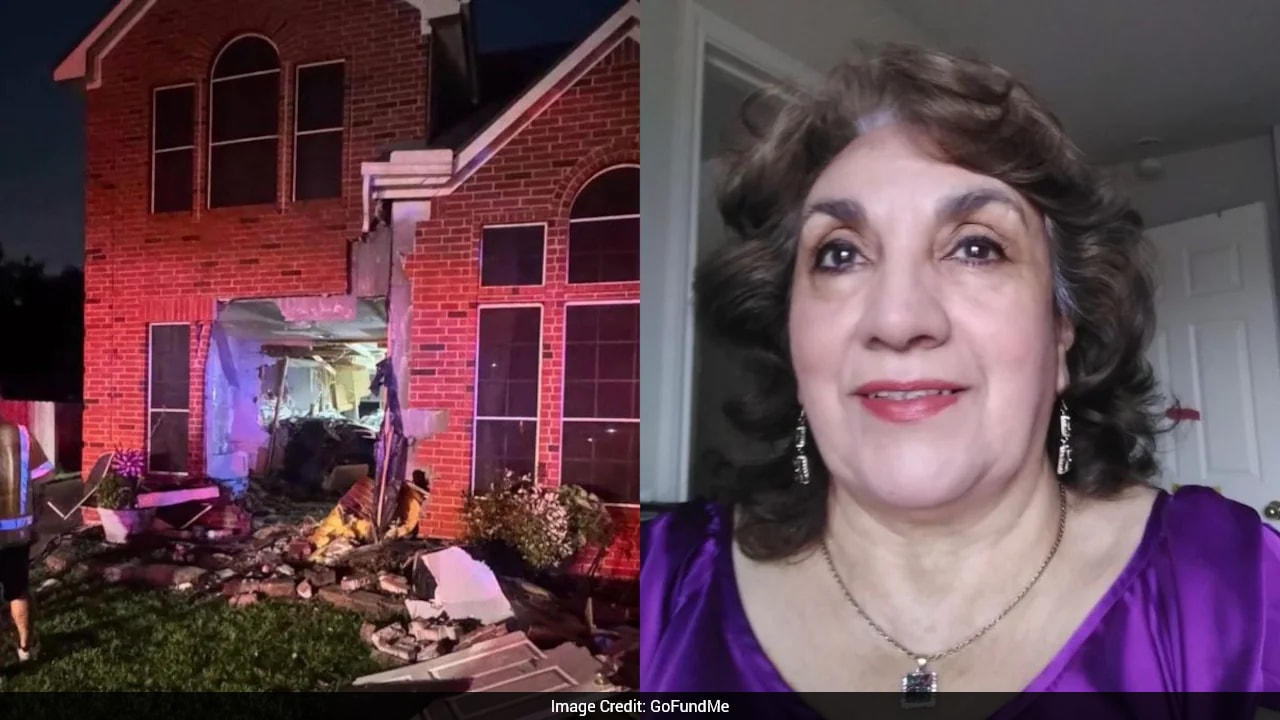
Your home feels like the one place where you're completely safe from traffic. That security shattered on a Friday night in Katy, Texas, when a Tesla Model 3 plowed straight through a brick wall and into a front room. The crash killed 76-year-old Martha Avila, a healthy grandmother who her family says didn't have any medical issues and should've lived to a hundred. The driver, 44-year-old Michael Butler, told investigators his car was running on Autopilot when it failed to navigate a turn and accelerated into the house.
This tragedy isn't just an isolated accident or a bizarre headline. It points directly to a massive, systemic misunderstanding of what driver-assistance systems can actually do. People hear names like Autopilot or Full Self-Driving and naturally assume the car can handle routine residential driving. It can't. When drivers treat partial automation like a chauffeur, the results can be fatal.
Let's look at what happened in western Harris County and dissect why these automation failures keep happening.
The Shocking Reality of the Katy Texas Crash
Around 8 p.m. on June 19, the Tesla Model 3 was traveling down Rose Hollow Lane near Westgreen Boulevard and Highland Knolls. The road hit an intersection where the driver needed to make a right turn. Instead of turning, the vehicle went straight, left the roadway, and headed directly for the brick residence.
Neighbors reported hearing a massive boom that sounded like an explosion. Front-door camera footage from the neighborhood showed the vehicle moving at a remarkably high rate of speed before it slammed into the home.
Martha Avila was simply standing in her front room when the vehicle breached the wall. The impact pinned her down inside her own home. Emergency crews rushed to the scene and flew her via Life Flight helicopter to Memorial Hermann Hospital, but she died from her injuries. Jennifer Barbour, Avila's daughter, was in the backyard when the crash occurred and described the sheer chaos of trying to check on her children through the thick dust and smoke before realizing her mother had been struck.
The driver stayed at the scene and cooperated fully with the Harris County Sheriff's Office. Deputies confirmed Michael Butler showed no signs of alcohol or drug impairment. He was taken to the hospital by ambulance for his own injuries, and no immediate criminal charges were filed while the investigation continued.
The most critical detail from the initial response came straight from Butler's mouth. He told deputies he had the vehicle's automated driving features active right before the impact.
The Distinction Between Autopilot and True Autonomy
Investigators are working with technical teams to download the Tesla data logs to verify Butler's claim. We don't officially know if the car was using basic Autopilot or the premium Full Self-Driving software. Frankly, for the safety of people standing inside their living rooms, the exact software version doesn't change the underlying problem.
Neither system turns a Tesla into an autonomous vehicle.
Basic Autopilot combines traffic-aware cruise control with lane-centering assistance. It's meant for highways with clear lane markings and predictable traffic flows. It isn't designed to handle sharp right-hand turns at T-intersections in quiet residential zones. The advanced Full Self-Driving option attempts to navigate city streets, handle stop signs, and make turns, but Tesla explicitly labels it as a supervised system.
The driver must remain fully attentive, with hands on the wheel, ready to take over at any split second.
The marketing names create a dangerous mental gap. When you name a product Autopilot, human psychology takes over. Drivers give the machine the benefit of the doubt. They look away from the road, check a text message, or zone out because the car has successfully handled the last twenty turns perfectly.
Experts call this automation complacency. The system works well 99% of the time, which tricks your brain into thinking it's perfect. But that remaining 1% is where people die. If a driver takes three seconds to realize the car is accelerating toward a house instead of braking for a turn, those three seconds represent the entire margin between life and death.
Federal Regulators Take a Harder Stance
This horrific incident in Texas comes during an intense wave of government pressure on automated driving software. The National Highway Traffic Safety Administration has been circling these systems for years, and the leash is getting shorter.
Back in October 2025, federal regulators launched an investigation into nearly 3 million vehicles running Tesla's automated software after receiving numerous reports of vehicles running red lights, ignoring traffic signs, and driving into oncoming traffic lanes. The agency didn't let the issue slide. In March 2026, they officially upgraded that probe into a formal Engineering Analysis, which is the final step before the government can force a massive manufacturer recall or demand permanent software restrictions.
Regulators are also digging into a separate issue involving how companies report these crashes. A major legal and regulatory flashpoint emerged when engineers acknowledged the company hadn't fully preserved comprehensive crash records for the first few years after Autopilot launched. This lack of transparent data makes it incredibly difficult for independent safety experts to determine exactly how often these vehicles misinterpret the environment around them.
The central question federal investigators face is whether the driver-monitoring systems are fundamentally flawed. If a vehicle allows a driver to completely disengage their attention while traveling at high speeds through a neighborhood, the safety safeguards aren't doing their job.
The Technical Blind Spots of Camera Only Systems
To understand why a vehicle might plow straight through an intersection into a house, you have to look at the hardware choices. Tesla famously stripped radar and ultrasonic sensors out of its vehicles, relying entirely on a suite of external cameras and artificial intelligence neural networks. The company argues that humans drive using only vision, so cars should do the same.
The problem is that computer vision doesn't see the world the way a human eye does. Cameras can get confused by sudden changes in lighting, shadows, glare, or highly reflective surfaces. A brick wall of a home sitting at the end of a T-intersection might not look like an obstacle to an algorithmic model trained primarily on highway retaining walls and moving semi-trucks.
If the system misidentifies a house as open space or an overhead overpass, it won't apply the brakes. Even worse, if the software believes it needs to clear an intersection quickly, it might actually command the vehicle to accelerate.
When a human driver approaches a dead end or a sharp turn, your brain relies on a lifetime of contextual clues. You see the mailbox, the manicured lawn, the front porch light, and you naturally slow down. A camera system looks for lines, contrast, and pixel variations. If those pixels don't clearly match a known hazard pattern in the system's training data, the car keeps moving forward.
Responsibility in the Age of Assisted Driving
When these tragedies hit the news, a fierce debate always erupts over who is actually to blame. Is it the driver who trusted the technology too much, or is it the manufacturer that sold a system with an overly ambitious name?
Legally, the responsibility still rests squarely on the person sitting in the driver's seat. Every time you turn on these features, a warning pops up on the screen reminding you that you must keep your hands on the wheel and remain in full control. If the car drives off the road, the legal system views it exactly the same as if you fell asleep at the wheel of a traditional gas-powered sedan. Michael Butler was the operator of that Model 3, and his duty was to stop that vehicle before it crossed the property line.
Morally and ethically, the conversation is much messier. If a company designs a system that predictably causes humans to lose focus, can you blame the human for losing focus?
Human factors engineering proves that people are terrible at monitoring an automated system that rarely fails. We aren't built to stare intently at a road for an hour without doing anything, waiting for a mechanical error that happens once every ten thousand miles. Software engineers know this. By providing technology that handles the steering and acceleration but demanding the human remain 100% alert, car companies are creating a terrible user experience that relies on flawless human behavior to avoid disaster.
Steps You Must Take to Protect Yourself on the Road
If you drive a vehicle with advanced driver-assistance features, you have to actively fight against the urge to trust the machine. Don't wait for a government recall or a software update to change how you behave behind the wheel.
First, strictly limit your use of partial automation to the environments they were genuinely built for. Keep these systems turned off when you're driving through residential neighborhoods, school zones, or areas with heavy pedestrian traffic. These environments are too chaotic, unpredictable, and tightly packed for a camera-based system to navigate safely without a high risk of a sudden error.
Second, treat the system as an unpredictable student driver. You wouldn't take your eyes off the road or look down at your phone if a teenager with a learner's permit was steering your car through an intersection. Treat your vehicle's software with that exact same level of skepticism. Keep your hands physically on the wheel, not just hovering near it, so you can instantly counter-steer if the vehicle makes an unpredicted turn or fails to detect a dead end.
Finally, ignore the marketing names. Strip away terms like autonomous, self-driving, or autopilot from your vocabulary. Remind yourself every time you start your engine that you are driving an ordinary car equipped with an advanced cruise control system. Your car cannot think, it cannot anticipate a crisis, and it won't care about the brick wall standing right in front of it. Keeping that mindset is the only way to make sure your drive doesn't turn into someone else's worst nightmare.