Europe finally stopped talking and started building. On July 13, 2026, nine European nations teamed up with Ukraine in Paris to launch a brand-new defensive alliance. It is called the Integrated Anti-Ballistic Missile Coalition. It is designed to do one specific job. It wants to build a collective shield against high-altitude ballistic missiles.
For years, Kyiv has been begging for air defense. They got bits and pieces. A Patriot battery here. An IRIS-T system there. A few SAMP/T units. It wasn't enough. Russia kept raining down ballistic missiles on Ukrainian cities and power grids. This new agreement aims to fix that. It is not just about donating old stockpiles. It is about merging industrial bases, research teams, and real-world combat data to build a shared defense network across the continent. For a more detailed analysis into this area, we recommend: this related article.
Let's look at what this actually means on the ground.
The Reality Behind the Paris Summit
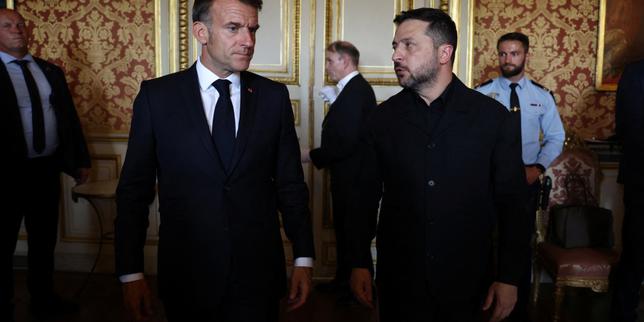
The timing wasn't an accident. Volodymyr Zelenskyy landed in Paris just before France's July 14 Bastille Day military parade. He spent his day at the Hôtel national des Invalides and the Quai d'Orsay meeting with French President Emmanuel Macron, the British Prime Minister, and the German Chancellor. For broader details on this development, in-depth reporting can be read at USA.gov.
This meeting went beyond the usual diplomatic photo-ops. The core of the group includes France, Germany, the UK, Italy, the Netherlands, Spain, Denmark, Norway, and Sweden. Together with Ukraine, they are signing up for long-term industrial integration.
Think about the sheer variety of weapons systems currently in play. You have American-made Patriots, French-Italian SAMP/T platforms, and German IRIS-T units. Right now, these systems often operate like isolated islands. They don't always talk to each other cleanly. This coalition intends to force these different technologies into a unified framework. It is an acknowledgment that no single European country can protect its airspace alone anymore.
Why Ballistic Missiles Left Europe Exposed
To understand why this coalition is a big deal, you have to look at the technical gap in European defense. Standard air defense systems are great at knocking down cruise missiles or slow-moving drones. Cruise missiles fly low. They fly slow. Drones are basically lawnmowers with wings.
Ballistic missiles are a completely different animal. They fly up into the upper atmosphere, sometimes reaching space, before screaming down at hypersonic speeds. Standard air defense can't touch them.
Right now, Europe's anti-ballistic capabilities are thin. Germany recently bought the Arrow-3 system from Israel, but that is years away from being fully operational and integrated across the continent. France and Italy have their Aster 30 missiles, which do a decent job but aren't available in the massive quantities required to sustain a long war.
Ukraine has been the testing ground for this imbalance. When Russia fires an Iskander or a Kinzhal missile, Ukrainian air defenders have a window of just a few minutes to react. If a Patriot system isn't sitting directly under the missile's flight path, the target gets hit. By bringing nine European nations together, the goal is to create a layered defense net that can track and intercept these threats long before they reach their targets.
What the Industrial Integration Looks Like
This isn't a charity project. It is an industrial consolidation. The joint declaration makes it clear that these nations are pooling their defense industrial bases.
What does that look like in practice? It means European defense giants like MBDA, Thales, and Rheinmetall are going to have to work together on shared production lines.
- Standardized ammunition. They need to pump out interceptor missiles faster than ever before. Production lines for Aster and IRIS-T missiles are currently clogged with backlogs.
- Shared radar data. A radar tracking a missile launch in Poland needs to instantly feed that data to a firing battery in western Ukraine or Germany.
- Combat data loops. Ukraine has more real-world experience fighting ballistic missiles than the entire NATO alliance combined. This coalition gives European engineers direct access to that data to upgrade their software in real-time.
It is a smart move for Europe. For decades, European countries bought American tech because it was easier. This coalition shifts the focus back to domestic European production. It protects local economies while building up hard military power.
The Geopolitical Stance
The coalition leaders were careful to call this initiative purely defensive. They stated it isn't aimed at any specific population. It is designed to protect their own people.
That is diplomatic code. Everyone knows exactly who this is aimed at. Moscow has spent the last few years threatening European capitals with missile strikes. This coalition is a direct reply. It shows that Europe is preparing for a future where American support might be uncertain, forcing the continent to handle its own security.
By bringing Ukraine in as a founding partner, the European nations are making a bold statement. They are treating Ukraine's airspace as an extension of Western Europe's airspace. It integrates Kyiv into European defense structures long before any formal EU or NATO membership happens.
Next Steps for European Air Defense
This agreement is a solid start, but a piece of paper doesn't shoot down missiles. To make this coalition work, these nations must take immediate concrete actions.
First, they have to standardize software interfaces. The defense ministries need to establish a single, secure data protocol so French radars can talk to German launchers without lag.
Second, they need to co-fund new manufacturing plants. Air defense interceptors are incredibly complex to build. They require advanced chips and specialized propellants. The coalition must invest public money into expanding factories in France, Germany, and the UK to double production capacity by next year.
Third, they must set up joint training centers. Ukrainian operators need to train alongside French and British crews to master the combined tactics required for layered air defense.
The era of relying on a distant superpower for basic atmospheric protection is over. This new coalition is a necessary piece of realism. It is about time Europe started acting like it.