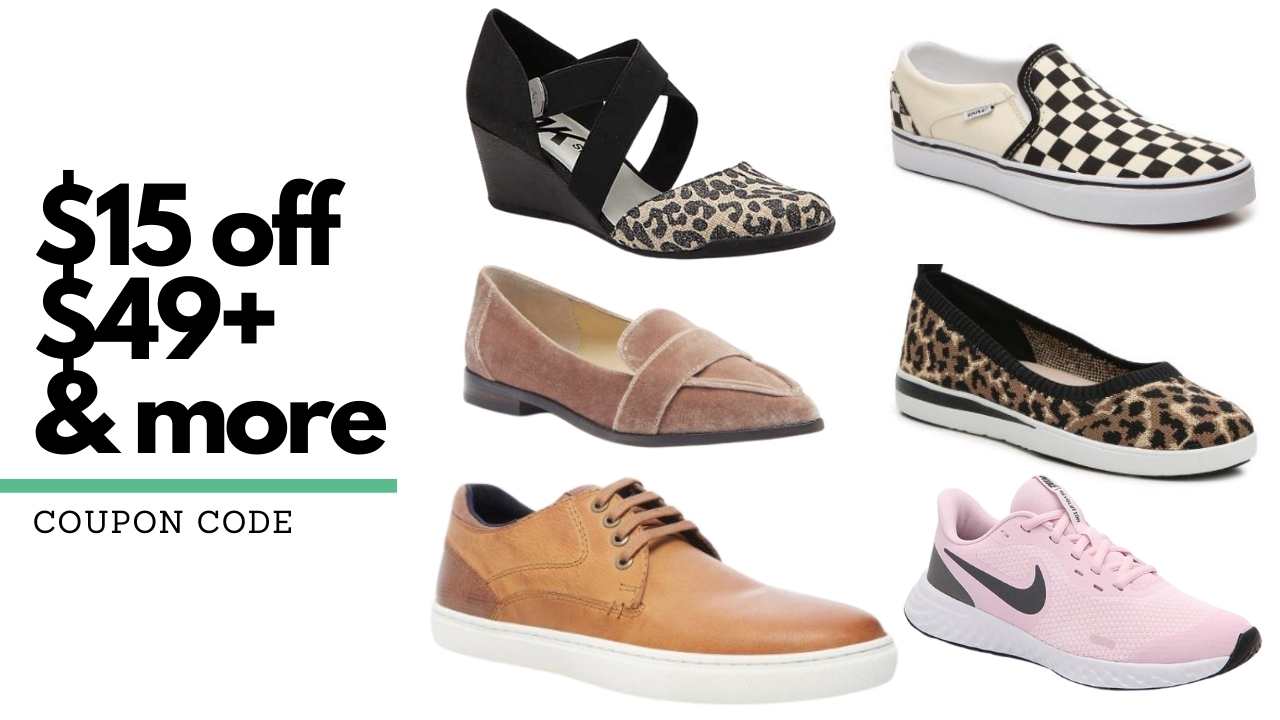
Elena stood in the center of the aisle, the air smelling of industrial adhesive and treated calfskin. Around her, the Sunday afternoon rush at the Designer Shoe Warehouse felt like a low-frequency hum, a collective shuffling of cardboard boxes and the occasional squeak of a rubber sole on polished concrete. She held a slip of paper that had been tucked into the side pocket of her purse for three weeks, its edges softening from the heat of her hands. It was more than a promotional flyer; it was a permission slip. For a woman who spent forty hours a week managing the chaotic logistics of a regional hospital wing, the act of hunting for the perfect pair of navy pumps was a rare moment of controlled desire. She reached the checkout counter, smoothing the crinkled paper against the laminate surface, and presented her Dsw Discount Coupon In Store to the teenager behind the register. In that silent exchange, a transaction of value occurred that went far beyond the ten dollars deducted from the total. It was a small, physical manifestation of a modern ritual—the thrill of the find combined with the satisfaction of the win.
The psychology of the bargain is not merely about the preservation of capital. It is a neurological event. When we look at the history of American retail, we see a shift from the haggling of the open-air market to the rigid pricing of the department store, a transition that left a void in the human psyche. We lost the agency of the deal. The modern coupon fills that gap, acting as a bridge between the corporate price tag and the individual’s sense of worth. Dr. Kit Yarrow, a consumer psychologist, has often observed that the "win" of a discount triggers a release of dopamine similar to that of a successful hunt. For Elena, the paper in her hand represented a tactical advantage in a world that often felt increasingly expensive and indifferent to her budget. It was a tangible piece of leverage.
The retail environment of the twenty-first century is a carefully choreographed stage. Every light fixture, every mirror placement, and every stack of boxes is designed to move the body through a specific path. Yet, the physical coupon remains one of the few items that remains stubbornly analog in an era of digital ghost-code. There is something about the weight of it, the way it occupies space in a wallet, that keeps the consumer tethered to the physical location. Digital codes can be forgotten in an inbox or buried under a mountain of notifications, but a physical voucher demands an appointment. It requires the customer to put on a coat, drive through traffic, and walk through the automatic sliding doors.
The Weight of a Dsw Discount Coupon In Store
Retailers understand that the journey is as important as the destination. The physical act of handing over a discount code creates a moment of friction that ironically increases brand loyalty. It is a phenomenon known as the "IKEA effect," where the labor we put into a process increases our valuation of the result. When Elena navigated the rows of boots and sneakers, she was investing her time and physical effort. By the time she reached the front of the store, the savings felt earned rather than gifted. The subject of the discount becomes a trophy for the labor of the search.
The economics of these paper incentives are staggering when viewed from a bird's-eye perspective. According to data from the Inmar Intelligence annual coupon report, billions of coupons are distributed every year, yet only a fraction are ever redeemed. This discrepancy is not a failure of the system; it is the system itself. The unredeemed coupons serve as a form of brand impressions, tiny billboards that sit on kitchen counters and refrigerator magnets, whispering the name of the store into the subconscious of the household. But for those who do use them, the impact is measurable. For many families, the difference between a high-quality pair of school shoes and a cheap substitute is exactly the value printed on that rectangular slip of paper.
Walking through the store, one sees the quiet drama of the middle class playing out in the footwear department. There is the father trying to convince a toddler that the flashing lights on a sneaker are worth the price, and the college student looking for an interview shoe that conveys a professional competence she hasn't quite mastered yet. In these moments, the availability of a price reduction isn't just about corporate strategy; it is about the accessibility of a certain standard of life. The shoes we wear are the most literal contact point we have with the world. They dictate how long we can stand, how fast we can run, and how we are perceived by the strangers we pass on the street. To make those shoes more affordable is to make the world slightly more navigable.
The architecture of a large-scale shoe warehouse is designed to be overwhelming, a cathedral of choices that can paralyze the indecisive mind. There are thousands of options, ranging from the utilitarian to the absurd. Amidst this abundance, the coupon acts as a compass. It narrows the focus. It provides a reason to choose today over tomorrow. The scarcity of the expiration date creates a temporal boundary that forces a decision. Elena felt this as she looked at a pair of suede loafers that were slightly outside her usual style. The discount made the risk feel manageable. It was an invitation to step, quite literally, into a slightly different version of herself.
Retail experts like Paco Underhill, author of Why We Buy, have spent decades studying the "interstitial moments" of shopping—the seconds between a customer seeing an item and deciding to touch it. The presence of a pre-planned discount changes the chemistry of these seconds. It lowers the defensive barrier that most consumers naturally carry into a commercial space. When a shopper knows they have a Dsw Discount Coupon In Store waiting in their pocket, they browse with a different posture. They are not just looking; they are choosing. The power dynamic shifts from the seller to the buyer.
The Social Fabric of the Shared Deal
There is a communal aspect to the hunt that often goes unnoticed. In the breakroom at Elena’s hospital, the exchange of information about where to find the best deals is a form of social currency. It is a way of saying, I am looking out for you. When a colleague mentions a specific weekend sale or hands over a spare flyer, it strengthens the social fabric of the workplace. We live in a fragmented culture, but the shared experience of seeking value remains a universal language. It is a survival trait that has been repurposed for the age of mass consumption.
This social element extends to the interactions within the store itself. Watch the way people glance at each other’s carts or offer a quick tip about a hidden clearance rack in the back corner. There is a quiet solidarity among those who are trying to make their earnings stretch just a little bit further. The retail space becomes a temporary commons, a place where people from different walks of life are united by the same practical goal. The shoes are the medium, but the connection is the shared understanding of the cost of living.
As the sun began to dip lower, casting long shadows through the front windows of the store, the line at the registers grew. The rhythmic thwack of the tissue paper being stuffed into boxes and the chime of the credit card machines created a steady percussion. Elena watched the person in front of her, an older man buying work boots, as he carefully counted out his bills. He didn't have a coupon, and she felt a brief, strange impulse to offer him hers, though she knew it wouldn't apply to his specific purchase. It was that human desire to share the "win," to ensure that no one is paying the full, unvarnished price if they don't have to.
The evolution of the shoe itself is a story of human progress and class distinction. For centuries, shoes were a luxury, custom-made for the feet of the wealthy while the poor made do with rags or wooden clogs. The mass production of the twentieth century democratized the shoe, but it also standardized it. In a sea of identical products, the discount is what restores a sense of individuality to the transaction. It makes the purchase feel personal again. It is no longer just a pair of shoes from a warehouse; it is the pair of shoes that I got for thirty percent off.
Behind the scenes, the logistics of these promotions are managed by sophisticated algorithms that predict consumer behavior with eerie accuracy. They know when Elena is likely to need new boots based on the weather patterns in her zip code and her previous purchase history. They know that a ten-dollar incentive is often the exact threshold required to move a customer from "maybe" to "yes." Yet, despite the cold mathematics of the back-end systems, the experience on the floor remains stubbornly human. It is driven by the desire for comfort, the need for status, and the simple joy of a new beginning.
There is a specific kind of optimism inherent in buying a new pair of shoes. It is a belief in a future where we will walk more, stand taller, or finally take that trip we’ve been planning. The box represents a fresh start, unsullied by the dirt and wear of the world. When we apply a discount to that optimism, we are essentially lowering the cost of hope. We are making it easier to imagine a better version of our daily lives.
Elena finally walked out of the store, the sliding doors hissing shut behind her. The brisk evening air hit her face, and she felt the weight of the bag in her hand—a solid, satisfying mass. She had saved fifteen dollars, a sum that in the grand scheme of her monthly mortgage or her car payment was almost invisible. But as she walked toward her car, she wasn't thinking about the math. She was thinking about the first time she would wear the navy pumps to a board meeting, the way the leather would feel, and the quiet confidence of knowing she had navigated the system and come out ahead.
The parking lot was a mosaic of headlights and exhaust in the twilight. She placed the shopping bag on the passenger seat and caught a glimpse of the discarded receipt in the bottom of the bag. On it, the line item for the discount was printed in clear, black ink, a small digital record of a physical victory. It was a reminder that even in a world of massive corporations and global supply chains, there is still room for the individual to find a small edge.
She started the engine and sat for a moment in the warmth of the car, watching the other shoppers stream in and out of the bright fluorescent glow of the warehouse. Each one was carrying their own story, their own needs, and their own small scraps of paper or digital codes. We are all searching for that same feeling—the sense that we are not just passive participants in the economy, but active agents who can, with the right timing and a bit of luck, claim a piece of the world for a little bit less than what was asked.
The crumpled flyer was gone now, surrendered to the bin behind the counter, its mission accomplished. It had served its purpose as a catalyst, a tiny spark that turned a mundane chore into a narrative of success. Elena backed out of the space and turned toward home, her new shoes resting silently beside her, ready for the miles ahead. The transaction was over, but the feeling of the win lingered like the scent of new leather in the cool evening air.