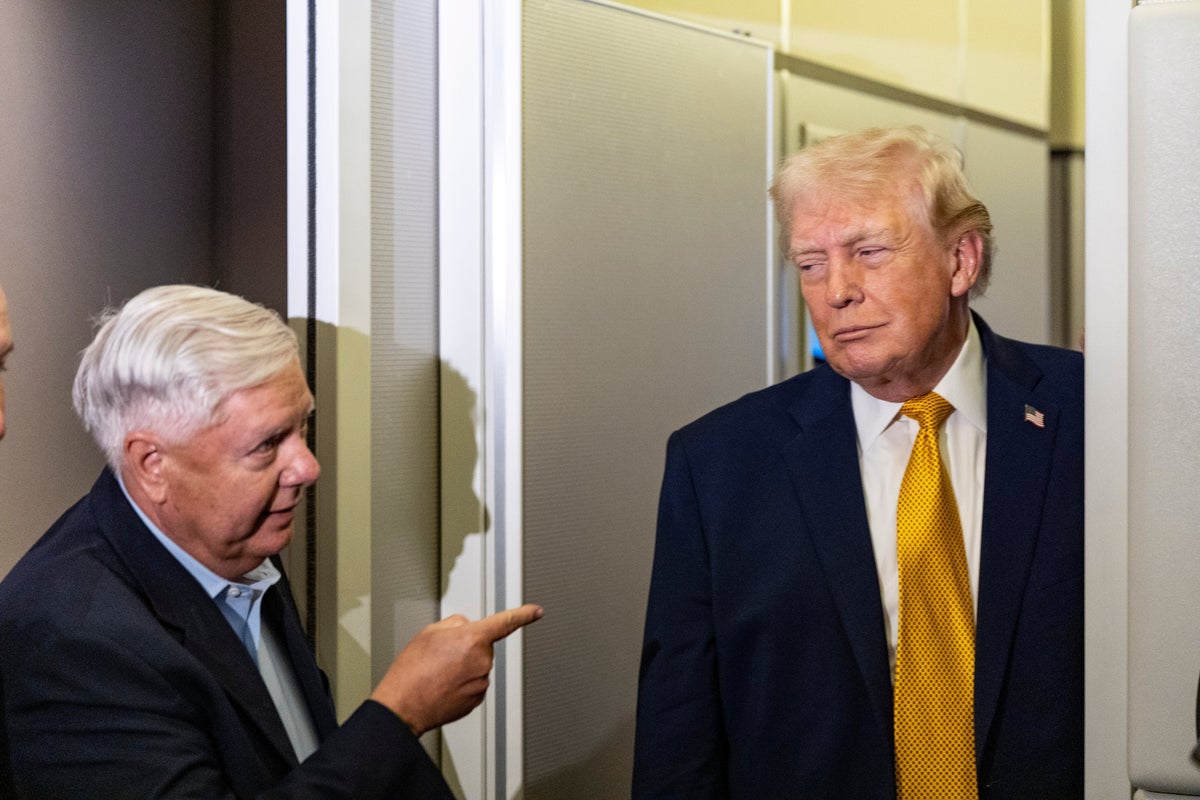
The sudden death of Senator Lindsey Graham at age 71 has sent shockwaves through Washington. Almost immediately, the political vacuum filled with whispers, wild internet theories, and unexpected law enforcement movements. When nearly 20 FBI agents showed up at Graham’s Capitol Hill home on Monday, the rumor mill went into overdrive. But on Tuesday, President Donald Trump threw cold water on the entire spectacle. Speaking from the Oval Office, Trump insisted the feds are chasing ghosts. In doing so, some argue Trump contradicts medical examiner’s initial report on Lindsey Graham’s cause of death by offering his own highly specific medical theories before the final toxicology results are even in.
Trump was blunt. He told reporters that the FBI is simply wasting its time. According to him, there is no international plot, no hidden poison, and no foul play. Yet, his eagerness to shut down the investigation has raised eyebrows, especially since Graham had just returned from a high-profile trip to Ukraine. You might also find this related article insightful: Why The Us Air Force Seeks A New Engine For Rockets That Fly Like Jets.
What the Medical Examiner actually found
To understand the friction, we have to look at what the medical experts are actually saying. The District of Columbia’s Chief Medical Examiner, Dr. Francisco Diaz, released preliminary findings on Sunday. The report pointed to a cardiovascular emergency. Specifically, the autopsy revealed an aortic dissection.
[Image of an aortic dissection diagram] As highlighted in latest coverage by NBC News, the results are worth noting.
An aortic dissection is a sudden, catastrophic tear in the inner layer of the body's main artery. In Graham's case, the examiner noted this tear was brought on by arteriosclerotic cardiovascular disease—essentially, the hardening and weakening of his arterial walls over decades.
But there is a catch. The medical examiner’s office was clear that the official death certificate remains pending. They are waiting on complete toxicological and microscopic testing to finalize the exact cause and manner of death.
Trump's personal medical diagnosis in the Oval Office
Trump did not wait for those final laboratory tests. On Tuesday, he told reporters he had been briefed by White House doctors and had reviewed the available medical files. He then offered a highly personal explanation that bypassed the medical examiner's formal, cautious process.
Trump linked Graham’s death directly to genetics. He pointed out that Graham’s father had died of a heart attack at age 69.
"Well, I don't know why [the FBI went to the house], because I think, you know, he had a problem. His father had a very similar problem, as you know."
🔗 Read more: a heartwell ending if
Trump went on to describe the condition as something almost impossible to detect unless you know what to look for. He claimed a bad back is one of the primary warning signs. He recalled how Graham frequently complained of back pain to him, without either of them realizing what it actually meant.
When that artery bursts, Trump said, there is simply nothing you can do.
Why the FBI searched Graham's Capitol Hill row house
If the preliminary cause of death is a natural cardiac event, why did a massive convoy of federal agents descend on Graham’s home?
On Monday afternoon, witnesses saw roughly 20 FBI and federal agents gather outside the late senator’s residence. Agents entered the home and took photos. However, law enforcement sources confirmed they did not remove boxes of evidence or personal files.
FBI Director Kash Patel stated the bureau was simply assisting local authorities. He called Graham a devoted public servant and patriot. Behind the scenes, officials admit the sweep was done out of an abundance of caution. Given Graham's position on key Senate committees and his hawkish foreign policy stances, leaving anything to chance was not an option.
The Ukraine connection and the online rumor storm
You cannot ignore the timing of Graham’s death. Just days before he passed away, Graham was in Kyiv meeting with Ukrainian President Volodymyr Zelenskyy. He was a vocal hawk, pushing for aggressive sanctions against Russia and taking a hardline stance against Iran.
This foreign travel immediately ignited a firestorm of online conspiracy theories. Commentators on the right, including high-profile Trump ally Laura Loomer, questioned the sudden illness of a man who looked perfectly healthy on television just 48 hours prior.
Political commentator Marc Thiessen openly wondered on social media if Russian intelligence could have been involved. He noted that Vladimir Putin has a long history of poisoning political opponents and that Kyiv is teeming with foreign operatives. Even Republican Senator John Cornyn told reporters he wants to see the full toxicology report released to rule out any foul play.
Trump, however, wants none of it. By declaring the investigation a waste of time, he is actively trying to shut down these theories before they spiral out of control. It is a rare moment where Trump is defending the official medical narrative over the wild theories of his own online base.
What happens next in Washington
The sudden loss of Graham leaves a massive hole in the Senate. He was a master negotiator who knew how to bridge the gap between the traditional Republican establishment and Trump’s populist movement.
Here is what you need to watch for in the coming days:
- The Governor’s Appointment: South Carolina Governor Henry McMaster has already appointed Graham's sister, Darline Graham Nordone, to temporarily fill the seat. She was sworn in on Tuesday.
- The Special Primary: South Carolina law requires a special primary election to be organized within weeks to select a permanent nominee for the November ballot.
- The Toxicology Report: The D.C. medical examiner will release the final toxicology and microscopic results in the coming weeks. This will either put the conspiracy theories to bed or spark an entirely new political firestorm.
Trump wants the country to move on and accept that his friend died of a tragic, hereditary medical condition. Whether the public—and the FBI—will listen to him remains to be seen.
To stay informed on this rapidly developing story, monitor the official press releases from the District of Columbia Chief Medical Examiner and watch for the upcoming South Carolina special election announcements.