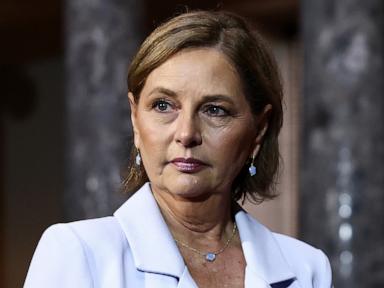
When South Carolina Governor Henry McMaster tapped Darline Graham Nordone to fill out her late brother’s Senate term, most political insiders assumed she was just a ceremonial seat-warmer. Lindsey Graham had passed away suddenly from an aortic tear, leaving behind a 33-year legacy and an immediate political vacuum. Selecting his sister felt like an emotional tribute meant to keep the peace until a grueling special primary sorted things out.
Then Donald Trump stepped in.
After a quiet White House visit, Trump publicly urged Nordone to throw her hat into the ring for the full six-year term. On July 20, 2026, Nordone officially confirmed on Fox News that she was diving in headfirst.
"I feel like I can do it," she told Sean Hannity. "I feel an inner peace about it."
Her decision immediately upended one of the most intense political scrambles the Palmetto State has seen in decades. Republican heavyweights who spent years waiting for Lindsey Graham’s seat to open suddenly find themselves running against his sister, who happens to hold the sitting seat and the full backing of the former president.
From Behind the Scenes to the Center of Capitol Hill
Darline Graham Nordone isn't your typical politician. In fact, she’s never run for elected office before.
While her brother spent over three decades in public life—navigating Washington backrooms, Sunday talk shows, and high-profile judicial battles—Nordone worked quietly away from the cameras. For nearly thirty years, her career centered on vocational rehabilitation and public service in South Carolina. Most recently, she served as the Commissioner of the South Carolina Commission for the Blind, working to build workforce entry programs for people with disabilities.
People who worked with her describe her as deeply focused on practical outcomes rather than political grandstanding. In 2022, she helped spearhead state legislation ending subminimum wages for workers with disabilities. It passed unanimously in the state Senate.
"Family is what defines her, but she's not her brother," noted Kimberly Tissot, president of Able South Carolina. "She is a leader, but she's not the kind of leader to ever brag about what she's done."
That background makes her an unusual candidate in modern GOP politics. She doesn't have a record of fiery cable news rants or legislative brawls. Instead, she brings a deep personal story tied directly to her late brother.
When their parents died when she was young, Lindsey Graham became her legal guardian and helped raise her. That bond remained tight throughout his career. She often stood beside him during filing events and major campaign milestones. Now, she steps directly into his shoes as South Carolina's first female U.S. Senator.
The Trump Factor and the Primary Powder Keg
Trump’s public endorsement transformed what could have been a low-profile candidacy into an instant juggernaut.
Posting on Truth Social, Trump pushed hard for her entry: “During her visit, I asked Darline, for the Good of our Nation, to run for the U.S. Senate... there would be nobody better to honor the legacy of her beloved brother, Lindsey.”
In South Carolina, a Trump endorsement carries massive weight. It can sink established figures or elevate newcomers overnight. However, this primary race won't be a simple coronation.
The Contenders Racing Against the Clock
South Carolina law sets up an extraordinarily tight timeline for special primary elections following the death of an incumbent. The filing window opens July 21, with the special primary set for August 11. If no candidate clears 50 percent, a runoff follows two weeks later on August 25.
That leaves candidates roughly three weeks to run a statewide campaign.
Several ambitious conservatives are jumping into the primary despite Trump’s backing of Nordone:
- Representative Ralph Norman: The Freedom Caucus member from South Carolina’s 5th District launched his bid quickly, banking on his strong conservative voting record.
- Representative Russell Fry: The freshman congressman from the 7th District jumped in immediately, positioning himself as a loyal ally who would be "President Trump's favorite U.S. Senator."
- Representative Nancy Mace: While initially considered a top contender, Mace officially declined to run, choosing to avoid a messy primary clash.
The compressed timeline creates major hurdles for everyone involved. Building a campaign apparatus, buying television ads, and knocking on doors across 46 counties usually takes months. Doing it in 20 days is nearly unprecedented.
The Election Law and War Chest Hurdles
Beyond the rapid schedule, the sudden election creates complex legal and logistical hurdles.
Federal law requires military and overseas ballots to be dispatched at least 45 days before any federal general election. The compressed South Carolina primary calendar pushes up against those federal deadlines, forcing state election officials to move at breakneck speed.
Then there’s the money.
Lindsey Graham left behind millions in his campaign war chest. Many assumed his sister could simply take over those funds to bankroll her run. Federal Election Commission rules say otherwise.
Former FEC Chairman Bradley A. Smith clarified the legal boundary: a deceased candidate’s campaign committee can only transfer a maximum of $2,000 directly to another federal candidate's campaign.
However, there is a giant loophole.
Graham’s campaign account can transfer unlimited sums to the National Republican Senatorial Committee (NRSC). Following recent legal rulings, the NRSC can then spend without caps in coordination with Nordone’s campaign. While she can't directly write checks from her brother's bank account, those funds will likely still fuel her airwaves.
What Happens Next in the Palmetto State
Whoever survives the August primary faces a quick sprint to November 3.
The Republican nominee will go head-to-head against Democrat Annie Andrews, a pediatrician who secured her party's nomination earlier in the summer. South Carolina hasn't elected a Democrat to the U.S. Senate since 1998. In a state that has favored conservative candidates for nearly three decades, the GOP nominee will enter the general election as a heavy favorite.
Nordone has already signaled her initial legislative priorities on Capitol Hill. She publicly pushed for immediate passage of pending Russia sanctions legislation—a cause her brother championed until his final days.
“Until the very day he passed, Lindsey remained focused on passing the Russia sanctions bill,” Nordone stated. “Passing this legislation would honor my brother's steadfast commitment to our national security.”
Whether voters prefer an experienced legislator like Ralph Norman or a relative political newcomer backed by Donald Trump remains to be seen. But one thing is clear: Darline Graham Nordone isn't just standing by as a temporary substitute anymore. She's stepping out of the background and shaping the future of South Carolina politics.
Real World Action Steps for Voters and Observers
If you're following this high-stakes special election, here's how to stay informed and tracking key moves over the coming weeks:
- Track the Primary Filings: Watch the South Carolina State Election Commission portal starting July 21 to see the finalized list of primary candidates.
- Monitor Special Campaign Finance Disclosures: Check FEC filings to monitor how the NRSC allocates coordinated funds following transfers from the late senator's campaign accounts.
- Mark Key Voting Dates: The GOP special primary takes place August 11, with any required runoff set for August 25.
- Watch the General Election Matchup: The primary winner immediately transitions to face Democratic candidate Annie Andrews ahead of the November 3 midterm vote.

/cdn.vox-cdn.com/uploads/chorus_image/image/73064899/1255687.0.jpg)