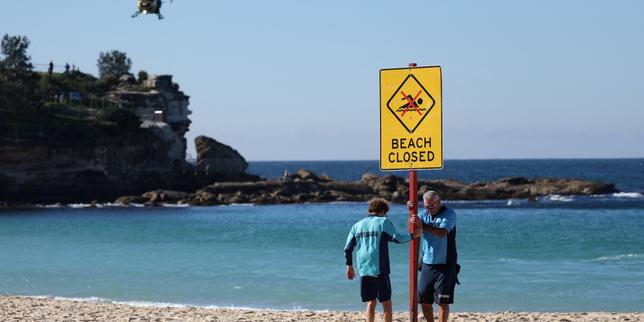
Four lives have been lost to shark attacks along the Australian coastline since the start of 2026. Every single one of these events is an absolute tragedy that rips a hole through local communities. In January, a twelve-year-old boy lost his life at Shark Beach in Sydney Harbour to what officials believe was a bull shark. Fast forward to June, and a thirty-four-year-old woman named Leah Stewart was severely bitten on her leg and arm while swimming at Sydney’s famous Coogee Beach. Whenever these horrific encounters cluster together, fear takes over. People panic.
Politicians are quick to capitalize on that fear. Former Prime Minister Tony Abbott jumped on social media to demand an immediate cull, stating it's completely wrong that sharks aren't targeted and killed after serious incidents. He even called for the establishment of a dedicated shark fishery to thin out their numbers. It sounds simple. It sounds decisive. If a predator bites a human, you kill the predator, and the water becomes safe again. You might also find this connected article insightful: Why Europe Future Security Architecture Still Hangs In The Balance.
Except it doesn't work that way.
The idea that killing sharks makes beaches safer is an illusion. It's a comforting lie designed to give us a false sense of control over an environment that we don't own. When we look at the actual science, the ocean conditions, and the migratory patterns of apex predators, the argument for culling completely falls apart. As extensively documented in detailed reports by TIME, the results are worth noting.
The Myth of the Local Rogue Shark
People watch movies and think a single giant shark hangs around a specific beach, hunting humans like a villain in a thriller. That's a complete myth. Most of the species responsible for fatal interactions in Australia, specifically great whites, tiger sharks, and bull sharks, travel thousands of kilometers.
A great white shark spotted off the coast of Sydney today could easily be near New Zealand or crossing the Pacific Ocean next month. They don't have small local territories. If a state government sets out baited hooks or nets to kill a shark after an attack, they aren't eliminating a localized threat. They're just killing a random animal passing through an enormous ecosystem.
Marine scientists have pointed out this flaw for years. Lawrence Chlebeck, a prominent marine biologist at Humane Society International, notes that culls fail fundamentally because of this extreme mobility. When you remove a shark from a specific stretch of water, another one simply swims right into that empty space a day later. You haven't lowered the risk. You've just created an endless cycle of killing that does nothing to protect the next surfer or swimmer.
Worse yet, the methods used to kill sharks often end up inviting more of them to the shore. Traditional shark culls rely on drumlines, which are large, baited hooks anchored to the ocean floor. Think about it for a second. You want to make a beach safer for families, so you hang massive pieces of bloody, dripping fish bait just a few hundred meters from where children are swimming. It defies common sense. Baiting sharks draws them closer to the surf zone, which actually increases the short-term risk of an encounter.
What the Numbers Tell Us About the Population
The immediate emotional reaction to a spike in shark bites is to assume the ocean is suddenly crawling with man-eaters. You hear people on talk radio claiming shark populations have exploded because of conservation laws. This claim is completely disconnected from reality.
Genetic research paints a very different picture. Recent population studies estimate that there are only about 500 breeding adult white sharks along the entire eastern coast of Australia. That's a tiny number for a species responsible for keeping our ocean ecosystems balanced. Sharks are slow to grow, they take a long time to reach sexual maturity, and they produce very few pups. They are incredibly vulnerable to population collapse. A widespread cull wouldn't just be ineffective; it would trigger an ecological disaster.
If shark numbers aren't exploding, then why are more people getting bitten in 2026?
The answer lies in our changing climate and shifting ocean environments. Water temperatures are fluctuating rapidly, forcing baitfish closer to the shore. When massive schools of salmon or mullet move into shallow coastal waters, the predators follow them. New South Wales Premier Chris Minns recently pointed out that a cleaner, healthier Sydney Harbour actually means more fish stocks, which naturally attracts bull sharks into areas where people like to swim.
We also have to look at environmental triggers. Bull sharks are highly sensitive to water temperature. When you get a succession of warm nights and warm mornings, these animals move right up toward the surface where people are swimming or paddling. It's a perfect storm of environmental conditions, not a population explosion.
The Collateral Damage of Our Current Safety Measures
Australia hasn't abandoned lethal measures entirely. Shark nets still stretch across dozens of popular beaches between Newcastle and Wollongong. The public thinks these nets act as a massive underwater fence that keeps sharks away from the sand. They don't.
Shark nets are relatively short segments of mesh suspended in the middle of the water column. Sharks can swim over them, under them, and right around the sides. In fact, historical data shows that an incredibly high percentage of sharks caught in these nets are found on the beach side, meaning they had already swam past the net toward the shore and got tangled on their way back out to sea.
The real tragedy of these nets is the staggering amount of non-target marine life they slaughter. Dolphins, migrating humpback whales, sea turtles, harmless rays, and critically endangered nurse sharks get caught in the mesh and drown. We are destroying our marine ecosystems to maintain a psychological safety blanket that doesn't actually stop shark bites.
If we want real beach safety, we have to look toward modern data and tech rather than relying on crude colonial mindsets of conquering nature through slaughter.
Smarter Ways to Share the Ocean
We don't need to choose between human life and marine conservation. The tools to drastically reduce risk already exist, and they don't involve killing anything.
Drone surveillance is rapidly changing how surf lifesavers monitor the coast. Drones give teams an eye in the sky, allowing them to spot a shadow moving toward a lineup of surfers long before anyone in the water notices. During the recent Coogee Beach attack, drone flights weren't permitted because the beach sits directly under a Sydney Airport flight path. Premier Minns has since moved to fix this bureaucratic hurdle, ensuring lifesavers get the clearance they need to fly. Dr. Daryl McPhee, a shark bite trend researcher at Bond University, openly stated that if drones had been in the air that morning, that specific bite could have been entirely avoided.
Beyond drones, Australia uses tagged shark listening stations. When a shark is caught on a smart drumline, scientists tag it with an acoustic transmitter and release it alive far out at sea. When that shark swims anywhere near a popular beach equipped with a listening station, an instant alert is blasted out to lifesavers and public apps like SharkSmart. You get real-time data on exactly what is moving through your local break.
The community also needs to take personal responsibility. Ocean lovers are beginning to realize that certain conditions are simply too risky. Swimming near seal colonies, entering the water after heavy rains when river mouths discharge murky water, or surfing at dusk when predators actively hunt are bad decisions. No amount of culling will protect someone who ignores basic safety principles. Government funding is better spent putting shark bite trauma kits on every single beach, as New South Wales has done with over 470 community kits, rather than financing commercial shark hunting fleets.
Changing Our Relationship with the Wild
We need to drop the 18th-century mentality that every natural threat must be wiped out. The ocean is a wild, untamed environment. It belongs to the creatures that live there. When you step off the sand and dive into the surf, you are entering a foreign ecosystem as a guest.
Culling sharks does not work. It won't lower the statistical probability of an encounter. It won't keep great whites away from Sydney beaches, and it won't fix the shifting ocean currents driven by climate change. It is nothing more than a populist knee-jerk reaction designed to make politicians look tough while doing absolute zero for actual public safety.
If you are going to swim in open water, accept the tiny, inherent risk that comes with it. Use the tracking apps, look for drone patrols, avoid murky river mouths, and swim in fully enclosed netted enclosures if you want complete peace of mind. Let's stop demanding blood every time nature acts according to its design.
Pack your gear, check the SharkSmart app before you leave the house, stick to patrolled beaches, and keep your eyes on the water. That's how we stay safe. Everything else is just noise.