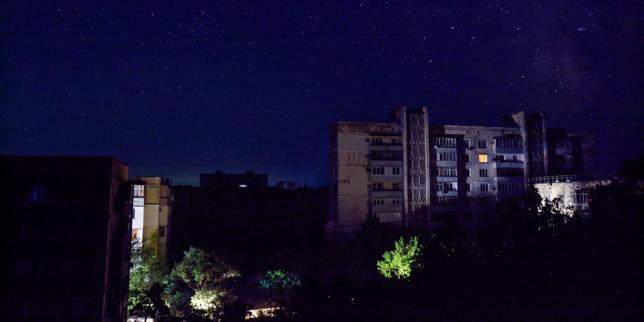
A massive wave of Ukrainian drones just knocked out the lights in Sevastopol. Overnight, multiple explosions ripped through energy facilities, substations, and transport networks across the Russian-occupied peninsula. If you've been watching the war in Ukraine lately, you know Kyiv's strategy is shifting. It's no longer just about trading artillery fire on the muddy fields of the Donbas. Ukraine is actively trying to turn Crimea into an unlivable, indefensible island.
The immediate result? Complete darkness in the home of Russia's Black Sea Fleet. Moscow-installed governor Mikhail Razvozhayev tried to downplay the crisis on Telegram, telling residents that "the absence of light" wouldn't intimidate them. But behind the brave face, the reality is stark. About half the peninsula faced blackouts after Ukrainian drones pounded the Balaklava thermal power plant, a vital electrical substation in Sevastopol, and a liquefied natural gas facility in Simferopol.
The Boiling Point for Russian Logistics
This isn't a random hit-and-run operation. It's a calculated, grinding campaign to choke out the entire peninsula during the peak of summer tourist season. Just days ago, Russian authorities had to halt all gasoline sales to ordinary civilians in Crimea. Think about that. If you're a civilian there, you can't buy fuel. It's now strictly reserved for state enterprises and the military.
Ukraine is exploiting a massive geographic vulnerability. Look at the data from the ground over the last 48 hours. Kyiv's Special Operations Forces didn't just go after the power grid. They teamed up with local resistance movements to blow up a crucial railway bridge over the North Crimean Canal near Rozdolne. Why that specific bridge? It's a lifeline. It is the primary route Russia uses to move heavy military hardware, ammo, and fresh troops straight into southern Ukraine.
When Russian repair crews rushed to fix the twisted steel, Ukrainian drones struck a second time, obliterating the repair equipment. That's a classic, brutal tactical double-tap. It shows deep intelligence penetration and a complete lack of fear.
What Was Hit in the Latest Wave
- Sevastopol Grid: Drone strikes on a major 330 kV electrical substation caused massive fires, leaving the city without power.
- Balaklava Thermal Power Plant: Multiple explosions reported by local monitoring channels at this critical energy hub.
- Kerch Oil Terminal: Footage confirmed fuel storage tanks completely destroyed, cutting off vital maritime fuel distribution.
- Rozdolne Rail Link: A key bridge partially collapsed, severing direct supply lines to the southern front.
From Air Defense Failure to Economic Collapse
Honestly, the military implications here are devastating for the Kremlin, but the economic and social fallout might be worse. Vladimir Putin recently admitted that Moscow had been warned about Ukrainian plans to target the region's energy and tourism. He complained about drones coming in a "huge stream" to destabilize Russian society.
He's right to worry. Tourism is the economic lifeblood of Crimea. Right now, the Russian Ministry of Sport has cancelled all youth sporting events and training camps until September. Summer camps have stopped taking bookings. Parents are fleeing. The beaches are empty, and the air raid sirens don't stop.
What we're seeing is a complete failure of Russian air defense networks in the rear. To protect assets like the Kerch Strait Bridge, Russia has had to pull advanced S-300 and S-400 anti-aircraft batteries away from the front lines. Ukraine responds by using cheap, domestically produced long-range drones to hunt those exact air defense systems down. According to Ukraine's Defense Ministry, roughly 95% of the drones used in these deep strikes are manufactured inside Ukraine. They're outproducing the Russian defense grid's ability to reload.
The Strategic Reality
For years, Moscow treated Crimea as an unsinkable aircraft carrier. It was the heavily fortified staging ground for everything Russia wanted to achieve in southern Ukraine. Now, it's a massive drain on resources.
Every single power plant that burns, every bridge that buckles, and every fuel tank that goes up in smoke forces Russian commanders to make an impossible choice. Do they protect the civilian infrastructure keeping the annexed population compliant, or do they protect the ammunition dumps feeding the war? They can't do both. Repair teams are stretched to their absolute limits, and spare parts for complex electrical grids are hard to come by under heavy international sanctions.
Ukrainian Defense Minister Mykhailo Fedorov put it bluntly when he noted that his forces are isolating the peninsula with drones. He warned that Crimea will soon become an island, leading to highly unexpected consequences for the occupiers.
Navigating the Fallout
If you are tracking this conflict for geopolitical risk, supply chain impacts, or energy market disruptions, the next few weeks are critical. The campaign against dual-use infrastructure isn't slowing down.
Actionable Steps for Analysts and Observers
- Monitor Black Sea Freight: Track maritime traffic around Port Kavkaz and the Kerch Strait. Fuel shortages in Crimea mean Russia will likely restrict commercial diesel exports to prioritize domestic military consumption.
- Watch Russian Air Defense Reallocation: Look for satellite data showing the movement of air defense assets from the eastern front lines back into Crimea to protect the remaining power infrastructure.
- Assess Southern Front Supply Lines: Watch for bottlenecks in Russian troop movements in Zaporizhzhia and Kherson. With the Rozdolne rail link damaged, military logistics will bottleneck significantly, creating windows of vulnerability for Ukrainian counter-localization efforts.
The lights may eventually come back on in Sevastopol, but the illusion of a secure Russian fortress in Crimea is gone for good.