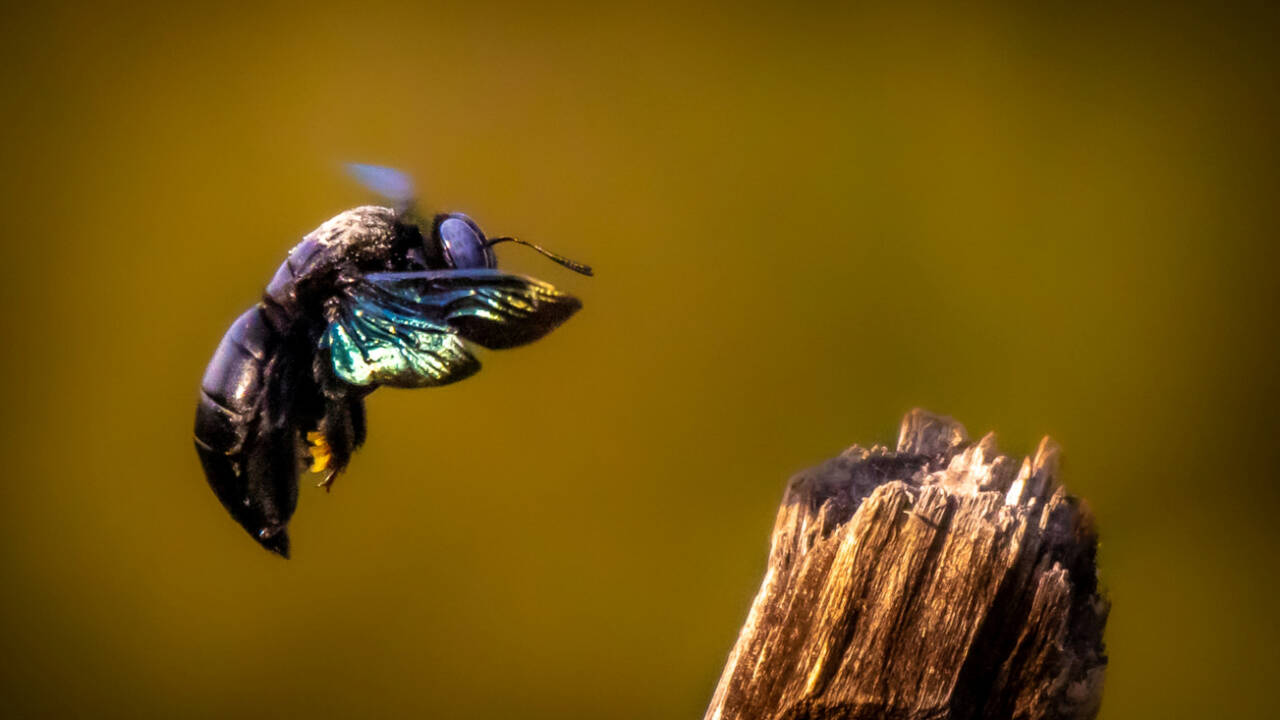
You see a bumblebee buzzing around your garden, landing on a tomato flower, and flying away. You assume everything is fine. After all, the bee didn't drop dead. It seems healthy, active, and perfectly capable of doing its job.
But science tells a much more alarming story.
A groundbreaking study published in Ecotoxicology and Environmental Safety reveals that even when bumblebees survive exposure to modern pesticides, their bodies undergo radical, invisible changes. Specifically, their reproductive genes begin to rewrite themselves.
The research shows that a next-generation pesticide called sulfoxaflor is secretly disrupting the genetic code of bumblebees, specifically targeting the genes responsible for producing the next generation of pollinators. It is a slow, silent threat that could dismantle global agriculture from the inside out.
The Illusion of Survival in Modern Agriculture
For decades, the standard for pesticide safety was simple. If a bee didn't die immediately after exposure, the chemical was largely deemed safe enough for controlled agricultural use. This binary way of thinking—dead versus alive—has blinded us to the subtle, sub-lethal damage happening at the molecular level.
Farmers have to protect their crops. Nobody is arguing against that. Sap-feeding pests like aphids can destroy entire fields of soybeans and corn in a matter of days. To fight these pests, chemical manufacturers introduced sulfoxaflor in 2013. It was marketed as a highly effective tool, a modern alternative to older, heavily restricted chemicals.
The chemical works wonderfully at protecting crops. The problem is that beneficial insects, especially bumblebees (Bombus impatiens), get caught in the crossfire. They do not fall out of the sky instantly when they encounter low doses of sulfoxaflor. They survive. They fly back to their hives. But they carry a molecular time bomb inside them.
The Genetic Hijack inside the Bumblebee
A research team at the Georgia Institute of Technology decided to look past the surface. Led by Sarah Orr, a former postdoctoral fellow at Georgia Tech who now teaches at the University of Tampa, and Michael Goodisman, a professor in the School of Biological Sciences, the team set out to map exactly what happens inside a bee's body after low-dose pesticide exposure.
They exposed worker bumblebees to tiny, realistic doses of sulfoxaflor—the kind of exposure a bee would naturally get while foraging near a treated agricultural field.
Then, they used a method that sounds like science fiction. They flash-froze the bees and analyzed their RNA.
Analyzing RNA allows scientists to see which genes are actively turned "on" or "off." Think of genes as a massive library of blueprints. RNA is the construction worker reading those blueprints. When the team looked at the RNA of the exposed bees, they found something deeply disturbing.
The pesticide had fundamentally altered gene expression across multiple tissues. The most dramatic, widespread genetic shifts occurred in the ovarian tissues, which are directly responsible for reproduction.
The Cost of Genetic Disruption
When genes in ovarian tissues are scrambled, the biological cost is devastating. Worker bees lose their biological drive and physical capacity to support colony growth and produce offspring.
- Decreased Egg Development: The genetic pathways required for healthy egg maturation are disrupted, leading to fewer viable offspring.
- Weakened Colony Infrastructure: A bumblebee colony operates as a single superorganism. If individual workers have compromised reproductive health and altered behavior, the entire social structure begins to collapse.
- Shrinking Populations Over Generations: Since the effects of these genetic changes accumulate, the colony gradually produces fewer and fewer healthy workers over time.
If bees cannot produce enough offspring, their populations crash. And when bumblebee populations crash, our food systems go down with them.
Why Buzz Pollination Matters for Your Dinner Plate
We often lump all bees into a single category, but bumblebees are unique. They are heavy, fuzzy, and incredibly industrious. More importantly, they perform a highly specialized task called buzz pollination.
Some plants, like tomatoes, blueberries, and eggplants, hold their pollen tightly inside their flowers. A normal honeybee cannot shake this pollen loose. A bumblebee, however, grabs onto the flower and violently vibrates its massive flight muscles. This intense vibration, which produces a characteristic loud buzzing sound, releases a golden cloud of pollen.
Without bumblebees and their specialized buzz pollination, many of the fruits and vegetables we take for granted would struggle to reproduce.
About one-third of the world’s food crops rely on animal pollination. We are not just talking about wild flowers in a forest. We are talking about the basic ingredients of a healthy human diet. If we allow subtle genetic changes to slowly erode bumblebee reproduction, we are looking at a future with drastically lower crop yields, skyrocketing food prices, and a severe loss of biodiversity.
A Chemical Soup Compounded by Climate Change
The genetic stress caused by sulfoxaflor does not happen in a vacuum. Bumblebees are already fighting an uphill battle against a hostile environment.
Temperatures are rising globally. Heatwaves are becoming longer, more frequent, and more intense. When a bee is forced to forage in extreme heat, its body is already under immense physical stress.
If you add pesticide exposure to that heat stress, the cumulative damage is exponential. A bee might be able to survive a hot summer day, and it might be able to survive a low dose of sulfoxaflor. But when you force its body to deal with both at the same time, its biological systems simply give up.
The Georgia Tech study highlights a critical flaw in how we evaluate environmental risks. We test chemicals individually, in controlled laboratory environments, at stable temperatures. That is not how the real world works. In the wild, bees are flying through a toxic cocktail of multiple pesticides, herbicides, rising temperatures, and shrinking habitats.
How Farmers and Gardeners Can Take Action
We cannot simply ban every pesticide overnight. Farmers need ways to protect their crops from devastating pests to feed a growing global population. The goal is not to eliminate pest control, but to make it smarter, safer, and highly targeted.
Here are the concrete, practical steps we must take to protect our wild pollinators.
1. Implement Integrated Pest Management (IPM)
Farmers should avoid relying solely on routine chemical sprays. Integrated Pest Management focuses on using biological controls, such as introducing natural predators of aphids, before turning to chemical solutions. When pesticides must be used, they should be applied late in the evening when bumblebees are no longer actively foraging.
2. Plant Diverse Wildflower Buffers
Creating pesticide-free zones around agricultural fields gives bumblebees a safe haven. Planting native wildflowers along crop borders provides bees with clean, untainted food sources, reducing their reliance on foraging in treated crop areas.
3. Redesign Pesticide Safety Testing Standards
Regulatory bodies must move past the simple "lethal dose" metric. We need to demand that chemical manufacturers test for sub-lethal, multi-generational genetic impacts before approving new pesticides for widespread use. If a chemical alters reproductive genes, it should not be classified as safe for pollinators.
4. Create Pollinator Sanctuaries at Home
You do not need to own a massive farm to help. If you have a backyard or a balcony, you can make a difference. Stop using cosmetic chemical pesticides on your lawn and garden. Plant native, pollen-rich flowers like purple coneflower, bee balm, and lupine. Leave a small patch of bare, undisturbed soil in your yard, as many bumblebee species nest underground.
The science is clear. Just because a bee flies away from a sprayed field does not mean it is safe. If we want to secure our global food supply, we have to start paying attention to the invisible, genetic damage we are leaving in our wake. It is time to move beyond crude survival metrics and build an agricultural system that respects the complex, fragile biology of the creatures that keep us fed.