When the twin earthquakes hit north-central Venezuela on June 24, 2026, the earth didn't just shake; it ruptured. A magnitude 7.2 foreshock followed a mere 39 seconds later by a massive 7.5 mainshock completely crippled the region around Caracas and La Guaira. Power grids died instantly. Cellular networks went dark. Over 1,700 people lost their lives, and tens of thousands ended up missing or trapped under buckled concrete.
If you relied on official emergency channels in those first few hours, you were met with silence. The Venezuelan state, already struggling with systemic infrastructure issues, faced a massive logistical logjam.
But in the middle of the chaos, a massive local network pulled together. Venezuela's Chinese diaspora, an established community of shopkeepers, commercial operators, and enterprise workers, turned their private communication groups into a literal lifeline. They didn't wait for municipal clearances or international aid. They organized, funded, and executed a massive rescue and supply operation while the ground was still physically trembling from aftershocks.
Here is how an immigrant community built a parallel emergency response system when the traditional state completely failed to move.
Turning Chat Apps Into Logistics Hubs
The immediate problem after a doublet earthquake isn't just the rubble; it's the total lack of information. With local phone networks dead, standard emergency calls weren't going through.
However, the Chinese-Venezuelan community has spent decades building insulated, self-reliant networks to navigate economic instability and security issues. When the quakes hit, group chats on platforms like WeChat—originally used for business supply chains and local community updates—instantly shifted into emergency dispatch centers.
While municipal first responders struggled to map the damage, the diaspora was already pinpointing exact coordinates of collapsed buildings. Shop owners used satellite internet or erratic data patches to drop pins, report structural failures, and coordinate search operations. It wasn't a formal command center; it was decentralized crowd-sourcing operating at maximum speed.
If a grocery owner in Caracas noticed an entire apartment block pancaked nearby, they didn't wait to file a report with civil protection. They blasted the location to the local chamber network. Within minutes, nearby merchants were routing whatever vehicles and tools they had to that exact spot.
Heavy Machinery In Under Twelve Hours
The biggest error people make in disaster response is thinking that good intentions and bare hands are enough. They aren't. When a multi-story concrete building pancakes, you need heavy diesel power, or you're just moving pebbles while people suffocate underneath.
The Chinese-Venezuela Chamber of Commerce realized this immediately. Instead of waiting for government transport or specialized military deployment, they mobilized private industrial assets. Local Chinese-funded enterprises and construction firms immediately pulled heavy cranes, excavators, and earth-moving equipment from private worksites and redirected them straight to the worst-hit zones in Caracas and La Guaira.
Equipment was incredibly scarce, requiring rescuers to rotate heavy machinery between multiple high-priority collapse sites. Private operators worked 50-hour shifts without stopping, cutting through rebar and lifting massive slabs of fractured concrete because they knew municipal gear simply wasn't coming.
The Club Social Chino Logistics Machine
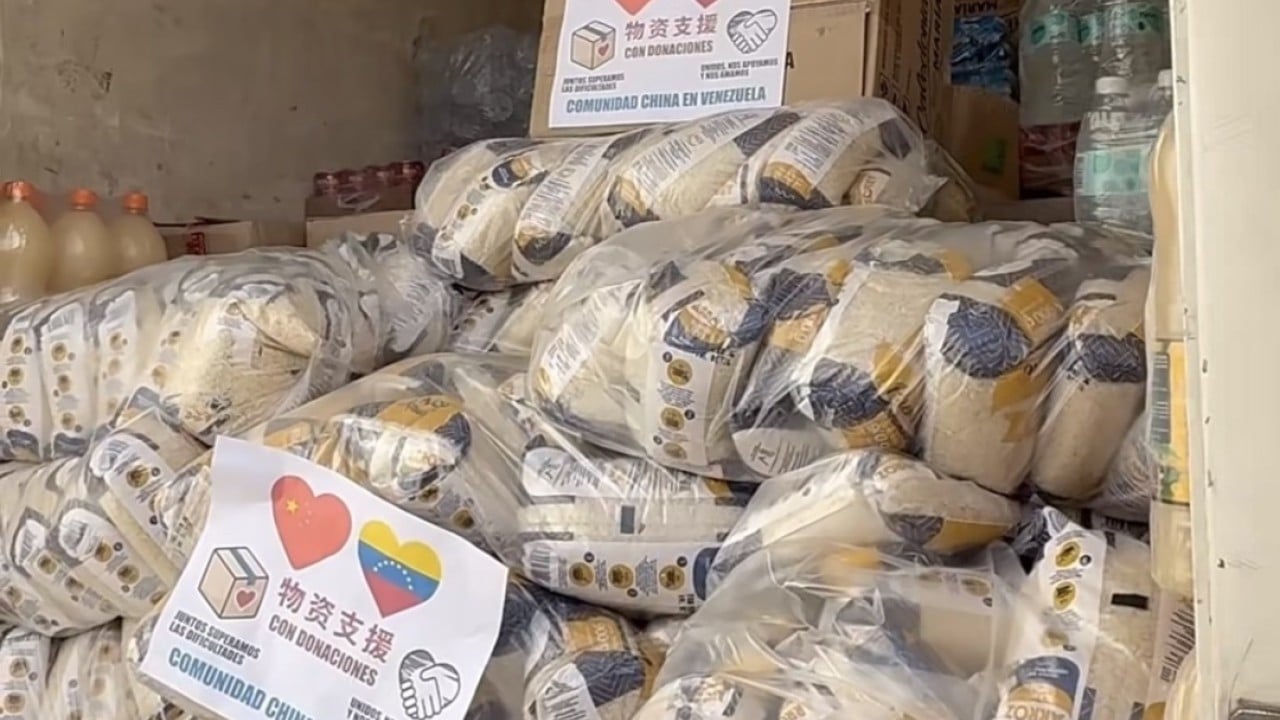
While heavy equipment cleared paths, the immediate survival of thousands of displaced families required an entirely different scale of organization. The Club Social Chino de Caracas—traditionally a cultural and social hub—turned into a massive, 24-hour humanitarian logistics terminal overnight.
The scale of the operation quickly outpaced standard local relief efforts. Community members of all ages gathered to unload, sort, and package essentials. By the weekend following the disaster, the Chinese Embassy in Venezuela confirmed that overseas Chinese and local networks had mobilized and distributed roughly 500 tonnes of relief supplies.
The strategy focused purely on immediate utility. Volunteers focused on five specific items:
- Portable diesel generators to power makeshift medical tents and emergency lighting.
- Commercial emergency lighting rigs so search-and-rescue teams could work through the pitch-black night.
- Heavy-duty first-aid materials, specifically tourniquets, splints, and antiseptics.
- Industrial rescue tools like concrete saws, crowbars, and hydraulic jacks.
- Bulk clean drinking water and basic dry rations for the 10,000 families suddenly left homeless.
This wasn't just a charitable gesture; it was a targeted supply chain that kept frontline rescue teams functioning when official government supply lines were completely bogged down by bureaucracy and fuel shortages.
Paying a Heavy Price
This level of frontline involvement came with severe risks. The Chinese community wasn't just observing from the sidelines; they were deep inside the collapse zones when the aftershocks rolled through.
The Chinese Embassy eventually confirmed that eight Chinese nationals died in the disaster, with many others injured or caught in structural collapses while trying to secure their neighborhoods or assist in clearing debris.
The disaster didn't discriminate, but the diaspora's decision to anchor themselves in the center of the rescue effort meant they bore a direct share of the tragedy. Beijing has since committed to sending official emergency humanitarian aid and dedicated rescue teams through the Red Cross Society of China, but the reality on the ground is clear: the local diaspora had already finished the heaviest, most volatile lifting long before any foreign flights could land.
Actionable Steps for Community Disaster Readiness
The speed of the Chinese-Venezuelan response offers a blueprint for how any localized community or neighborhood can organize when formal emergency services are overwhelmed. Relying entirely on a centralized state apparatus during a catastrophic event is a tactical mistake.
If you want to build a resilient local network before a crisis hits, prioritize these steps:
- Establish redundant, off-grid communication protocols. Do not rely on standard cellular voice lines. Set up community groups across multiple digital platforms (WeChat, Signal, WhatsApp) and establish a clear physical meeting point if all networks fail.
- Audit local heavy assets ahead of time. Know exactly who in your immediate network owns a truck, a generator, commercial tools, or heavy machinery. Keep an off-line directory of these resources.
- Designate a central logistics staging area. Identify a sturdy, low-risk local structure (like a community center, warehouse, or social club) that can immediately pivot into a supply sorting and distribution hub.
- Focus inventory on utility, not comfort. In the first 72 hours of a structural disaster, flashlights, clean water, crowbars, and basic medical supplies matter infinitely more than clothing or complex food items.
The tragedy in Venezuela proves that during a major disaster, the most effective rescue team is the one that is already on your street. By turning private business networks into an ad-hoc civil defense system, Venezuela's Chinese community didn't just protect their own; they kept the entire recovery effort moving when every second counted.
For a closer look at how community groups and enterprises mobilized raw materials and heavy equipment on the ground during the initial response, watch this raw footage of the Chinese community quake relief efforts in Venezuela. This short report highlights the intense, round-the-clock sorting and delivery operations managed by volunteers at the Club Social Chino de Caracas.