The standard for a preliminary hearing in Utah is incredibly low. Prosecutors don't have to prove guilt beyond a reasonable doubt yet. They just need to show a reasonable belief that a crime happened and the guy sitting in the courtroom did it.
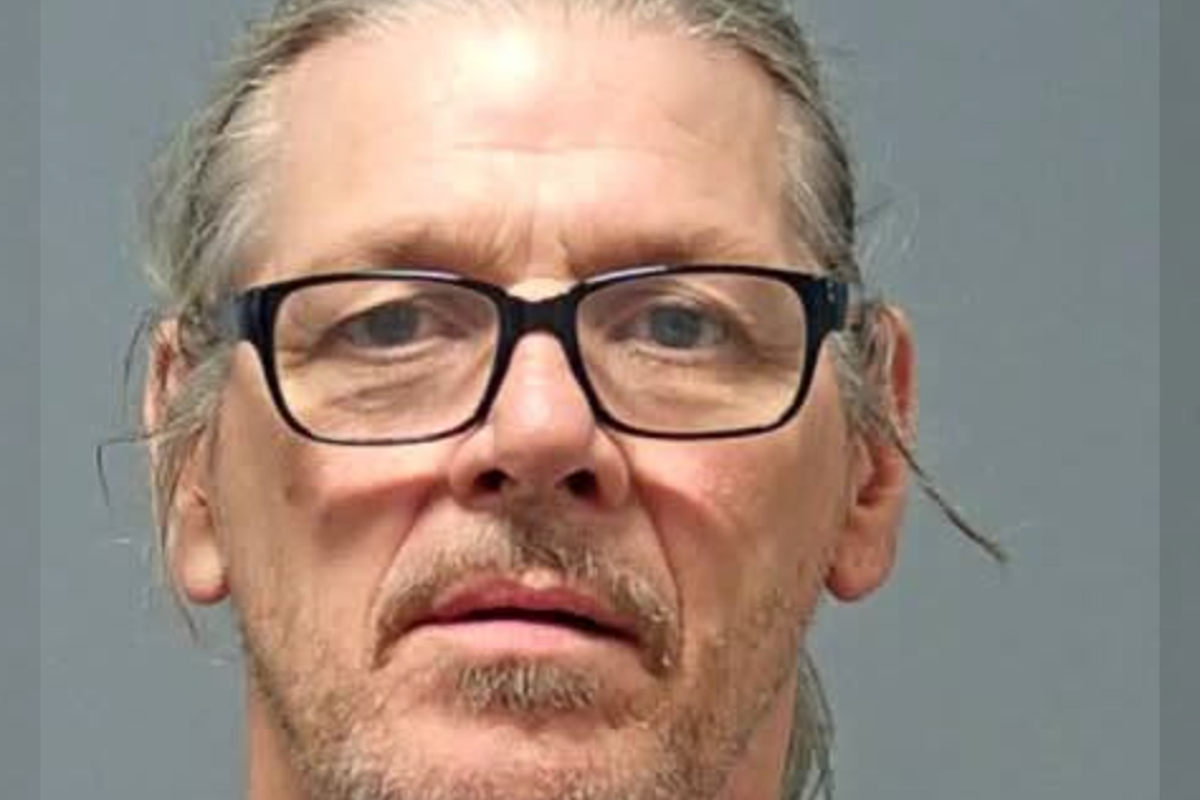
That guy is 23-year-old Tyler James Robinson. He sat in a Provo courtroom in a gray suit, his wrists shackled to a chain around his waist. He looked at the monitors. He took notes. A few rows behind him sat his parents. Just in front of them sat the family of the man he allegedly killed, including Charlie Kirk's widow, Erika Kirk, his parents, Robert and Kathryn Kirk, and Donald Trump Jr.
The atmosphere inside the Fourth District Courthouse on July 7, 2026, was thick with tension. It has been nearly ten months since the September 10, 2025, assassination of Turning Point USA founder Charlie Kirk on the campus of Utah Valley University. What is coming out in this weeklong hearing is not just a standard rehearsal for a trial. It is a detailed look at a clinical, planned assassination that exposed gaping holes in how high-profile political figures are protected at public universities.
The Sniper Pad on the Losee Building Roof
The defense team spent the first days of the hearing fighting the introduction of almost every piece of evidence. Defense attorney Kathryn Nester objected repeatedly. Judge Tony Graf Jr. overruled most of those objections, letting the state build its public narrative bit by bit.
The most chilling testimony came from Christopher Bagley. He is a former Utah Valley University police officer who was working an overtime shift to cover the Turning Point USA event that day. Bagley described the exact moment of the shooting. Kirk was on stage, answering a question from the crowd. Then, a single, loud gunshot cracked through the air.
Bagley testified that he saw Kirk go to the left. He could no longer see the right side of Kirk's body. The activist had been shot in the neck. Thousands of people in the crowd started screaming. They fled in every direction.
When Bagley searched the surrounding rooftops shortly after the shooting, he made a grim discovery on top of the Losee building. He found indentations in the gravel that looked consistent with someone lying prone on the roof. It had a clear, unobstructed sightline to the stage where Kirk was speaking.
Bagley called it a sniper pad.
Beside those indentations, investigators found a red and black screwdriver. They also found physical signs that someone had spent time waiting for the perfect shot. Security at the event was remarkably light for an activist of Kirk's stature. Bagley acknowledged under cross-examination that there were only six officers assigned to handle a crowd of thousands. There were no metal detectors. There were no security drones keeping watch over the surrounding rooftops. The shooter basically walked up to an elevated position, set up a firing post, and waited.
The Physical Evidence Left Behind in the Panic
The prosecution team, led by Deputy Utah County Attorney David Sturgill, is not relying solely on the rooftop geometry. The forensic trail is substantial. State investigators have testified about DNA evidence recovered from the scene and from the weapon.
According to the state's forensic analysis, Robinson left his genetic signature in multiple critical spots. His DNA was found on the trigger of the rifle believed to be used in the assassination. It was also found on the fired cartridge casing left behind, on two unfired cartridges, and on a towel that someone used to wrap the rifle before fleeing.
The defense tried to poke holes in this narrative during cross-examination. Nester questioned Bagley about an empty pistol holster found on the ground after the crowd scattered. Bagley admitted he never took custody of that holster and didn't know if it was ever fingerprinted. Nester reminded the court that Utah is an open-carry state. People can carry weapons openly or concealed without a permit, meaning an empty holster in a fleeing crowd of thousands doesn't necessarily tie back to the shooter on the roof.
The prosecution also introduced doorbell camera footage from a nearby resident. Former State Bureau of Investigation Agent David Hull testified that the clips showed a vehicle parking across the street from the home on September 10 and September 11. A person left the vehicle and later returned before driving away. Investigators state that the vehicle and the individual matched Robinson.
The Paper Trail and Confession Texts
The most damning evidence presented in the hearing involves Robinson's own words. Prosecutors allege that the 23-year-old left a clear paper trail explaining his actions before he turned himself in to the Washington County Sheriff's Office on September 11, the day after the shooting.
Robinson allegedly left a physical note for his roommate, who was also his romantic partner. The note was explicit. It read that he had the opportunity to take out Charlie Kirk and he was going to take it.
He didn't stop there. He also sent text messages to his roommate explaining his motive. In those texts, Robinson reportedly wrote that he targeted Kirk because he had enough of his hatred.
The defense fought hard to prevent these communications and the video statements from being introduced easily. They used hearsay rules to argue that the witnesses on the stand were not the original authors or direct recipients of some statements. Judge Graf allowed the evidence to move forward anyway, pointing out that the rules for preliminary hearings give prosecutors more leeway to introduce secondhand information than a full trial would.
A Legal Battle Over Edited Video Footage
Not everything went the prosecution's way. On the first day of the hearing, the state tried to introduce a compiled video exhibit showing surveillance footage from Utah Valley University. The defense objected immediately. Nester argued that the video compilation had been altered because technicians had zoomed in on certain areas and drawn circles around specific individuals.
Judge Graf sided with the defense on this point. He refused to admit the edited video into evidence. He told the courtroom that in a case of this magnitude, he wants to be completely thorough, and even minor alterations matter.
The prosecutors did not argue. They asked to end the court session fifteen minutes early on Monday evening so they could spend the night preparing a clean copy of the surveillance video with all the digital circles and blurs removed. They brought the clean video back to court on Tuesday to try again.
Another battle erupted when the prosecution asked Agent Hull to look around the courtroom and point out the suspect he had identified during his investigation. Nester jumped up to object. She argued that asking a witness to identify a suspect who is the only person sitting at the defense table in shackles is an unduly suggestive in-court identification. She argued it violates Robinson's constitutional rights.
The attorneys huddled at the judge's bench for a private discussion. When they stepped back, Judge Graf ruled that the court record would simply note that Robinson had been identified, bypassing the dramatic theatricality of a witness pointing a finger across the room.
The High Stakes of the Aggravating Circumstance
The state is using this hearing to lay the groundwork for a death penalty trial. To get a death sentence in Utah, prosecutors must prove at least one aggravating circumstance.
They aren't just arguing that Robinson killed a prominent political figure. They are arguing that his method of killing endangered everyone else in that crowded campus plaza. Firing a rifle from a rooftop into a crowd of thousands of students and attendees naturally creates a zone of extreme danger. The panic itself could have killed people. By showing the graphic videos of the shooting and the subsequent stampede, the prosecution wants to lock in that aggravating factor before the trial even begins.
The defense has tried to get the death penalty taken off the table since late 2025. So far, those attempts have failed.
The emotional weight of the courtroom is heavy. Charlie Kirk's widow, Erika Kirk, has since taken the helm of Turning Point USA to keep the organization running. She sat through the technical descriptions of her husband's death, though the family briefly walked out of the courtroom twice when the testimony got too graphic. They left when Bagley began detailing Kirk's arrival on campus, and they stepped out again when the prosecution introduced video clips showing the actual moment of the shooting and the immediate first aid attempts.
Erika Kirk has publicly stated that she forgives the young man accused of the assassination. Still, she and Kirk's parents have fought to keep the court proceedings open to the public and the media, resisting any attempts to close the courtroom doors.
What Happens Next in Provo
This preliminary hearing is scheduled to last five days. Because the legal hurdle is so low for the state at this stage, legal experts expect Judge Graf to rule that there is sufficient probable cause to send the case to a full criminal trial.
If you are following this case, the next steps will involve formal arraignment, where Robinson will finally enter an official plea of guilty or not guilty. After that, expect months of motions from the defense team to suppress the DNA evidence and the roommate's text messages before a jury is ever selected. The fight over the rooftop security vacuum and the campus video edits is just the opening salvo in what will be one of the most high-profile capital murder trials of the decade.