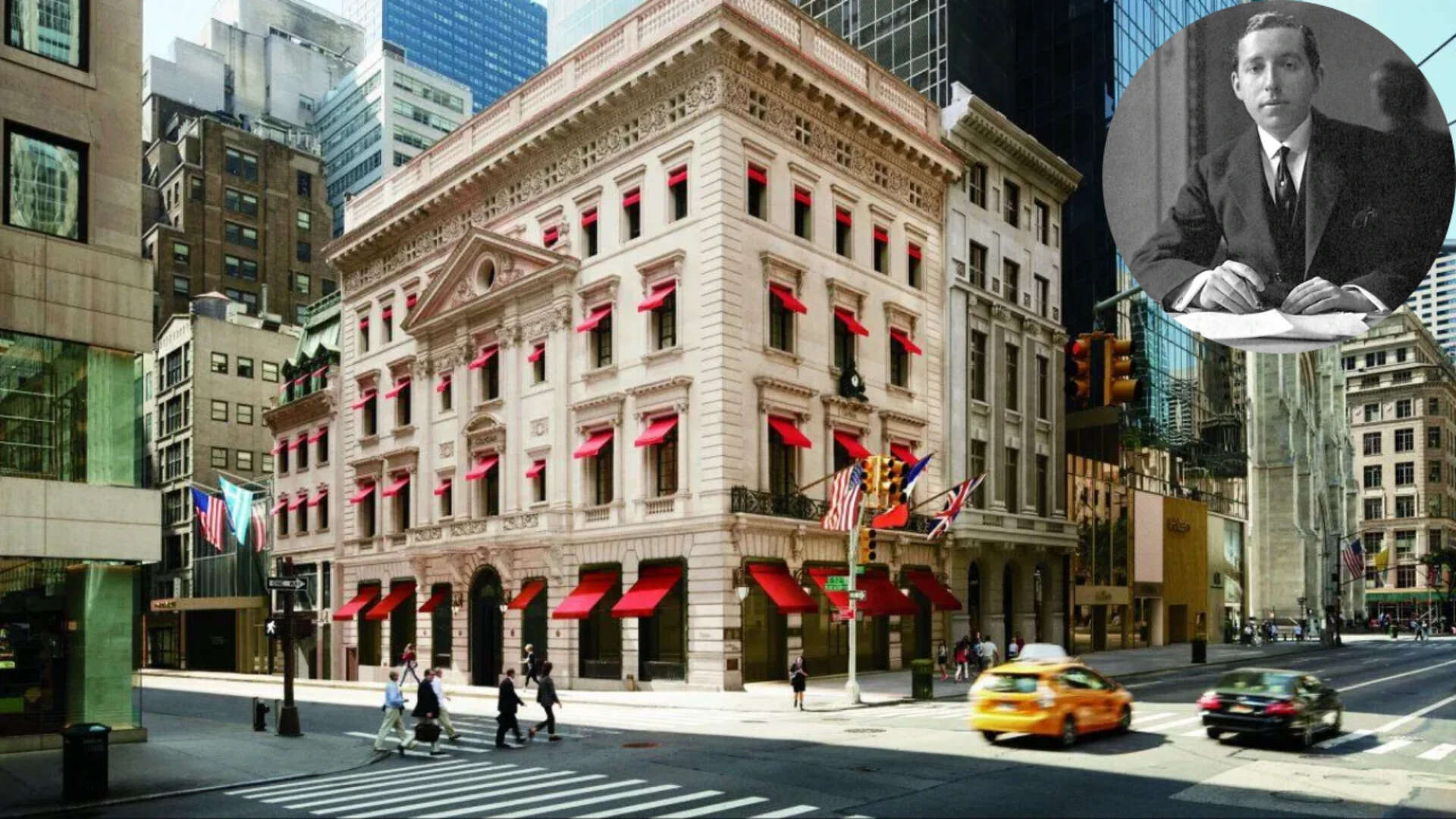
Imagine trading a piece of jewelry for a six-story mansion on Fifth Avenue. It sounds like a ridiculous piece of fiction, but it happened in 1917. Pierre Cartier, a French jeweler with big ambitions and no permanent American headquarters, pull off what might be the most lopsided property swap in New York history. He handed over a double-strand natural pearl necklace and a crisp hundred-dollar bill to a railroad heir named Morton F. Plant. In exchange, he walked away with a stunning Renaissance-style stone mansion at the corner of 52nd Street.
Today, that building is the crown jewel of Cartier's global retail empire. The necklace itself? It practically vanished into financial irrelevance within a few decades.
This wasn't just a quirky historical anomaly. The iconic Cartier mansion pearl trade represents a masterclass in reading asset trends, understanding emotional leverage, and capturing long-term branding value. While Gilded Age real estate moguls were busy outbidding each other with piles of cash, Cartier used a completely different currency: obsession.
The Setup Behind the Cartier Mansion Pearl Trade
To understand why this deal worked, you have to realize that natural pearls were the ultimate status symbol of the early 1900s. They weren't like diamonds, which could be mined in massive quantities from South Africa. Natural pearls came from wild oysters, harvested by divers who risked their lives in the Persian Gulf or the South Seas. Finding a single large, symmetrical pearl with a perfect luster was rare. Finding enough of them to create a perfectly matched double strand took years of painstaking curation.
Pierre Cartier spent years collecting 128 flawless natural pearls. He matched them precisely by size, shape, and color, eventually securing them with a stunning diamond clasp. He priced the finished necklace at a staggering $1 million. In 1917, that kind of money was a fortune. It was enough to fund entire business operations, purchase fleets of ships, or buy prime Manhattan real estate.
Cartier put the masterpiece right in his temporary shop window on Fifth Avenue. He knew exactly who would see it.
A Mansion the Owner Wanted to Flee
Morton F. Plant didn't actually want his mansion anymore. Built in 1905, the limestone and granite residence was a spectacular home in an elite residential enclave. But the neighborhood was changing fast. The quiet, aristocratic vibe of Millionaire's Row was being overrun by commercial businesses. Massive retail stores and luxury hotels were creeping north up Fifth Avenue, pushing out the private estates.
Plant and his young wife, Maisie, were already planning a move further uptown to escape the commercial noise. They wanted out, and Pierre Cartier wanted in.
Maisie Plant had fallen completely in love with the double-strand pearl necklace sitting in Cartier's window. She obsessed over it. Morton Plant, wanting to make his wife happy before their big move, saw an opportunity to solve two problems at once. He approached the jeweler with a radical proposal. He would trade the entire six-story mansion for the $1 million necklace, provided Cartier threw in an extra $100 to make the contract legally binding.
Cartier didn't hesitate. He signed the paperwork, handed over the pearls and the cash, and secured a permanent home for his brand.
What Happens When Market Disruption Hits
The trade looked incredibly fair on paper in 1917. Both sides walked away thinking they won. But economics doesn't care about temporary sentiment.
Shortly after the deal closed, an entrepreneur in Japan named Kokichi Mikimoto perfected the commercial production of cultured pearls. By inserting a small nucleus into a living oyster, Mikimoto figured out how to force oysters to create beautiful pearls on demand. Suddenly, pearls weren't a biological miracle anymore. They could be farmed.
The luxury market shifted overnight. The extreme scarcity that drove natural pearl prices into the stratosphere evaporated. The massive devaluation hit Maisie Plant's collection hard. When her estate finally auctioned off that famous double-strand necklace in 1957, the piece fetched a measly $157,000. Adjusting for inflation, it was a financial catastrophe.
The mansion, meanwhile, did the exact opposite. As Manhattan real estate values exploded over the next century, 653 Fifth Avenue became one of the most expensive and recognizable retail spots on earth. Cartier preserved the building's architectural soul, converting private living rooms into high-jewelry viewing salons and keeping the original Gilded Age essence alive.
How to Apply the Cartier Strategy in Modern Business
You don't need a million dollars in jewelry to learn from Pierre Cartier's brilliant move. The core principles of this trade apply directly to modern brand positioning and asset management.
Trade Depreciating Hype for Permanent Authority
Maisie Plant traded a permanent, scarce physical asset for a trendy luxury item whose value relied entirely on temporary market scarcity. Cartier did the reverse. He traded an inventory item—something his company could technically produce or source again—for irreplaceable physical positioning. Look at your own business assets. Don't hoard liquid capital or trendy tools that lose value. Swap them for long-term authority, proprietary platforms, or foundational assets that appreciate over decades.
Identify the True Source of Leverage
Cartier didn't try to outbid New York's wealthiest real estate developers with cash. He didn't have the capital to compete with the Astors or the Rockefellers on pure financial terms. Instead, he identified a specific, emotional pain point: Maisie Plant's intense desire for a specific aesthetic object. When you're negotiating against bigger competitors, look for the emotional leverage point. Find what the other party values more than money, and offer that instead.
Build an Unmistakable Flagship Presence
If Cartier had stayed in a standard rented commercial space, the brand might have blended into the background of New York's bustling retail scene. By taking over a historic, grand mansion, the company instantly inherited a sense of old-world nobility and permanence. It gave them instant authority in the American market. Your business needs its own version of a flagship presence. Whether it's an industry-defining piece of content, an unforgettable customer experience, or a flawless product design, you need one definitive asset that commands absolute respect.
Take an inventory of your current assets today. Identify what you are holding onto that might be vulnerable to future market disruption, just like natural pearls were in 1917. Find a way to exchange those fleeting assets for something that anchors your brand permanently in your industry. Stop playing for short-term margins and start trading for permanent real estate.