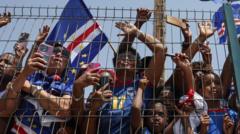
They said a tiny island nation of 600,000 people couldn't compete with global football giants. They were completely wrong. When the Cape Verde national team touched down at Nelson Mandela International Airport in Praia, the capital didn't just celebrate. It erupted. Thousands of fans lined the streets, waving the blue, white, and red national flag, turning the archipelago into a massive carnival. The Blue Sharks just pulled off one of the greatest stories in modern World Cup history, and the rest of the world is finally opening its eyes.
For decades, the standard football narrative focused heavily on massive budgets, hyper-advanced training facilities, and deep talent pools. Cape Verde blew that entire formula to pieces during their historic run in the 2026 World Cup. Facing a brutal Group H lineup featuring Spain, Uruguay, and Saudi Arabia, absolutely nobody gave them a prayer. Yet, they walked away unbeaten in the group stage, securing a spot in the Round of 32 and showing that organization, spirit, and smart recruitment can level the playing field.
The Defiance That Shocked Global Giants
Look at the numbers because they tell a story that sounds like a movie script. Cape Verde entered the tournament ranked 67th in the world. Their opening match in Atlanta pitted them against Spain, a team sitting comfortably at number two. A blowout felt inevitable. Instead, head coach Bubista set up a defensive masterclass that frustrated the Spanish attackers for 90 grueling minutes. The match ended 0-0. It wasn't a fluke. It was a tactical blueprint.
Then came the showdown against Uruguay. Two-time winners. World-class strikers. But the Blue Sharks didn't back down. When Cape Verde scored their second goal 61 minutes into the match, securing a hard-fought draw, live television broadcasts in the capital were literally hijacked by fans jumping into the camera shots, dancing with sheer ecstasy. A final draw against Saudi Arabia sealed their passage to the knockout stages. Three games. Three draws. Zero losses against some of the most expensive squads on earth.
The adventure eventually ended in the Round of 32 against Lionel Messi and a ruthless Argentina side, but the exit didn't dampen the mood at home. The reception in Praia rivaled that of tournament winners. People climbed on top of cars, packed out public squares, and sang traditional Coladeira songs mixed with modern stadium chants. This wasn't a celebration of a trophy. It was a celebration of identity.
The Diaspora Strategy That Built a Powerhouse
How does a country with fewer residents than the city of Boston build a squad capable of stopping Spain? You look beyond your geographic borders. The Cape Verdean football federation spent years quietly tracking down talent across Europe, specifically targeting the massive diaspora communities in Portugal, the Netherlands, France, and New England.
This squad represents a unique mix of home-grown grit and elite European academy training.
- Vozinha: The iconic 40-year-old goalkeeper who provided a calm, immovable presence between the posts.
- Ryan Mendes: The 36-year-old captain and all-time leading goalscorer, acting as the emotional heartbeat of the side.
- Logan Costa: The Villarreal center-back who brought elite European league experience to steady the backline.
- Dailon Livramento: The young Casa Pia forward whose electric pace kept opposition defenders constantly terrified.
This blend of veteran leadership and youthful exuberance proved deadly. Players born in Europe chose to represent their ancestral home, driven by a deep emotional connection rather than financial incentive. You could see that passion in every single tackle, every block, and every sprint. They played for the shirts, their families, and the people lining the dusty pitches of Mindelo and Praia.
The Heavy Legacy of the Blue Sharks
This success didn't happen overnight. The foundation was visible during the 2023 Africa Cup of Nations in Ivory Coast, where the team reached the quarterfinals, matching their previous best from 2013. The world just wasn't paying attention back then. Now they have no choice.
Football in Cape Verde has always been an escape from economic hardships, but now it serves as a massive beacon of opportunity. Young kids playing barefoot on concrete patches in working-class neighborhoods now see a direct path to the global stage. They watched their heroes defend against the best in the world and realize that their dreams aren't restricted by the size of their island.
What Needs to Happen Next for the Archipelago
Reaching the Round of 32 is incredible, but keeping this momentum requires urgent action. The federation cannot rely solely on the diaspora forever. Investment must flow directly into local infrastructure.
- Upgrade Local Facilities: The domestic league needs better pitches and training complexes to develop talent locally.
- Expand Scouting Networks: Keep tracking young eligible players across Europe before major footballing nations cap them.
- Monetize the Success: Use the massive global exposure from this World Cup run to secure lucrative corporate sponsorships, pouring that money straight into youth academies.
The celebration in Praia will eventually quiet down, and the players will return to their respective clubs across the globe. But the status quo has shifted permanently. Cape Verde proved that heart, unity, and tactical intelligence matter far more than population sizes or multi-million-dollar budgets. The Blue Sharks arrived as tournament debutants, but they left as icons who changed how we view underdog stories forever. Keep an eye on them because they are not done yet.