Calgary's water infrastructure has been a ticking time bomb since that first massive rupture back in the summer of 2024. If you live here, or even if you just buy your water from us down in Airdrie, you know the drill. It’s the endless cycle of water restrictions, short showers, and the distinct anxiety every time you turn on the tap.
The city just dropped its latest update on the Bearspaw South Feeder Main replacement project, claiming everything is on schedule for a December 2026 finish. Officials are breathing a sigh of relief. But let's look past the slick city press releases and see what's actually happening beneath our feet.
This isn't a simple patch job. It’s an aggressive, $439 million race against time to replace a water main that local leaders have flat-out called "terminally ill."
The December Deadline Is Real But the Risks Aren't Gone
Darren Finney, the city's manager of major projects, announced that the replacement is moving forward on track. Normally, a massive water infrastructure build of this scale drags on for four years. The city fast-tracked this one to wrap up in under twelve months because they quite literally had no choice. Two catastrophic failures—including a brutal break in December 2025—forced their hand.
Right now, the project is split into two distinct chunks: Stage A and Stage B.
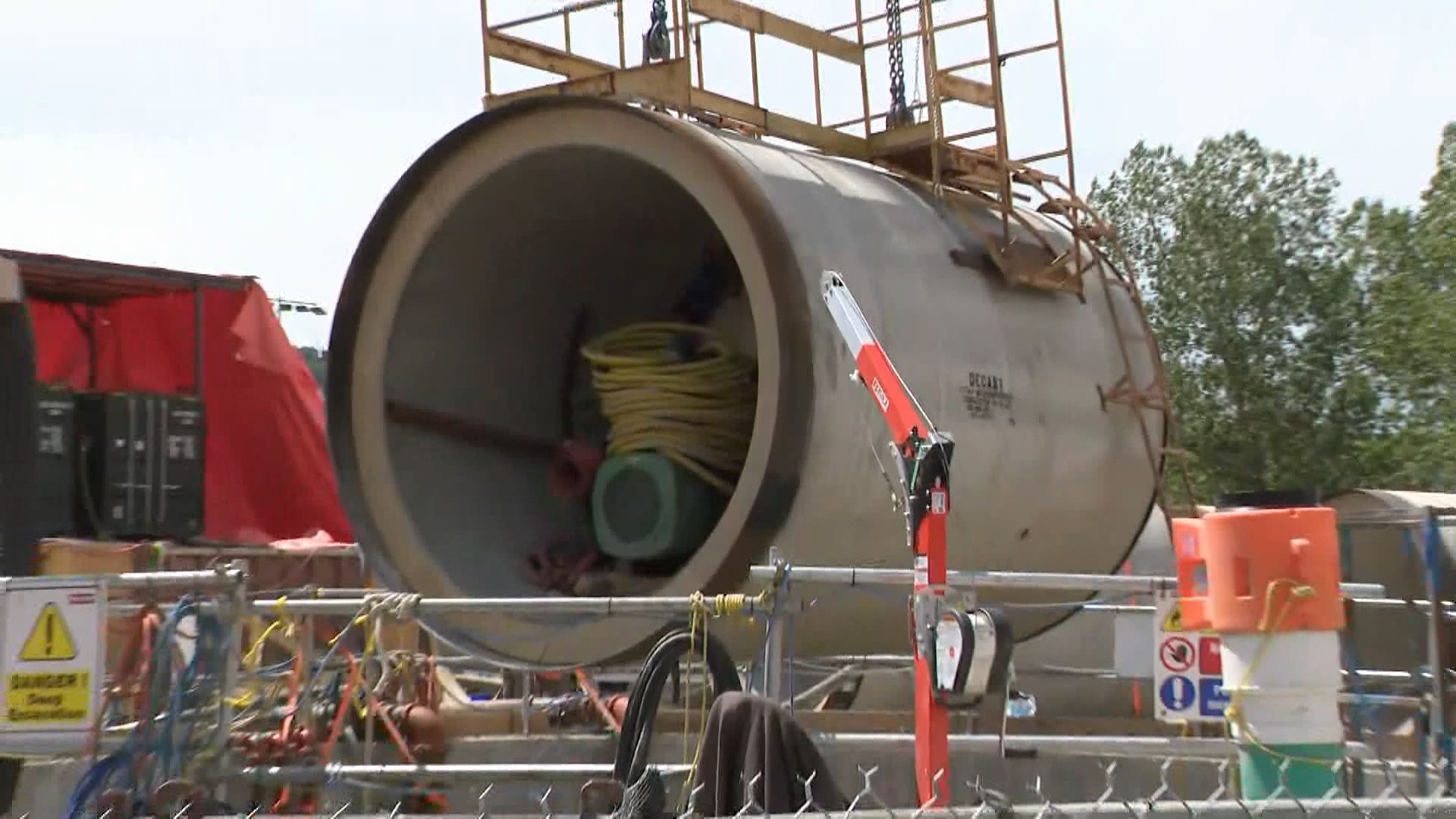
Stage A runs from the Shaganappi Pump Station over to Sarcee Trail on the west side of the Bow River. The city says this section is 51 per cent complete. Crews are using a method called two-pass microtunnelling. Basically, they tunnel underground and line it with a massive concrete carrier pipe first. That concrete shell is 55 per cent done. Once the shell is set, workers slide a heavy-duty steel pipe inside it.
The city expects the new steel pipe to start arriving on-site within a week. You’re going to see major action on the ground soon. Microtunnelling shafts are already carved out along 16 Avenue N.W. at 44 Street, near Home Road, and right off Sarcee Trail on 29 Avenue N.W.
Meanwhile, Stage B is a completely different beast. Crews started last month using open-cut construction. That’s the classic, messy "dig a giant trench in the middle of the road" method. They finished the initial cross-connection work on 77 Street N.W. and 83 Street N.W., and thankfully, those roads are paved and open again.
But don't get too comfortable. This week, crews are tearing into 34 Avenue N.W. at two separate spots: between 79 and 80 Street, and between 85 and 86 Street. The plan is a block-by-block approach. They dig, drop the steel pipe in as it arrives, bury it, and fix the road before moving to the next block. It sounds neat on paper, but if you commute through northwest Calgary, it's going to be a headache.
What Most People Get Wrong About the New Pipe
The biggest misconception rolling around Calgary right now is that the old pipe is already history. It isn't.
Crews spent a tense month back in March 2026 doing emergency concrete reinforcement on nine vulnerable segments of the existing feeder main just to keep it from blowing up again this summer. That old concrete pipe is still doing the heavy lifting right now. It will keep carrying our water until the new parallel steel pipe goes live in December.
Let’s be totally honest here. The city cannot guarantee the old pipe won't fail again before the new one is ready. We're riding on a prayer and some fresh concrete encasements until winter.
And yes, there is another planned water shutdown coming this fall. To hook up the new steel system and pull the plug on the old one, the city will have to take the feeder main offline. They haven't set the exact dates yet, but you can count on another round of indoor and outdoor water restrictions when it happens.
The Bigger Picture on Accountability
Calgary isn't just throwing money into a trench; they're also rewriting how the city manages water.
A lot of people don't know that Calgary's water system supplies bulk treated water to regional neighbors like Airdrie. When our system chokes, they feel the squeeze too. To prevent another 2024-style communications disaster, the city is building a brand-new, dedicated Water Department. They're actively hunting for a Chief Operating Officer of Water to take sole accountability for the grid.
They are also setting up an independent Water Utility Oversight Board by the end of 2026. This board will give city council expert, non-political advice on infrastructure risks before pipes actually burst.
Your Next Steps as a Resident
Don't wait for the city's next emergency alert to map out your summer and fall.
- Track the 34 Avenue N.W. construction: If your daily drive takes you near the 79-80 Street or 85-86 Street blocks, change your route now. The block-by-block closures mean traffic patterns will shift constantly without warning.
- Keep the rain barrels handy: We have a temporary reprieve from severe restrictions right now, but the fall hook-up window will require us to drop our water usage again. Keep your outdoor bins full while you can.
- Watch for localized pressure changes: As steel pipes arrive and get integrated into Stage B, minor pressure fluctuations or temporary water cloudiness can happen when crews adjust local valves. If you see murky water that doesn't clear after running your cold tap for a couple of minutes, report it to 311 instantly.