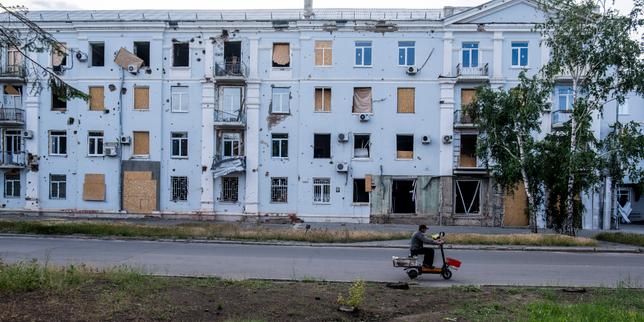
The ground never stops shaking in the Donbass. For months, the dual strongholds of Sloviansk and Kramatorsk have served as the bedrock of Ukrainian defense in the east. But as Russian forces slowly grind forward, this vital hub is transforming from a secure logistical rear into a precarious combat zone. If you think this is just another standard trench fight, you are missing the bigger picture.
The Reality of the Twin Cities Under Fire
Sloviansk and Kramatorsk aren't just random targets on a map. They represent the ultimate prize for Moscow's campaign in the Donetsk region. For years, these cities operated as highly organized military centers. They kept frontline troops supplied, treated the wounded, and gave weary units a place to rotationally rest.
That buffer zone is evaporating.
Local defense networks face a punishing mix of glide bombs, heavy artillery, and relentless drone surveillance. The psychological toll on the remaining civilian population and the overstretched military personnel is massive. Daily routines are dictate by the siren warnings. People don't just run to shelters anymore; they simply live in the rooms farthest from the windows, hoping the next strike misses their roof.
The Military Architecture Holding the Line
To understand why this area matters, look at how the Ukrainian armed forces structured their defense. The urban sprawl between Sloviansk and Kramatorsk creates a natural fortress. Concrete industrial zones, rail yards, and fortified high-rise buildings offer defensive advantages that are incredibly costly to attack.
- The Rail Network: Kramatorsk has historically been the primary hub for shifting heavy armor and ammunition across the entire eastern sector.
- The High Ground: The rolling hills surrounding Sloviansk provide artillery crews with crucial sightlines to spot advancing armor columns miles before they arrive.
- Industrial Fortresses: Heavy machinery plants have been converted into underground command posts and repair facilities that can withstand substantial bombardment.
Russian tactics have adapted to these defenses. Instead of launching direct, suicidal frontal assaults into the cities, the Russian military uses a strategy of aggressive flank encirclement. They look to cut the major supply routes leading in from the west, specifically targeting the roads from Pavlohrad and Dnipro. If those routes fall, the twin cities become isolated islands.
What Most Analysis Gets Wrong About the Rear Front
Commentators often label this area an "arrière-front" or a quiet rear line. That description is outdated and dangerously misleading. Air defense batteries are constantly active, trying to intercept the high-explosive glide bombs that Russian aircraft release from dozens of miles away. These weapons don't need pinpoint accuracy to disrupt operations; their sheer explosive power tears apart civilian infrastructure and shatters defensive trenches.
The logistics chain has shifted to a nighttime operation. Moving a convoy of supply trucks during the day is a death sentence due to the prevalence of thermal-imaging reconnaissance drones. Every piece of ammunition, every gallon of fuel, and every ration crate moves under the cover of total darkness, navigating cratered roads with headlights completely turned off.
The Strategic Consequences of a Breakthrough
If the defense here cracks, the entire Donbass front fractures. A Russian breakthrough at Sloviansk opens a direct path toward the borders of the Dnipro region, taking the fight out of the heavily fortified industrial east and into more open, harder-to-defend terrain.
- Loss of Manufacturing Hubs: The loss of the local industrial base completely halts domestic repair capabilities for western-supplied armor.
- Severe Political Fallout: Losing the symbolic heart of the 2014 resistance would deal a severe blow to national morale and complicate international aid negotiations.
- Logistical Chaos: Rerouting supply lines through smaller, secondary dirt roads severely reduces the speed of frontline reinforcements.
Ukrainian commanders know the risks. They're heavily reinforcing secondary defensive lines further west, digging fresh trench systems and installing concrete dragon's teeth across open fields. They aren't planning to retreat, but they're realistic about the math of an attritional war.
Next Steps for Survival on the Ground
For the military units holding the line, survival depends on immediate adjustments to their operational habits. The primary focus centers on decentralizing storage depots. Packing tons of ammunition into a single warehouse is an invitation for a missile strike. Supplies must be broken down into tiny, hidden caches scattered across miles of territory.
Electronic warfare units must also step up deployment of localized jamming systems to counter the swarm of reconnaissance drones pinning down infantry movements. Without total electronic coverage, digging new trenches or reinforcing existing bunkers becomes impossible.
The battle for these cities isn't just a localized clash over territory. It is the defining struggle for control of eastern Ukraine, and the outcome will reshape the entire geometry of the war.


 01.jpg)